


Table of content
- What can body contouring in Dubai do for you?
- Why do you need body contouring?
- When is the right time for post-bariatric body contouring?
- Which body contouring procedure do you need?
- What are the risks and complications of body contouring surgery?
- Checklist before having body contouring surgery in Dubai, UAE
- How much does a body contouring surgery cost in Dubai, UAE?
- FAQs about body contouring surgery in Dubai
- Get appointment
Losing a great deal of weight is a remarkable achievement — but it often leaves behind a problem that diet and exercise cannot solve: loose, hanging skin that no longer fits the body. I am Dr. Nazmi Baycin, and body contouring is the work I do after that journey, to finish what your weight loss began. My body contouring in Dubai removes the excess skin and refines the shape beneath it, restoring a firmer, more proportionate body that finally matches the effort you put in.
Let me be clear about my role from the outset: obesity surgery is not my specialty — as a plastic surgeon, my focus is the contouring that follows weight loss, whether from bariatric surgery or your own efforts. Performing body lift surgery in Dubai within JCI-accredited hospitals, I build each plan around the specific areas weight loss has affected, because no two bodies deflate in the same way. The principle is the one that guides all my work: to restore form is to restore function.
Body contouring surgery in Dubai quick facts
| Procedure detail | Body contouring / body lift in Dubai |
|---|---|
| What it treats | Excess, hanging skin after major weight loss |
| Approach | Tailored area by area; often several procedures combined |
| Anesthesia | General |
| Procedure time | Typically 2–6 hours (by number of areas) |
| Hospital stay | 1 day |
| Sutures | Hidden, dissolvable (none to remove) |
| Movement | Restricted for 3–4 days |
| Downtime | 5–7 days |
| Best timing | ~18 months after weight has plateaued |
| Result | Firmer, proportionate contour; lasting with stable weight |
What can body contouring in Dubai do for you?
Body contouring after major weight loss is as much about comfort and function as appearance. Removing the folds of excess skin ends the rubbing that causes painful sores and rashes, and restores the freedom to move and exercise without the weight of hanging tissue. The benefit is real and measurable: a systematic review and meta-analysis pooling 13 studies and 796 post-bariatric patients found significant improvements in physical functioning. Improvements in body image, self-esteem and the overall quality-of-life score all pointed the same way but did not reach statistical significance, and the authors suggest one reason: patients tend to picture a silhouette a size smaller than surgery can deliver. Closing that gap honestly, before anything is booked, is what a consultation is for.
Why do you need body contouring?
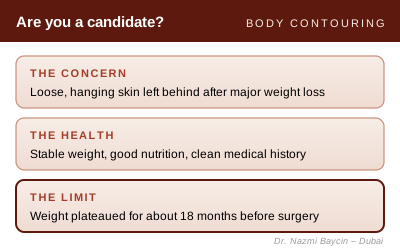
Bariatric surgery — gastric bypass, sleeve gastrectomy, gastric banding, or duodenal switch — is a highly effective treatment for obesity, and shedding the excess weight relieves many of the serious health risks that come with it, from diabetes to heart disease. But weight loss on that scale brings a challenge of its own: skin that has been stretched for years often cannot recover, and is left hanging loose on the body.
Why your skin won’t shrink back on its own
The skin owes its elasticity to collagen and elastin fibers. When you gain significant weight, the skin stretches to accommodate the extra tissue — and in doing so, those fibers tear. Once torn, they lose the ability to spring back, so when the fat is gone the skin can no longer shrink to fit. That is why loose, hanging skin persists after weight loss, no matter how healthy you are, and why it brings real problems: the folds rub and cause painful sores and rashes, the bulk limits physical activity and comfort, and the appearance can weigh heavily on self-esteem. Surgery is the only way to remove that excess skin and restore the contour beneath.
When is the right time for post-bariatric body contouring?
Timing matters. Weight loss after bariatric surgery is gradual, and how long it takes depends on how much excess weight you began with. Once you reach your ideal or target weight, it is important to give your metabolism time to stabilize before contouring surgery — operating too early, while the weight is still shifting, compromises the result. As a general rule, it is safe to consider body contouring about eighteen months after your weight loss has plateaued, though the exact adaptation period varies with the severity of the original obesity. At consultation I will help you judge when your weight has settled enough to proceed.
Which body contouring procedure do you need?
There is no single operation that reshapes the whole body. Instead, body contouring is a family of procedures, each addressing a different area, and the right plan depends on where your weight loss has left excess skin. Many patients need a combination rather than just one — and after losing weight from bariatric surgery, many find they need a post-bariatric abdominoplasty as the centerpiece. Because weight loss affects different parts of the body differently, I tailor the plan to the areas that need it, as below.
Face
When the face loses volume, the cheeks and neck sag and the whole face can look older than you feel. Here a full facelift restores the lift and firmness that weight loss has taken away.
Breasts
The breasts are among the areas most affected by weight loss, often left deflated and sagging. A breast lift — alone, or combined with a breast implant to restore lost volume — brings them back to a youthful position and shape.
Arms
Excess skin on the upper arm becomes obvious when the arm is raised, hanging between the armpit and the elbow. An arm lift removes that excess and tightens the upper arm to a firm, natural contour.
Abdomen and body lift
The abdomen is usually the area most affected by major weight loss — and by pregnancy too. Where the looseness is confined to the front, a full tummy tuck restores a flat, firm abdomen. Where it extends around the sides and onto the back, a circumferential procedure — a panniculectomy or lower body lift — tightens the skin all the way around, lifting the abdomen, flanks, and buttocks together.
Thighs
The inner thighs are a common trouble spot, where loose skin rubs together when walking and causes irritation. A thigh lift removes the excess and smooths the inner thigh for comfortable, friction-free movement.
| Area affected | Sign of excess skin | Procedure |
|---|---|---|
| Face & neck | Sagging cheeks and neck | Facelift |
| Breasts | Deflated, sagging breasts | Breast lift (± implant) |
| Arms | Hanging skin from armpit to elbow | Arm lift |
| Abdomen | Loose skin over the abdomen (± back) | Tummy tuck / panniculectomy |
| Thighs | Inner-thigh skin that rubs when walking | Thigh lift |
In-depth reading: how each area is rebuilt after massive weight loss in Dubai
These detailed guides go deeper into the individual decisions behind a post-weight-loss transformation — when a circumferential approach is truly needed, how each area is reconstructed rather than simply tightened, and which technique suits which anatomy:
- When a classic tummy tuck isn’t enough: 360° abdominoplasty for circumferential skin excess — the anatomical indicators that call for a belt-like, all-the-way-around abdominal excision rather than a standard front-only tummy tuck, and how the scar is planned for concealment.
- Rebuilding the deflated breast after massive weight loss: lift with implants — why the post-weight-loss breast needs architectural reconstruction, not simple enhancement, and the strict candidacy criteria that make combining a lift with an implant safe.
- The extended arm lift and lateral chest laxity — how the inner arm, axilla, and side of the chest are treated as one continuous unit when laxity flows from the arm onto the torso.
- Vertical or horizontal thigh lift after weight loss: choosing the right technique — why liposuction alone fails inner-thigh laxity, and how vertical, spiral, and short-scar approaches are matched to anatomy and lymphatic safety.
- Correcting a heavy pubic area after tummy tuck or weight loss — how a mons lift completes the lower-abdominal contour when the pubic region stays full or descends after skin removal.
Where does Dr. Baycin perform body lift surgery in Dubai?
I perform every body contouring and body lift procedure in a state-of-the-art, JCI-accredited hospital in Dubai that upholds world-class standards of safety and hygiene. Your surgery takes place in a premium facility equipped with the latest medical technology, with your well-being the first priority at every step.
What is recovery after body contouring surgery like?
Recovery depends on how extensive your procedure is — a single area heals faster than a full body lift. In general, expect a one-day hospital stay and mild to moderate pain in the first few days, which is easily managed with medication; movement is a little restricted for the first three to four days, and typical downtime is five to seven days before you are up and about comfortably. Because the stitches are hidden and dissolvable, there are none to remove. The deeper healing continues over the following weeks and months as swelling settles and the new contour emerges. To understand the full science behind how I support your healing after surgery, see my advanced recovery protocol in Dubai article.
Download Dr. Baycin’s body contouring aftercare instructions
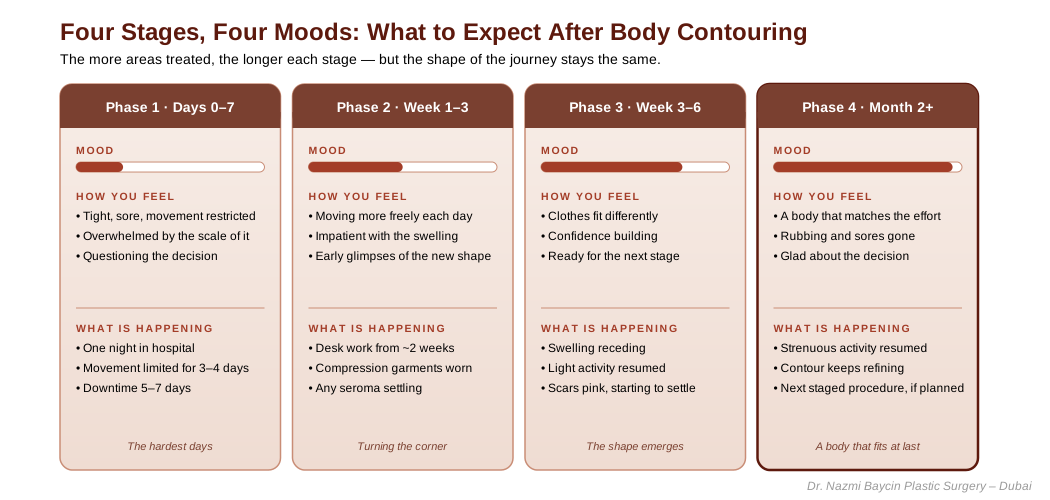
Recovery after body contouring runs to a longer clock than most single procedures, because it often treats several areas at once — but the shape of the journey is the same whatever the scale. The body’s milestones are fixed: a night in hospital, movement restricted for three to four days, downtime of five to seven, desk work from around two weeks, compression garments for several weeks, and swelling that recedes over the following months as the new contour emerges. Mood follows behind. The first week feels tight and sore, and the scale of what has been done can be overwhelming; by the third week you are moving freely and catching early glimpses of the new shape; by the sixth, clothes fit differently and confidence has returned; and from the second month on, with the rubbing and sores gone, you have a body that finally matches the effort of the weight loss — and, if the plan is staged, you are ready for the next procedure. The pace varies with how many areas were treated; the shape rarely does.
What are the risks and complications of body contouring surgery?
Body contouring is generally safe, but because it often treats large areas, a few risks deserve honest mention — and certain patients carry higher risk, particularly those who are still significantly overweight, diabetic, or have a high BMI. A hematoma — blood collecting in the wound — can usually be prevented with careful control of bleeding during surgery.
A seroma, a temporary build-up of lymphatic fluid, cannot always be avoided, but it typically resolves on its own within two to three weeks. Infection is uncommon and reduced further by antibiotics, and as with any skin surgery there can be issues with wound healing and scarring, especially across the long incisions that body lifts sometimes require. Where a complication does arise, it may cause some discomfort and lengthen recovery, but it can be managed and treated effectively.
Checklist before having body contouring surgery in Dubai, UAE
IMPORTANT ! Before getting the appointment, check your medical conditions yourself.
| # | Conditions | Safety | Aesthetic Suitability |
|---|---|---|---|
| 1 | Are you over 18? | 🟢 Fit for surgery | — |
| 2 | Does your body require lifting due to aging or significant weight loss? | 🟢 Fit for surgery | 🟡 Ideal candidate |
| 3 | Do you have a cardiovascular problem such as heart disease or deep vein thrombosis? | 🔴 Contraindicated | — |
| 4 | Do you have pulmonary system problems such as chronic lung disease? | 🔴 Contraindicated | — |
| 5 | Do you have chronic liver disease? | 🔴 Contraindicated | — |
| 6 | Do you have a urinary system disease such as kidney failure? | 🔴 Contraindicated | — |
| 7 | Do you have a hematologic problem such as anemia or coagulopathy? | 🔴 Contraindicated | — |
| 8 | Do you have any transmitting disease through blood such as HIV? | 🔴 Contraindicated | — |
| 9 | Have you been taking anticoagulant medication? | 🔴 Contraindicated | — |
| 10 | Have you been taking psychotropic drugs? | 🔴 Contraindicated | — |
| 11 | Any drug abuse or addiction | 🔴 Contraindicated | — |
How much does a body contouring surgery cost in Dubai, UAE?
When it comes to body contouring and lift costs in Dubai, you’ll find that prices can differ quite a bit from one clinic to another. Typically, they start around 25,000 AED and can go up depending on the specific procedure(s) you choose.
These figures don’t represent Dr. Baycin’s personal rates; you’ll get the exact pricing during your consultation after he evaluates your condition.
For a complete overview of treatment fees, please refer to full price list of the procedures.
Schedule your private consultation with Dr. BaycinWhat makes Dr. Baycin an exceptional body contouring surgeon in Dubai?
Patients seeking body contouring want more than a physical change — they want precision, artistry, and lasting confidence — and with more than 250 successful procedures, that is the standard Dr. Baycin holds.
- Decades of proven expertise: a board-certified plastic surgeon, DHA-licensed and a member of the American Society of Plastic Surgeons (ASPS), with more than 25 years of surgical experience.
- Personalized transformation plans: every body is unique, so each plan is tailored to your anatomy and goals, restoring natural balance while reflecting your own vision.
- Mastery of advanced techniques: from high-definition liposuction to comprehensive post-bariatric body lifts, refined methods that prioritize proportion, symmetry, and elegance.
- Technology-driven comfort: modern surgical tools and techniques that minimize tissue trauma, reduce scarring, and speed recovery for life-changing results with minimal downtime.
- An uncompromising commitment to safety: an exceptional safety record across thousands of aesthetic procedures, with meticulous standards at every stage.
- Transparent, supportive consultations: realistic goals, every option explained, and your well-being put before any unnecessary intervention.
- Comprehensive post-operative care: structured aftercare, continuous follow-up, and direct surgeon access for a smooth recovery.
- A global reputation for body contouring excellence: patients travel from across the GCC, Europe, and beyond for his results in Dubai.
- Proven results that redefine standards: 250+ procedures delivering natural, long-lasting results that celebrate individuality.
- Where compassion meets surgical artistry: an empathetic understanding of how profound a physical transformation can be, so every patient feels valued and empowered.
About Dr. Nazmi Baycin
Surgery, to me, is precision applied in service of restoration — a conviction that has guided every one of the more than 7,000 procedures I have performed over 25 years in practice. I am a DHA-licensed, board-certified plastic surgeon, trained in Turkey and based in Dubai since 2016. I operate exclusively within JCI-accredited hospitals, and hold international membership in the American Society of Plastic Surgeons (ASPS). Three techniques, in particular, have become signatures of my practice. Scarless breast augmentation, performed through a transaxillary approach that leaves no incision on the breast itself. Labiaplasty designed individually around each patient’s own anatomy, never to a standard template. And 3D customized facial bone implants, engineered through CT-based bespoke printing — a technique I currently offer as the only surgeon in Dubai providing it. My practice today spans facial rejuvenation, breast surgery, body contouring, and cosmetic genital procedures, drawing patients from across the UAE, Europe, and the wider GCC. Yet the principle guiding each of these specialties has never changed: to restore form is to restore function.
FAQs about body contouring surgery in Dubai
-
What is body contouring and a body lift?
Body contouring is how I restore a firm, proportionate shape after major weight loss, when large amounts of excess, hanging skin remain that diet and exercise cannot address. It is not one operation but a tailored plan: I treat each affected area, the abdomen, arms, thighs, back, buttocks, and more, according to your needs. A body lift is a broader version that combines several of these into a comprehensive reshaping, restoring the firm, natural contour your weight loss has earned you.
-
How much does body contouring cost in Dubai?
Because body contouring is tailored to each person and can involve one area or several, the cost varies considerably with the specific procedures chosen. As a guide, prices in Dubai start around AED 25,000 and rise from there depending on how many areas are treated and the complexity involved. These are general market figures, not Dr. Baycin’s personal rates; your precise cost is confirmed at consultation, once a personalized plan has been agreed.
-
Who is body contouring for?
Body contouring is primarily for people who have lost a large amount of weight, whether through diet and exercise or bariatric surgery, and are left with loose, excess skin. That skin does not retract on its own, and no amount of exercise will remove it, which is where surgery comes in. It suits those who have reached a stable weight and want their body’s shape to finally reflect the tremendous effort and achievement of their weight loss.
-
Which areas can be treated with body contouring in Dubai?
Major weight loss can leave loose skin almost anywhere, so I treat the full range of areas, tailoring the plan to you. Commonly this includes the abdomen with a tummy tuck, the upper arms with an arm lift, and the thighs, as well as the back, buttocks, and the lower body as a whole. At consultation I assess which areas trouble you most and build a plan that addresses them in the right order.
-
What is a full body lift?
A body lift is a comprehensive procedure that addresses excess skin around a larger region in one operation, most often the lower body, lifting the abdomen, hips, outer thighs, and buttocks together through a circumferential approach. Rather than treating one area in isolation, it reshapes the whole lower trunk in balance. It is a major undertaking, suited to those with significant, widespread loose skin after major weight loss, and it delivers a dramatic, harmonious transformation when it is the right choice.
-
Are body contouring procedures often staged?
Yes, and planning the sequence thoughtfully is an important part of my role. When several areas need treatment, doing everything at once is not always safe or wise, so I often stage the procedures across more than one operation, grouping what can sensibly be combined and spacing the rest for safe, comfortable recovery. This staged approach keeps each operation within safe limits and gives the best-healed, most refined result. At consultation I map out a sensible sequence tailored to you.
-
Where will the scars be, and how visible are they?
Body contouring does involve scars in exchange for removing the excess skin, and I am always honest about this trade-off. I place every incision as discreetly as possible, hidden in natural creases and areas covered by underwear or swimwear wherever I can, such as the bikini line for the abdomen and the inner arm for an arm lift. I close with meticulous technique to give each scar the best possible chance of fading, and we discuss placement together beforehand.
-
Is body contouring in Dubai often combined with liposuction?
Yes, frequently. While the skin-removal procedures address loose skin, liposuction refines the underlying contour and removes any stubborn residual fat, so the two work hand in hand for a smoother result. Where only mild skin laxity remains in an area, J-Plasma skin tightening can sometimes firm it without a longer scar. At consultation I combine these tools thoughtfully to achieve the most natural, proportionate shape.
-
What is recovery after body contouring like?
Recovery depends on how many areas are treated, so it varies from person to person and is part of why I plan carefully. In general you will wear compression garments for several weeks, and I advise limiting strenuous activity while the incisions heal. Most people return to desk work within about two weeks for a single area, longer for more extensive work. Swelling settles over the following weeks to months, and I guide you closely through each stage of a staged plan.
-
Are the results of body contouring permanent?
The results are long-lasting, especially when your weight stays stable. The excess skin I remove does not return, so the firmer contour endures. The main thing that can affect the result over time is significant weight change or a future pregnancy, which is why maintaining a stable weight is so important, and why I recommend body contouring once your weight has settled after major loss. For most people who keep their weight steady, the transformation lasts well over the long term.
-
Is body contouring in Dubai safe?
In experienced hands body contouring is safe, but these are significant operations, especially when several areas are treated, so careful planning and staging are central to keeping them so. As skin-removal surgery, the considerations include swelling, bruising, fluid collection, delayed wound healing, and scar quality, all minimized through meticulous technique and attentive aftercare. Good general health, a clean medical history, stable weight, and good nutrition, which matters after major weight loss, all support a safe procedure and the best result.
-
Are you a good candidate for body contouring?
You are likely a good candidate if you have loose, excess skin after major weight loss that troubles you, your weight has been stable for a period, and you are in good general health. Because significant weight loss can affect nutrition, being in good nutritional health matters too, and I assess this. A clean medical history is the foundation of safe surgery, and understanding the scar trade-off is important. At consultation we discuss your goals and design a tailored, sensibly staged plan for you.


GET APPOINTMENT
Get ready to look and feel best… You deserve…
