

Key takeaways: the science of surgical recovery
- Recovery is an active phase of treatment, not passive waiting — it is planned and supported as deliberately as the surgery itself.
- Multimodal pain management (long-acting local anesthetic, non-opioid regimens, nerve-sparing technique) keeps most patients comfortable with little or no reliance on narcotics.
- Strategic nutrition — protein, vitamin C, zinc, hydration, targeted supplements — supplies the raw materials for efficient tissue repair.
- Proactive scar management in staged phases (tension relief, then silicone and sun protection, then laser if needed) guides scars toward imperceptibility.
- The protocol applies the principles of Enhanced Recovery After Surgery (ERAS), shown to reduce opioid use and hospital stay.
- Every plan is procedure-specific and personalized, with written instructions and direct clinical-team access throughout healing.
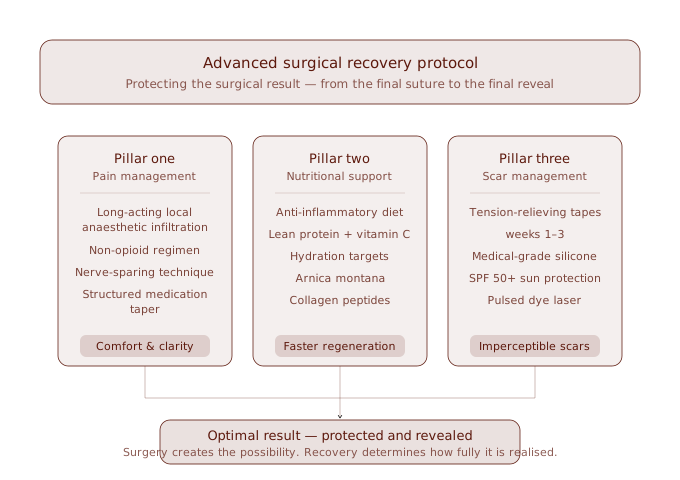
The three pillars of an optimized surgical recovery — pain management, nutrition, and scar care — by Dr. Nazmi Baycin, Dubai.
This systematic care is what I consider the complete standard of plastic surgery in Dubai — not merely a surgical result, but a fully supported journey.
Pillar one: advanced multimodal pain management — redefining comfort
The expectation of significant post-operative pain reliant on strong narcotics is outdated. My approach uses a multimodal strategy that preempts pain by targeting it through multiple physiological pathways, dramatically enhancing comfort and reducing side effects. This protocol includes:
- Long-acting local anesthetic infiltration: administered during surgery, these blocks can provide 72–96 hours of continuous, targeted pain relief directly to the surgical site, allowing you to wake up and remain remarkably comfortable in the initial critical period.
- Non-opioid medication regimen: a scheduled rotation of specific non-steroidal anti-inflammatory drugs and other analgesic agents that work synergistically to reduce inflammation and pain at the source, not just mask it.
- Nerve-sparing surgical techniques: wherever anatomically possible, I employ meticulous dissection that preserves sensory nerves, which limits the extent of post-operative numbness. How sensation then recovers — the regeneration timeline, why tingling is a good sign, and when numbness does not fully resolve — is a subject of its own, and I set it out in my article on numbness after a tummy tuck.
- Structured medication taper: a clear, day-by-day plan to gently step down from any prescribed medications, aiming for minimal reliance and a quick return to mental clarity.
The benefits are profound: significantly reduced risk of nausea, constipation, and brain fog; earlier and more comfortable mobility; and a recovery period where you feel like a participant in your healing, not a victim of it. This proactive pain strategy is a standard I uphold for all surgical procedures in my Dubai practice.
Pillar two: strategic nutritional & supplemental guidance — fueling regeneration
Your body is a regeneration machine, and like any complex machine, it requires the highest-quality fuel and specific raw materials to repair itself optimally. I provide a detailed framework to nutritionally support your healing, focused on three key areas:
- The anti-inflammatory dietary foundation: ample lean protein for tissue repair, vitamin C for collagen synthesis, and zinc for enzymatic functions, while minimizing sodium (to reduce swelling), sugar, and processed foods that promote systemic inflammation.
- Hydration as a healing mandate: optimal fluid intake is crucial for circulation, detoxification, and preventing complications. I provide clear targets to ensure you are adequately hydrated throughout your recovery.
- Targeted, high-quality supplementation: I recommend pharmaceutical-grade arnica montana, which many patients find reduces the extent and duration of bruising, and bioavailable collagen peptides to supply building blocks for repairing skin, connective tissue, and muscle. I should be straight with you about the evidence here: the dietary and hydration measures above rest on well-established wound-healing physiology, while the supplement evidence is thinner and more contested than the pain and scar protocols. I offer them as low-risk adjuncts, not as the load-bearing part of this pillar.
Neglecting nutrition is a common but critical error that can lead to delayed healing, poor scar formation, and prolonged fatigue. This protocol ensures your body has every resource it needs to rebuild itself efficiently.
Pillar three: proactive scar management — the pursuit of imperceptibility
A well-placed incision is only the beginning. The ultimate appearance of your scar is determined by the care it receives in the months that follow. My scar management protocol is a staged, active process designed to guide your scar toward the finest, most imperceptible line possible. It progresses through key phases:
- The early phase (Weeks 1–3) — tension is the enemy. The single most important factor in scar width is mechanical tension. I use sterile, tension-relieving tapes or adhesives applied directly over the incision for several weeks to shield the fragile healing tissues from distracting forces, ensuring the edges heal together under minimal stress.
- The maturation phase (Weeks 3–12+) — silicone and sun protection. Once the incision is fully closed, you transition to medical-grade silicone gel or sheets — the gold-standard topical treatment, proven to hydrate the scar and modulate erratic collagen production. Concurrently, rigorous sun protection with SPF 50+ is mandatory for at least one year to prevent permanent hyperpigmentation.
- Advanced intervention (as needed) — laser modulation. For scars showing early signs of excessive redness or thickening, I may recommend early treatment with a Pulsed Dye Laser, which selectively targets the micro-capillaries fueling inflammation, effectively calming the scar and improving its color and texture match to surrounding skin.
This proactive, multi-modal approach transforms scar care from a hope into a science. It is a testament to the philosophy that our work together continues long after you leave the operating room.
The three pillars of recovery at a glance
| Pillar | Core interventions | Primary benefit |
|---|---|---|
| Advanced pain management | Long-acting local blocks, non-opioid regimen, nerve-sparing technique, structured taper | Comfort with minimal narcotics; fewer side effects |
| Nutritional support | Protein, vitamin C, zinc, hydration, arnica & collagen peptides | Faster, more complete tissue repair |
| Scar optimization | Tension-relief taping → silicone + SPF 50+ → Pulsed Dye Laser if needed | Finer, paler, more imperceptible scars |
The evidence-based foundation: why a structured protocol matters
This comprehensive approach is not anecdotal; it is grounded in the principles of Enhanced Recovery After Surgery (ERAS), a paradigm shift in surgical care adopted by leading institutions worldwide. UCSF’s teaching resource on ERAS pathways sets out the reasoning: multimodal analgesia built around regional anesthesia and non-opioid agents is used to reduce opioid exposure and its side effects, and has been shown to improve recovery and shorten hospital stays. It is an educational overview rather than a study, and I cite it as a statement of the standard rather than as evidence in itself.
The evidence behind that standard is substantial. A 2020 umbrella review of 23 meta-analyses found consistent and robust evidence that ERAS pathways shorten hospital stay — by a mean of 2.3 days — and reduce costs across the surgical specialties studied, without increasing mortality. Its authors stop short of a blanket endorsement: they note that adverse events need active prevention when ERAS is applied to gastric cancer surgery, particularly in older patients, where morbidity was higher in the laparoscopic group and readmission higher in the open group. Nor is a two-day reduction in hospital stay directly meaningful for day-case aesthetic surgery. What transfers is the principle, not the number.
The evidence is not limited to general surgery. Looking specifically at my own field, a 2025 systematic review of nine ERAS studies in plastic surgery, four of them pooled across 600 patients, found a significantly shorter hospital stay — a mean of 0.58 days — alongside reduced opioid consumption and maintained or improved patient satisfaction. Two qualifications belong with it, and I would rather give them than leave them out. The authors name increased bleeding among the risks, so this is not a pathway without trade-offs. And the underlying studies come largely from reconstructive rather than aesthetic practice, where the patient is admitted rather than going home the same day.
The pain pillar has the most directly relevant evidence of the four sources cited here, because it was studied in the right setting. A retrospective before-and-after study of 359 outpatient plastic surgery patients managed with an ERAS protocol and surgeon-led ultrasound-guided regional blocks reported reductions in both the opioid prescriptions written and the opioids patients actually consumed: the amount prescribed fell from an average of 332.3 to 100.3 morphine milligram equivalents, across 157 patients before the protocol and 202 after it. That is the outcome my multimodal protocol is built to achieve, in patients who, like mine, go home the same day. It is a single-surgeon, non-randomised comparison, and the blocks were given only to the higher-pain group — so it compares two protocols rather than isolating the blocks. My protocol applies these principles to aesthetic surgery, keeping your care aligned with the standards of modern perioperative practice.
A tailored journey: your personalized recovery plan
While the principles are universal, their application is personal. Your recovery plan is carefully adapted to the procedure you undergo — a facelift in Dubai requires different mobility guidelines than a body contouring procedure in Dubai — as well as to your individual health, age, and lifestyle. Whether you are recovering from a tummy tuck in Dubai or liposuction in Dubai, you will receive clear, written instructions and direct access to my clinical team throughout your healing journey. This structured support system is designed to provide clarity, confidence, and reassurance at every step.
Why a guided recovery protects your result
A structured recovery protocol is not a luxury layered on top of surgery; it is part of the surgery. Its benefits are clinical and concrete: less anxiety in the early days, better-controlled discomfort, a lower risk of complications, and the reassurance of knowing every detail is being managed toward your best possible result. Surgery creates potential; the recovery period determines how fully that potential is realized.
I designed this protocol because I believe my responsibility to a patient does not end when the final suture is placed. It continues through every phase of healing — through the first uncomfortable morning, through the weeks of compression and discipline, through the gradual emergence of the result. The body heals on its own timeline, but it heals more completely when it is guided, supported, and understood. This is not a passive process; it is the final act of the same precision and intention I bring to the operating room itself — the part of surgery that most surgeons leave to chance.
FAQs about recovery after plastic surgery in Dubai
-
How long does recovery take after plastic surgery in Dubai?
Recovery timelines vary significantly by procedure. Minor surgeries such as eyelid surgery or ear correction typically require 3 to 7 days of downtime. Breast augmentation and liposuction require 5 to 7 days. More extensive procedures such as tummy tuck, facelift, or body contouring require 10 to 14 days before most patients feel comfortable in social settings. Final results — including full resolution of swelling — emerge at 3 to 6 months for most procedures, and up to one year for rhinoplasty. I provide a procedure-specific written recovery plan at every consultation.
-
Is pain after plastic surgery really manageable without strong narcotics?
In my experience, yes — for the vast majority of patients and procedures. My multimodal pain protocol combines long-acting local anesthetic infiltration during surgery (providing 72 to 96 hours of targeted relief), a scheduled non-opioid medication regimen, and nerve-sparing surgical technique. Most patients are surprised by how manageable their discomfort is. Opioids are available if genuinely needed, but are rarely required beyond the first day or two.
-
What should I eat after plastic surgery to heal faster?
The nutritional priorities after surgery are protein (for tissue repair), vitamin C (for collagen synthesis), zinc (for enzymatic healing functions), and adequate hydration. I recommend minimizing sodium to reduce swelling, avoiding sugar and processed foods that promote systemic inflammation, and supplementing with pharmaceutical-grade arnica montana for bruising and bioavailable collagen peptides for tissue repair. I provide a detailed written nutritional guide at your pre-operative appointment.
-
When can I exercise after plastic surgery?
This depends on the procedure. Most patients can resume light walking within the first few days, which I actively encourage for circulation. Return to light resistance training is typically possible at 3 to 4 weeks. Full, unrestricted exercise is generally safe at 6 to 8 weeks. I provide a specific activity timeline based on your procedure at consultation.
-
How do I prevent bad scarring after surgery?
Scar quality is largely within our control when managed proactively. The three most important interventions are tension-relieving tapes applied over the incision for the first 2 to 3 weeks (the single biggest factor in scar width), medical-grade silicone gel or sheets from week 3 onward, and strict SPF 50+ sun protection for at least one year. I also monitor scars closely and may recommend early Pulsed Dye Laser treatment if a scar shows signs of excessive redness or thickening. Scars managed this way typically settle into a fine, pale line, though skin type, wound tension, and individual healing all influence how far that goes.
-
Do you provide written recovery instructions?
Yes, always. Every patient receives a detailed, written, day-by-day recovery plan specific to their procedure, including medication schedules, nutritional guidance, activity restrictions, wound care instructions, and scar management timelines. You also have direct access to my clinical team throughout your recovery for any questions or concerns.
-
When can I fly after surgery in Dubai?
For international and GCC patients, timing the return flight matters. For minor procedures, short-haul travel is often possible within a few days. For breast and body surgery, I generally advise waiting 7 to 10 days before long-haul flights to reduce the risk of blood clots and to allow initial healing, with in-flight measures such as compression garments, hydration, and regular movement. I give each traveling patient a specific clearance timeline as part of their recovery plan.
-
How can I reduce swelling as quickly as possible?
Swelling is managed through several combined measures: consistent use of the prescribed compression garment, keeping the treated area elevated where possible, minimizing dietary sodium, staying well hydrated, and — where indicated — gentle manual lymphatic drainage massage. Most swelling subsides substantially within the first few weeks, though the final refinement of contour continues over several months.
The partnered path to your result
Surgery creates the possibility; recovery determines whether that possibility is fully realized. My advanced recovery protocol is designed to be your guide and support system through this vital phase, leveraging science to work in harmony with your body’s natural healing intelligence. To discuss how this supported approach applies to your own procedure, I welcome you to consult with me as a leading cosmetic surgeon in Dubai.


GET APPOINTMENT
Get ready to look and feel best… You deserve…
