

Key takeaways: durability is biological, not just surgical
- Fading etched abs are rarely a surgical failure — usually it’s skin biology.
- Skin elasticity and collagen decide whether skin locks onto the muscle inscriptions.
- Weight fluctuation is the most common cause of blurred lines after surgery.
- Fibrosis helps in the right amount and distorts in excess.
- Over-etching to force definition produces early drama and later fading.
- Durable results come from respecting skin limits, not maximizing fat removal.
The etching technique itself is well described in the literature; a 2019 series of 50 consecutive abdominal etching patients reported no major complications but contour irregularities in 12 per cent — a reminder that outcomes depend on careful execution and the right candidate, not the tool alone.
Why skin quality is the foundation of long-term definition
Skin is an active, living structure that responds continuously to tension, trauma, and aging. After six-pack surgery, the skin has to adhere to the underlying muscle inscriptions to keep the definition visible. If it lacks elasticity, it cannot lock onto the sculpted framework beneath it.
Patients with strong collagen and elastin networks usually keep sharper results, because their skin contracts evenly during healing. Skin stretched by pregnancy, weight cycling, or aging tends to relax over time instead. Early swelling and inflammation can temporarily exaggerate the muscle outlines, but as the edema resolves, the skin may smooth out and soften the etched grooves.
That is why, for abdominal etching in Dubai, I place so much importance on preoperative skin assessment — the operation is not simply about fat removal, but about predicting how the skin will behave months and years later.
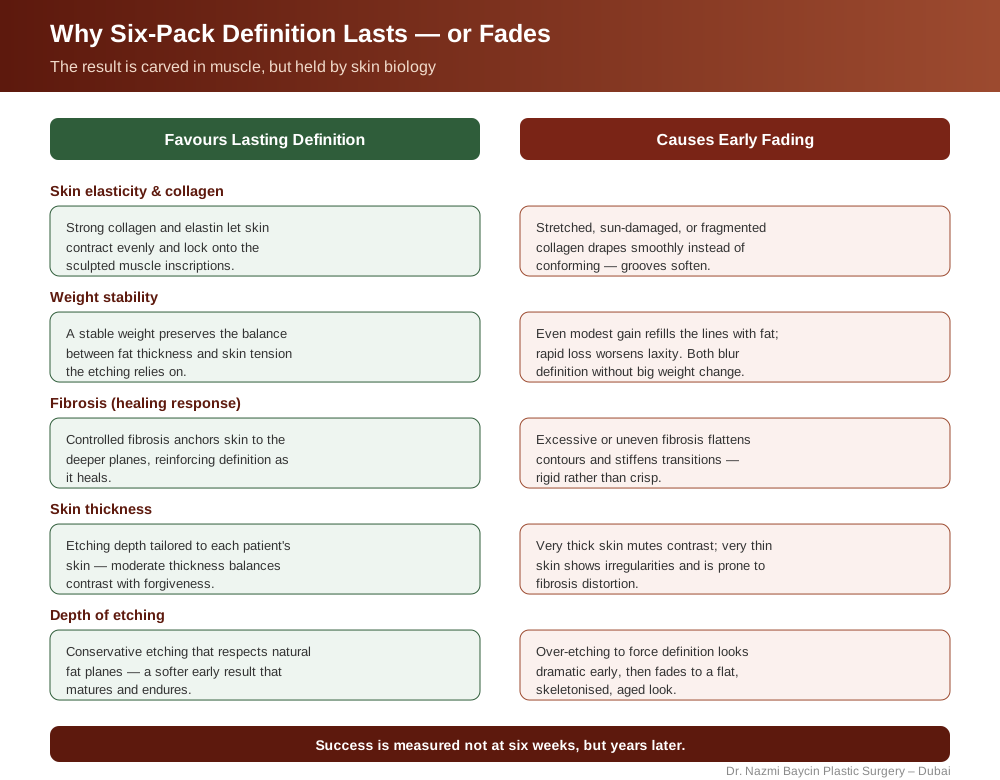
Why six-pack definition lasts or fades — skin elasticity and collagen, weight stability, balanced fibrosis, appropriate skin thickness, and conservative etching depth all favor a durable result, while stretched collagen, weight fluctuation, excessive fibrosis, and over-etching cause it to fade — by Dr. Nazmi Baycin, Dubai.
Elasticity and collagen quality
Elasticity determines how well the skin recoils after fat removal. Genetics play a major role, but so do sun exposure, smoking, and hydration. Younger patients often assume age alone guarantees long-lasting definition, yet I regularly see young people with poor elasticity from repeated weight fluctuations. When collagen fibers are stretched and fragmented, the skin loses its ability to contract effectively.
Even with technically perfect etching, that skin may drape smoothly rather than conform tightly to the rectus contours, giving a flatter look over time even though the muscle anatomy has not changed. In patients with borderline elasticity, aggressive fat removal does not solve the problem — it often accelerates fading by removing the supportive fat layer that helps maintain skin tension.
Weight fluctuation: the silent enemy of longevity
One of the most common reasons six-pack results fade is postoperative weight instability. Even modest weight gain can fill the sculpted lines with new fat, blurring definition without much change in body weight or clothing size. Rapid weight loss does the opposite, worsening skin laxity so the etched lines soften as the skin loses structural support. Long-term success needs metabolic stability.
Patients who hold a consistent weight preserve the delicate balance between fat thickness and skin tension that the surgery relies on, which is why I counsel patients extensively about lifestyle expectations before recommending six-pack surgery in Dubai — the operation enhances anatomy, but it does not override physiology.
Fibrosis: necessary, but only in the right amount
Fibrosis is the body’s natural healing response after liposuction-based procedures. Controlled fibrosis helps anchor the skin to deeper planes and reinforces definition. Excessive or uneven fibrosis, though, can compromise the result. Patients prone to dense scar tissue — often those with previous abdominal surgery or aggressive liposuction elsewhere — may look sharply etched at first, but as healing progresses, stiff fibrotic bands can flatten contours or create unnatural transitions between muscle segments. Instead of crisp definition, the abdomen can look rigid or overly smooth. The goal is balanced healing: enough fibrosis to stabilize contours, but not so much that it distorts anatomy. That balance depends on surgical restraint, proper cannula selection, and sensible postoperative compression.
Skin thickness and visual definition
Skin thickness plays a subtle but real role in longevity. Thicker skin can mask minor irregularities, but it also dampens the visual contrast between muscle inscriptions, so definition can look softer over time even when the structure underneath is intact. Very thin skin reveals muscle contours clearly but is less forgiving, raising the risk of contour irregularities and fibrosis-related distortion. Durable, natural results come from tailoring the depth and aggressiveness of etching to each patient’s skin rather than applying one formula to everyone.
Why over-etching leads to short-lived results
A common mistake in abdominal sculpting is over-etching to compensate for poor skin quality. Removing excessive fat to force definition can look dramatic in the early phase, but it often leads to premature fading or an unnatural appearance later. As swelling subsides, the skin relaxes into a flatter configuration, and the abdomen can look aged or skeletonized rather than athletic.
Sustainable results come from respecting natural fat planes — the focus of my detailed guide to why over-etching ruins abdominal definition — and letting the skin mature gradually around the sculpted anatomy. In my Dubai practice I prioritize longevity over immediate intensity — a slightly softer early result that improves over time is far preferable to an aggressive one that deteriorates within a year. The same principle guides all of my plastic surgery practice in Dubai.
What favors lasting definition, and what fades it
The table below sets the durability factors side by side against the ones that cause early fading.
| Factor | Favors Lasting Definition | Causes Early Fading |
|---|---|---|
| Skin elasticity | Strong collagen, even recoil | Stretched, sun-damaged, fragmented |
| Collagen quality | Intact, resilient fibers | Broken cross-links, poor contraction |
| Weight stability | Consistent, stable weight | Gain refills lines; loss worsens laxity |
| Fibrosis | Controlled, anchoring | Excessive, uneven, distorting |
| Skin thickness | Matched to etching depth | Too thick mutes; too thin distorts |
| Fat layer | Preserved for skin tension | Over-removed, unsupported skin |
| Etching depth | Conservative, plane-respecting | Over-etched to force definition |
| Early appearance | Slightly soft, then matures | Dramatic, then flattens |
| Long-term result | Defined, athletic, natural | Skeletonized or flat, aged |
Long-term strategies for maintaining results
Longevity after six-pack surgery depends on a partnership between surgeon and patient. Proper candidate selection, conservative sculpting, and realistic goal-setting form the surgical foundation; stable weight, consistent activity, and patience during healing carry it forward. Patients who approach abdominal etching as a refinement rather than a shortcut are far more satisfied with their outcomes.
When skin quality is respected and anatomy is preserved, the surgery can deliver definition that stays natural for many years — the outcome I aim for with every abdominal etching in Dubai. True success in six-pack surgery in Dubai lies not in how sharp the abdomen looks at six weeks, but in how balanced and athletic it appears years later. Because every patient’s skin and physiology are different, the plan and its cost are discussed transparently at consultation.
FAQs about six-pack surgery longevity in Dubai
-
Why do six-pack surgery results fade in some patients?
Fading is usually driven by skin biology rather than surgical technique. If the skin lacks elasticity, it cannot contract tightly onto the sculpted muscle inscriptions and instead drapes smoothly, softening the grooves over time. Weight fluctuation, excessive or uneven fibrosis, and over-aggressive fat removal all accelerate the process. This is why I assess skin quality carefully before surgery and tailor the technique to how each patient’s skin is likely to behave months and years later, rather than focusing only on the immediate result.
-
How does skin elasticity affect how long a six-pack lasts?
Elasticity determines how well skin recoils after fat is removed. Patients with strong collagen and elastin keep sharper results because their skin contracts evenly and locks onto the muscle contours. When collagen is stretched and fragmented — by aging, sun, smoking, or repeated weight changes — the skin drapes rather than conforms, so definition flattens over time even though the muscle anatomy is unchanged. Assessing elasticity is therefore central to predicting a durable outcome, and in borderline cases aggressive fat removal makes fading worse, not better.
-
Does weight gain or loss affect my six-pack results?
Yes, significantly. Even modest weight gain can refill the sculpted lines with new fat and blur definition without a big change in overall weight or clothing size. Rapid weight loss does the opposite, worsening skin laxity so the etched lines soften as the skin loses support. Durable results depend on metabolic stability — a consistent weight preserves the balance between fat thickness and skin tension that the etching relies on. I discuss realistic lifestyle expectations before surgery, because the operation enhances anatomy but does not override physiology.
-
What is fibrosis and how does it affect my result?
Fibrosis is the body’s natural scar-tissue healing response after liposuction-based surgery. In the right amount it is helpful — controlled fibrosis anchors the skin to deeper planes and reinforces definition. In excess or unevenly distributed, it can flatten contours or create rigid, unnatural transitions between muscle segments, so the abdomen looks stiff or overly smooth rather than crisply defined. Achieving the right balance depends on surgical restraint, appropriate cannula selection, and a sensible postoperative compression plan, all of which I manage deliberately.
-
Can younger patients still have poor longevity?
Yes. Age alone does not guarantee lasting definition. I frequently see younger patients with poor skin elasticity caused by repeated weight fluctuations, significant past weight loss, or sun damage. Because the durability of a six-pack result depends on collagen quality and skin recoil rather than age by itself, a younger patient with compromised skin may fade faster than an older patient with resilient skin. This is exactly why an individual skin assessment matters more than assumptions based on age.
-
Is it better to have a more aggressive, sharply defined result?
Not usually. Over-etching to force sharp definition can look dramatic in the early weeks, but as swelling subsides the skin relaxes into a flatter configuration, and the abdomen can appear skeletonized or aged rather than athletic. I deliberately prioritize longevity over immediate intensity: a slightly softer early result that matures gradually is far more durable than an aggressive one that deteriorates within a year. Respecting natural fat planes and letting the skin settle around the sculpted anatomy is what produces a lasting, natural look.
-
How can I make my six-pack surgery results last longer?
Longevity is a partnership. The surgical foundation is proper candidate selection, conservative sculpting, and realistic goals; the rest depends on you. Maintaining a stable weight, staying consistently active, protecting your skin, and being patient through the healing process all preserve the result. Patients who treat abdominal etching as a refinement rather than a shortcut, and who respect their skin’s biological limits, tend to keep defined, natural-looking results for many years. I provide individualized guidance on protecting your outcome long term.


GET APPOINTMENT
Get ready to look and feel best… You deserve…
