

Key takeaways: preservation, not aggression, creates definition
- Over-etching is the classic cause of a harsh, artificial, surgically obvious abdomen.
- A thin, uniform superficial fat layer is essential — it creates soft shadows and natural movement.
- Stripping that layer causes skin adhesions, dimpling, and a cobblestone surface.
- Natural definition changes with contraction; over-etched grooves stay fixed at rest and flexed.
- The female abdomen needs a gender-specific approach, not a masculine six-pack template.
- Over-etching is very hard to revise — prevention through restraint is the only reliable answer.
In my Dubai practice, I frequently consult patients seeking correction for a result that looks harsh and unnatural. Almost always, the cause is over-etching — an aggressive approach that strips away the soft tissue a natural result depends on. True artistry lies not in how much fat you remove, but in how strategically you preserve it. The abdomen is not a flat canvas for carving. It is a living structure, where a delicate balance of subcutaneous fat lets light fall softly over the muscle bellies. That is what creates the subtle shadows of genuine fitness.
Why the superficial layer is where it goes wrong
A single misconception drives the urge to over-etch: the belief that all fat obscures definition. It does not. A uniform, thin layer of superficial fat is what softens the transition from a muscle bulge to its valley, holds the skin off the fascia, and lets the skin glide as you move. Strip it and all three functions fail at once — which is exactly what produces the appearance described below. How I decide what to remove and what to leave, layer by layer, is the subject of my article on how the fat layers are worked and what is deliberately preserved.
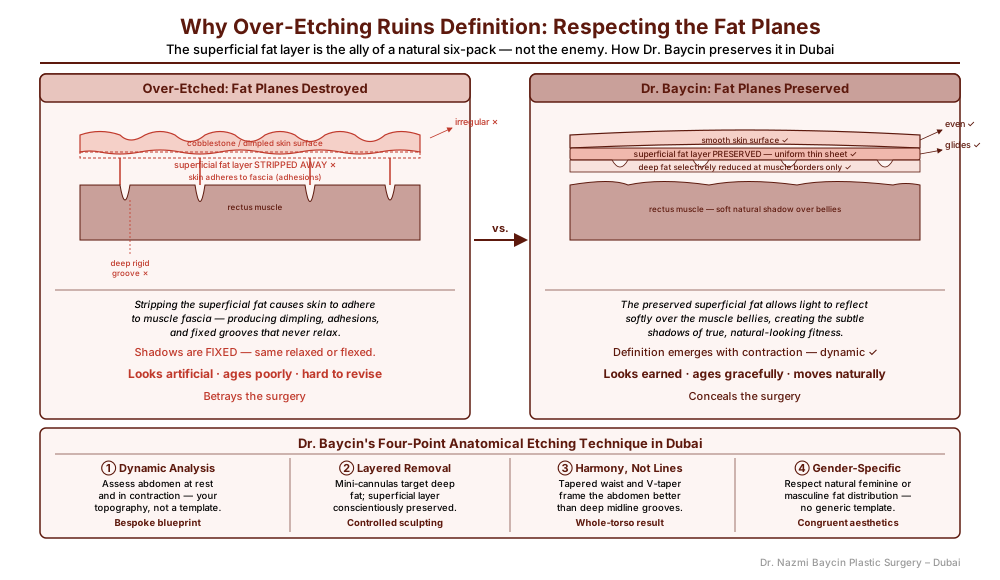
Natural definition preserves a uniform superficial fat layer — soft shadows, smooth skin gliding, gradual transitions — while over-etching strips it away, adhering skin to the muscle fascia and leaving fixed grooves, dimpling, and a cobblestone surface — by Dr. Nazmi Baycin, Dubai.
The hallmarks of over-etching
The results of over-etching are unmistakable to a trained eye. The shadows are fixed — the grooves look the same whether you are relaxed or flexing, unlike a natural abdomen, where definition emerges only with contraction. Aggressive, uneven fat removal leaves visible dents and depressions, most obvious in raking light or when the skin is pinched.
Gender-specific aesthetics are lost when the same masculine six-pack template is imposed on a female patient, ignoring the smoother fat distribution of the feminine abdomen. And the result ages badly: as skin loses elasticity over the years, areas of over-resection grow more pronounced — which is why skin quality largely determines six-pack longevity. Each of these arises because the technique has violated the anatomical integrity of the abdominal wall. The table below makes the contrast plain.
| Feature | Natural Definition (Dr. Baycin) | Over-Etched Abdomen |
|---|---|---|
| Superficial fat layer | Preserved as uniform thin sheet | Stripped away |
| Shadows | Emerge with contraction, soften at rest | Fixed — same relaxed or flexed |
| Skin surface | Smooth, glides over muscle | Dimpled, cobblestone, adhered |
| Transitions | Soft, gradual slopes | Harsh, carved channels |
| Movement | Natural skin gliding | Static, stiff appearance |
| Gender aesthetics | Respects natural distribution | Masculinized template on all |
| Long-term aging | Ages gracefully | Worsens as skin loses elasticity |
| Revision need | None | Often required, hard to correct |
| Overall impression | Looks earned | Betrays the surgery |
For those weighing this procedure, understanding the distinction is crucial. My dedicated page on high-definition abdominal etching in Dubai sets out the anatomical approach in full.
My technique: strategic enhancement through anatomical respect
My method is one of precision and conservation, planned from the patient’s own muscular topography rather than a template, and set out in full on the sibling page above. The surgical principles behind it are described in a 2019 series of 50 consecutive abdominal etching patients.
And I aim for harmony, not just lines. Often that means prioritizing a tapered waistline and a strong V-taper through flank and oblique contouring, which frames the abdomen far more effectively than deep midline grooves ever could. It is the same integrated thinking I apply to every form of precise liposuction surgery in Dubai.
Why correcting an over-etched abdomen is so difficult
Once the natural fat planes are disrupted and scar tissue forms, correction becomes a formidable challenge. Revision may require fat grafting to rebuild lost volume, or scar release to free adhered skin — with no guarantee of restoring the original smooth canvas. Grafted fat does not always survive evenly. Released adhesions can reform. This is precisely why I believe the best treatment for over-etching is preventing it, through restrained and expert planning from the very start.
Definition that looks earned, not engineered
The most compelling athletic physique suggests strength through harmony and movement. It does not shout of surgery through rigid, etched lines. My commitment is to deliver definition that complements your body’s natural language — a result that looks earned. Because every abdomen is individual, its plan and cost are discussed transparently at consultation. This philosophy of restraint runs through the whole of my cosmetic surgery practice here in Dubai.
FAQs about abdominal over-etching in Dubai
-
What does over-etched abdominal definition look like?
Over-etching has four recognizable hallmarks: fixed shadows that look identical whether the person is relaxed or flexing (natural definition changes with muscle contraction); visible irregularities, dents, and a cobblestone or dimpled skin surface; a masculinized appearance in female patients where the natural softer fat distribution has been ignored; and a result that ages poorly, becoming more pronounced and artificial as the skin loses elasticity. The underlying cause is removal of the superficial fat layer that a natural-looking abdomen requires.
-
Can over-etched abs be fixed?
Correction is possible but difficult, and rarely fully restores the original smooth contour. Revision may involve fat grafting to rebuild lost volume in over-resected areas, and scar release to free skin that has adhered to the muscle fascia. Neither offers a guarantee — grafted fat does not always survive evenly, and released adhesions can reform. This unpredictability is precisely why I emphasize that the only reliable approach to over-etching is preventing it through restrained surgical planning from the outset.
-
Why is the superficial fat layer so important in six-pack surgery?
The thin, uniform superficial fat layer just beneath the skin performs three essential functions: it creates soft, gradual transitions between muscle peaks and valleys (preventing a harsh carved look); it supports healthy skin draping through its fascial network (preventing the skin from adhering to muscle and dimpling); and it allows the skin to glide naturally during movement (preventing a stiff, static appearance). Preserving this layer while reducing only the deeper fat is the anatomical secret to definition that looks natural.
-
Is abdominal etching permanent?
The fat cells removed during abdominal etching do not return, so the structural definition is long-lasting. However, the result is not immune to change: significant weight gain can add volume to the remaining fat cells and obscure the definition, and the natural loss of skin elasticity with age affects the contour over time. Maintaining the result requires maintaining a stable weight and fitness level. A natural, restrained etching result ages far more gracefully than an over-etched one.
-
What is the difference between abdominal etching and liposuction?
Standard liposuction removes fat to reduce volume and slim a body area. Abdominal etching is a specialized, far more precise application of liposuction technique that selectively sculpts fat around the abdominal muscles to reveal and enhance their definition — working in specific layers and following the individual’s muscular topography. Etching demands significantly more skill and anatomical precision than standard liposuction, because it works close to the skin surface where the margin for error is small and over-resection causes lasting problems.
-
Can women have abdominal etching?
Yes, but the approach must be fundamentally different from the male procedure. The feminine abdomen has a naturally smoother, softer fat distribution, and applying an aggressive masculine “six-pack” template produces a masculinized, incongruous result. I tailor etching for female patients to enhance natural athletic tone — a subtle, soft definition and an elegant tapered waistline — rather than carving deep muscular grooves. Respecting gender-specific aesthetics is one of the four pillars of my approach.
-
How do I choose a surgeon for natural-looking six-pack surgery in Dubai?
Look for a surgeon who talks about restraint and fat preservation, not just fat removal — and who discusses the superficial fat layer, dynamic muscle assessment, and whole-torso harmony rather than only the depth of the midline grooves. A surgeon who promises the most dramatic possible definition may be the one most likely to over-etch. Ask to understand their approach to preserving natural fat planes. My entire methodology in Dubai is built on the principle that strategic preservation, not aggressive removal, produces the natural result.


GET APPOINTMENT
Get ready to look and feel best… You deserve…
