

For a highly active woman, breast reduction is not merely a cosmetic procedure — it is a functional restoration. I consult with runners, CrossFit athletes, swimmers, and gymnasts in Dubai who have hit a physical ceiling not through any lack of will, but because of the biomechanical burden of excessively large breasts. That burden shows up as chronic pain, restricted motion, and compensatory movement patterns that hinder performance and raise injury risk. My philosophy for these patients is distinct: the goal is a breast that is proportionally balanced and engineered to withstand and enhance an athletic life, with every decision — from pedicle design to scar placement — made with the dynamic athlete in mind.
Key takeaways: reduction as performance restoration
- For athletes, breast reduction is a functional restoration, not just a cosmetic change.
- Large breasts impose a mechanical load that can suppress performance and raise injury risk.
- The plan is athlete-specific: dynamic assessment, durable pedicle, tension-free scar, motion-aware nipple position.
- The superomedial pedicle resists descent under repetitive impact.
- The aim is the optimal functional size, not the smallest possible breast.
- Recovery is a phased return to sport, not passive rest.
The result I aim for eliminates physical limitation while preserving a strong, natural athletic form. Getting there depends on planning the operation around how the body actually moves.
Why reduction is a performance procedure for athletes
The highly active women I treat in Dubai place significant mechanical load on the chest and shoulder girdle, and large breasts multiply that load with every stride, jump, and lift. Even modest reductions in volume can change how the whole upper body moves.
I counsel my athletic patients that this surgery often delivers transformative functional gains. Runners report a more efficient stride with less upper-body fatigue. Swimmers and weightlifters describe cleaner, unrestricted overhead range of motion. The improvement comes from correcting fundamental biomechanics: reducing the forward pull on the thoracic spine allows proper scapular positioning and better engagement of the core stabilizers.
This is not only about comfort; it is about releasing physical potential that has been mechanically suppressed. The objective side of that benefit is documented, too — a 2018 study of the objective effects of breast reduction on physical fitness found measurable functional gains after reduction mammaplasty, consistent with what active patients report. The way reduced breast weight changes spinal loading is something I explore in my article on how reducing breast weight changes spinal alignment.
The athlete-specific surgical algorithm
Operating on an athlete in Dubai requires a different calculus than a standard reduction, and my planning follows a deliberate, stepwise process.
It begins with a dynamic assessment. I evaluate the patient not just at rest but in motion, discussing the specific demands of her sport — impact forces, ranges of motion, and equipment pressure. This shapes the optimal reduction amount, the crucial balance between radical symptom relief and preserving enough volume for a natural contour that will not look disproportionately flat on a muscular frame.
Next comes pedicle selection for durability. The pedicle is the tissue stalk that preserves nipple sensation and blood supply, and for most athletes I prefer the superomedial pedicle. Its superior-based blood flow is robust, and it provides exceptional long-term support against descent, which is critical for withstanding the repetitive impact and stretch of high-level training. It also helps prevent the gradual sagging known as bottoming-out. Because pedicle choice also governs nerve preservation, I plan it deliberately, a subject I cover in my article on how pedicle choice affects nipple sensation.
Scar strategy and tension management come next, because athletic skin is under constant stretch. To help scars heal as fine lines, I use a multi-layered, tension-free closure in which the deep layers absorb the internal stresses so the skin edges meet without tension. Where possible I use the short-scar vertical pattern, whose vertical component aligns well with athletic movement and tends to heal discreetly.
Finally, nipple positioning is planned for an active life. I place the nipple-areola complex knowing the chest wall expands and rotates during exercise, so its position must look natural not only standing at ease but through the dynamic phases of the patient’s sport.
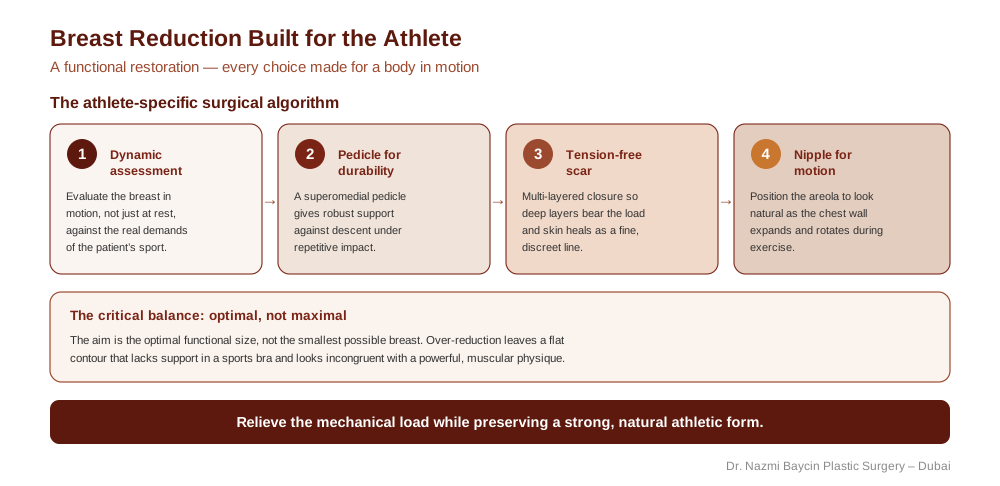
The athlete-specific surgical algorithm and the principle of optimal rather than maximal reduction, by Dr. Nazmi Baycin, Dubai.
The critical balance: function without over-reduction
One of the most common requests from the athletes I see in Dubai is to be made as small as possible. My role is to guide them toward the optimal functional size instead. Over-reduction can leave a flattened contour that lacks support in a sports bra and looks incongruent with a powerful, muscular physique.
The aim is a result that removes physical limitation while celebrating the patient’s athletic form. The precise engineering behind that balance is the subject of my broader work on breast reduction in Dubai, where technique is matched to each anatomy. Because much of the benefit here is about relieving load rather than appearance alone, it connects closely to my article on the biomechanics of symptom relief in breast reduction.
Recovery reimagined for the athlete
I frame recovery not as passive rest but as active, phased rehabilitation, with a clear timeline that protects the internal repairs while preventing deconditioning. The table below sets out the typical phases.
| Phase | Focus | What Is Allowed |
|---|---|---|
| Weeks 1–2 | Protect the repair | Strict rest, with walking for circulation |
| Weeks 3–4 | Reintroduce light activity | Lower-body and light cardio, such as a stationary bike |
| Weeks 5–6 | Rebuild lower-body strength | Graduated lower-body strength work, avoiding chest pressure or heavy straining |
| Weeks 7–8+ | Return upper body carefully | Modified upper-body work; full impact and contact sport usually after three months |
This staged approach protects the delicate internal reshaping while keeping the athlete moving, so the return to sport is stronger and safer rather than rushed. Whether the shape lasts under training load also depends on tissue behavior over time, which is why some results relax — a topic I examine in my article on why breast reduction results relapse in some patients.
Redefining your physical potential
Breast reduction for the athletic woman is a profound intervention that goes well beyond aesthetics. It recalibrates the body’s mechanics, relieves chronic pain, and removes a tangible barrier to performance.
My approach is built on the understanding that your body is an instrument of achievement, combining reconstructive principles with an athlete-centered philosophy to provide not just relief but a foundation for stronger, freer movement. If your athletic pursuits are held back by the weight you carry on your chest, that plan is best mapped at a consultation with a full dynamic assessment — the standard you should expect from a serious provider of plastic surgery in Dubai.
FAQs about breast reduction for athletes in Dubai
-
Can breast reduction actually improve my athletic performance?
For many active women, yes. Large breasts add mechanical load to the chest and shoulder girdle, which can shorten stride, increase upper-body fatigue, restrict overhead motion, and encourage compensatory postures that raise injury risk. Reducing that load lets the thoracic spine, shoulder blades, and core work more efficiently, so movement often becomes cleaner and less tiring. Objective studies of physical fitness after breast reduction have found measurable functional gains, which matches what my athletic patients report: a more efficient stride, freer overhead range, and less fatigue. The goal is to remove a mechanical barrier that has been quietly limiting performance.
-
How is breast reduction for an athlete different from a standard one?
The principles are the same, but the planning is tuned for a body in motion. I assess you dynamically, not just at rest, and factor in the impact forces, ranges of motion, and equipment pressure of your specific sport. I favor a durable pedicle design that resists descent under repetitive impact, use a tension-free closure because athletic skin is under constant stretch, and position the nipple so it looks natural through the movements of your sport, not only standing still. I also plan the reduction amount around function rather than simply making the breasts as small as possible, to preserve support and a natural contour.
-
How small should I go?
Toward the optimal functional size rather than the smallest possible. It is a common request to be made as small as possible, but over-reduction can leave a flat contour that actually lacks support in a sports bra and looks out of proportion on a muscular frame. My aim is to remove enough volume to relieve the mechanical load and symptoms while preserving a natural, athletic shape. The right amount depends on your sport, your build, your symptoms, and your goals, which we map together at consultation so the result both performs well and looks balanced with your physique.
-
Which technique do you use for athletes?
For most athletes I prefer a superomedial pedicle, often with a short-scar vertical pattern where the anatomy allows. The superomedial pedicle has a robust blood supply and gives strong long-term support against descent, which matters under the repetitive impact and stretch of training. The short-scar pattern avoids the long horizontal fold scar and its vertical orientation aligns well with athletic movement. That said, the technique is always matched to your specific anatomy and the size of reduction needed, so the final plan is individualized rather than a single fixed method applied to everyone.
-
When can I train again after surgery?
Recovery is phased. The first two weeks are strict rest with walking for circulation. Around weeks three to four, light lower-body and cardio work such as a stationary bike is introduced. By weeks five to six, graduated lower-body strength training resumes while avoiding direct chest pressure or heavy straining. From around weeks seven to eight, modified upper-body work begins, with full clearance for impact and contact sport typically after the three-month mark. This staged return protects the internal repairs while preventing deconditioning, so you come back stronger and safer rather than risking the result by rushing.
-
Will the scars be a problem for training?
Scars are planned with athletic skin in mind. Because active skin is under constant stretch, I use a multi-layered, tension-free closure so the deep tissues bear the internal load and the skin edges heal without tension, which encourages fine, discreet scars. Where possible I use the short-scar vertical pattern, which limits the length of scarring. Once healed, the scars sit within the natural contours of the breast and are not a barrier to training. I also provide a structured scar-management plan and stage your return to upper-body work so healing is not disrupted while the scars mature.
-
Will I lose nipple sensation or the ability to breastfeed?
The pedicle technique is designed to protect both as far as possible. By keeping the nipple-areola complex attached to a well-vascularized stalk of tissue that carries its nerve and blood supply, sensation is preserved in most cases, though some temporary change can occur and settle over the following months. Breastfeeding potential is often retained with pedicle techniques, but it can never be guaranteed for any individual. If future breastfeeding or sensation is a particular priority for you, tell me at consultation, because it can influence the technique and how the pedicle is designed, and I will be candid about what is realistic for your anatomy.


GET APPOINTMENT
Get ready to look and feel best… You deserve…
