

Key takeaways: reduction as a biomechanical correction
- Heavy breasts act as a constant anterior load that distorts spinal alignment.
- The body compensates with thoracic kyphosis, forward head posture, and rolled shoulders.
- Removing the weight eliminates the mechanical cause — the physics change immediately.
- Patients often feel an instinctive ability to stand taller from the first days after surgery.
- Muscles then rebalance over months; guided physiotherapy can consolidate the gains.
- The reported relief — standing taller, less neck ache, fuller breathing — is physiological, not placebo.
The biomechanical chain reaction: from breasts to spine
The human body is a master of compensation. When a heavy, forward weight is added to the chest, the entire upper skeleton must adapt to maintain balance and keep the eyes level. The effect is measurable. A 2012 São Paulo study comparing postural control in women with breast hypertrophy against women without it used a force platform to assess balance, and found postural control to be poorer in the hypertrophy group. It measures balance rather than spinal angles, and it compares two groups rather than following women through surgery — but it establishes the premise this article rests on: the weight is doing something measurable to the way the body holds itself. The adaptation that follows is predictable.
In the thoracic spine, the upper back increases its natural curvature (kyphosis) to counterbalance the pull; over time this rounded posture becomes structural, producing stiffness and a “hunched” sensation. In the cervical spine, the head juts forward to keep the eyes level, shifting the center of gravity further and dramatically increasing the effective load on the neck muscles — the source of chronic tension headaches, neck pain, and restricted mobility.
And in the shoulder girdle, the shoulders roll forward and inward to help support the bra straps bearing the load, compromising the position of the shoulder blades, weakening the mid-back muscles, and overworking the upper trapezius — the characteristic burning pain between the shoulder blades. This distorted posture is not a habit; it is a physical inevitability under the load, which is why generic postural advice so often fails these patients: the primary driver remains.
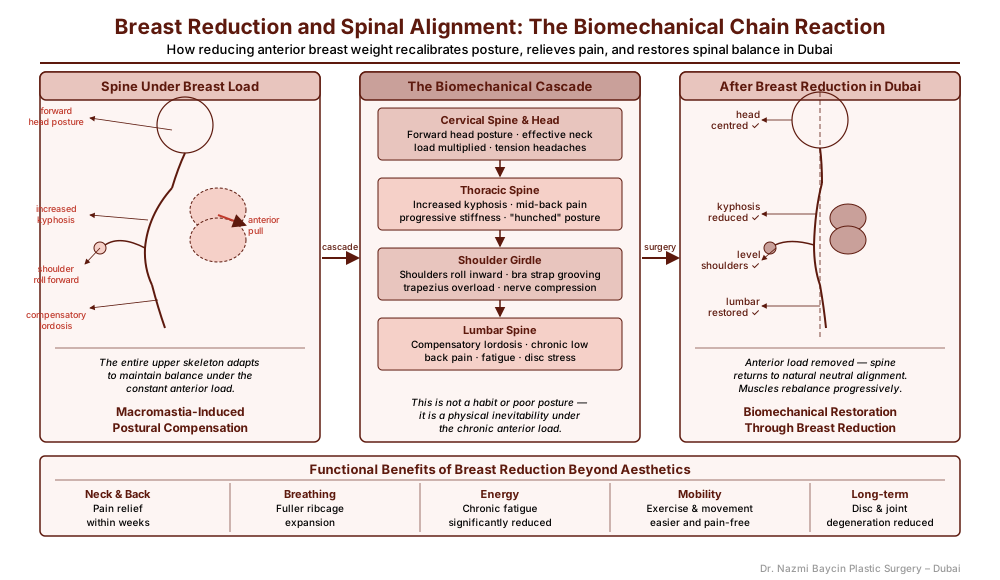
How breast weight distorts spinal alignment — anterior load driving thoracic kyphosis, forward head posture, and rolled shoulders — and how removing that load allows the skeleton to re-center into a balanced, upright posture — by Dr. Nazmi Baycin, Dubai.
My surgical-postural assessment: a diagnostic approach
During consultation, my evaluation extends well beyond breast measurements. What I look for on the postural side is the degree of thoracic rounding, where the shoulders sit, how the cervical spine is holding the head, and the depth of bra strap grooving — which tells me how long the load has been carried, and whether soft tissue and nerve are being compressed.
The rest of the diagnostic protocol — the palpatory mapping of muscular stress, the dynamic range-of-motion testing, and the manual support test that predicts who will actually get relief — belongs with the symptom side of this work, and I set it out in my companion article on the diagnostic protocol behind functional breast reduction. What matters on this page is that posture is assessed before anything is planned, because the amount of tissue to remove is decided by how much load has to come off to re-center you — not by a cup size.
The instantaneous shift: how surgery alters load dynamics
The moment the excessive weight is removed in surgery, the anterior pull on the spine is eliminated. While swelling is still present, the fundamental physics change immediately. Patients often notice this upon standing for the first time after the operation — a sense of lightness and an unconscious ability to stand more upright without effort. This is not muscle strengthening; it is the removal of the opposing force that was pulling them forward.
Long-term restoration: muscles relearning balance
Surgery corrects the mechanical disadvantage, but the muscles — having been lengthened or shortened in adaptation — need time to rebalance. In the months following surgery, many patients naturally and gradually develop improved posture as their muscles work from a new, balanced foundation.
For some, I recommend guided physiotherapy to actively strengthen the weakened mid-back retractors and stretch the chronically tight chest muscles, solidifying the postural gains. This combination of surgical intervention and musculoskeletal re-education produces a more complete and durable result than surgery alone.
Conservative management versus surgical correction
The table below contrasts non-surgical management with breast reduction, making clear why removing the load is the definitive step for true macromastia.
| Feature | Conservative Management | Breast Reduction Surgery in Dubai |
|---|---|---|
| Addresses root mechanical cause | ✗ | ✓ |
| Relieves anterior spinal load | ✗ | ✓ (immediately) |
| Neck and back pain relief | Temporary / partial | Significant and lasting |
| Postural correction | Limited (load persists) | Progressive and structural |
| Bra strap grooving relief | Partial | ✓ (load removed) |
| Breathing improvement | ✗ | ✓ |
| Requires ongoing maintenance | Ongoing | No (one-time procedure) |
| Suitable for macromastia | Management only | Definitive treatment |
Beyond pain relief: the expansive benefits of postural correction
The benefits of restoring alignment are profound. A less rounded thoracic spine allows fuller expansion of the rib cage, improving breathing capacity. The body expends immense energy simply holding itself up against the weight, so relieving that burden reduces chronic fatigue and increases endurance. With a re-centered center of gravity, movement often becomes easier and more fluid. And reducing chronic strain on the cervical and thoracic spine can help mitigate future degenerative joint and disc issues.
For the pain-relief side of this equation — how unloading the spine resolves back and neck pain specifically, and what the published evidence does and does not show — see my companion article on the biomechanics of back and neck pain relief after breast reduction. Together these gains explain why so many patients describe the change as functional rather than cosmetic. For the surgical detail, candidacy, and techniques behind this, visit my overview of breast reduction surgery in Dubai.
A new foundation for an active life
Ultimately, a well-performed breast reduction does more than change your silhouette; it changes your relationship with your body. It removes a source of chronic pain and limitation, allowing you to stand tall, move freely, and engage in an active life. Because every case is individual, the plan — including cost — is discussed transparently at consultation, where I evaluate your anatomy, connect your symptoms to their mechanical origin, and design a reduction calibrated to relieve the load without creating new imbalance. This functional, restorative philosophy runs through all of my plastic surgery work in Dubai.
FAQs about improvement of body posture after breast reduction in Dubai
-
Can breast reduction surgery really improve posture?
Yes — and the improvement begins immediately. Heavy breasts create a chronic anterior load on the upper skeleton, forcing the thoracic spine into increased kyphosis, the head into forward posture, and the shoulder girdle into protraction. Removing that anterior load eliminates the mechanical cause of these adaptations, and most patients notice an instinctive ability to stand more upright from the first days post-operatively. Posture then keeps improving over the following months as the muscles rebalance around the new foundation. The symptom side of the same mechanism — how quickly neck and back pain resolves, and what the published evidence shows — I cover separately in my article on how unloading the spine relieves back and neck pain.
-
Why does postural training alone not correct the posture caused by large breasts?
Postural training and physiotherapy address the muscular adaptations that result from chronic anterior load — but they cannot remove the load itself. As long as the breast weight remains, the compensation is mechanically obligatory: the thoracic spine must round and the head must come forward to keep the eyes level. Exercises can hold a corrected position briefly, but they cannot produce lasting structural change while the primary driver persists. Breast reduction removes the cause; physiotherapy then re-educates the muscles from their new, balanced foundation.
-
Will my posture still improve if my back pain has other causes?
Yes, and the two are worth separating. The postural correction follows from the physics: once the anterior load is gone, the skeleton re-centers regardless of what else is happening in your spine. Pain is less straightforward. Where it originates directly from postural compensation under breast weight — the dominant cause in true macromastia — it typically resolves substantially. Where there is a secondary component such as pre-existing disc disease or arthritis, that portion may persist, though it often eases as alignment improves. I discuss each patient’s specific symptom pattern, and what to expect from it, at consultation.
-
Will I need physiotherapy after breast reduction surgery?
Physiotherapy is not mandatory, but it is strongly recommended for patients whose postural muscles have adapted significantly over years of compensation. Surgery removes the mechanical cause; physiotherapy then actively strengthens the weakened mid-back retractors and deep cervical flexors, and stretches the shortened anterior chest and upper trapezius muscles. The combination produces more complete and durable postural restoration than surgery alone. I discuss this as part of the recovery plan at consultation.
-
How long after breast reduction surgery will my posture improve?
The immediate relief from spinal load begins at surgery. An instinctive ability to stand more upright is typically noticeable within the first week post-operatively. Progressive muscular rebalancing over the following months continues to improve posture as the muscles adapt to their new mechanical environment. Most patients describe their posture as substantially improved at the three to six month mark, with continued refinement through twelve months.
-
What postural signs suggest breast weight is the cause?
Bra strap grooving with tenderness or nerve-related symptoms; shoulders that sit rolled forward and resist correction; a thoracic rounding that has developed progressively over years rather than appearing suddenly; tension headaches that worsen through the day as the load is carried; and a burning ache between the shoulder blades. These are the findings I look for during the postural assessment, and they point toward a mechanical cause rather than a primary spinal one. Whether that translates into functional candidacy for surgery is assessed against the criteria set out in my companion article on breast reduction for symptom relief.


GET APPOINTMENT
Get ready to look and feel best… You deserve…
