

Key takeaways: natural, not overdone
- An overdone look comes from tightening skin instead of repositioning deep structure.
- The real driver of aging is descent and deflation of the deep layers, not loose skin alone.
- My technique repositions the SMAS, so the skin redrapes without tension.
- Fat is a resource to preserve and reposition, not something to strip away.
- The whole face is treated as a unit — a lifted lower face needs balanced brow and eyes.
- A deep-layer lift is more durable: a rejuvenated look that can last a decade or more.
The pursuit of natural facial rejuvenation
Too often, I see patients seeking revision of a facelift that left them looking tight, pulled, or unnatural. These outcomes typically stem from outdated methods that rely solely on tightening skin, which fails to address the core issue: the descent and deflation of the deeper structural layers of the face. The specific technical mistakes that produce that result — and how each one is avoided in the operating room — I set out separately in my article on what causes an unnatural facelift. What concerns me here is the principle beneath them all: a facelift should restore structure, not apply force. That includes treating the face as a whole, since a lifted lower face paired with an aging upper face looks discordant — a relationship I explore in the neck-chin-jawline continuum.
My surgical philosophy: anatomy, not tension
My entire technique is built on one principle: restore the anatomy, and the skin will follow. I do not believe in forceful pulling. Instead, I meticulously reposition the deep SMAS layer — the fibrous support network of the face — and secure it to its youthful origin, re-establishing the natural contours of the cheeks and jawline. The skin then gently redrapes without excessive tension. This is why my patients avoid the windblown look.
SMAS-level work is the mainstream of modern facelift surgery. A 2023 systematic review of 27 studies covering 6,086 patients across six SMAS techniques found more than 85% of patients satisfied with their outcome, with complication rates ranging from 0.05% for the composite SMAS technique to 5.75% for the SMAS flap. What that review does not do — and I would rather say so than imply otherwise — is crown a winner. Its own conclusion is that the optimal approach remains unclear, because several of the included studies did not report all their complications — and the lowest figure in that range, the 0.05% for the composite technique, rests on a single study of 128 patients. The deep-plane approach requires more surgical time and precision, and it is the one that gives the most natural result in my hands; the literature supports the family of SMAS techniques rather than a ranking within it.
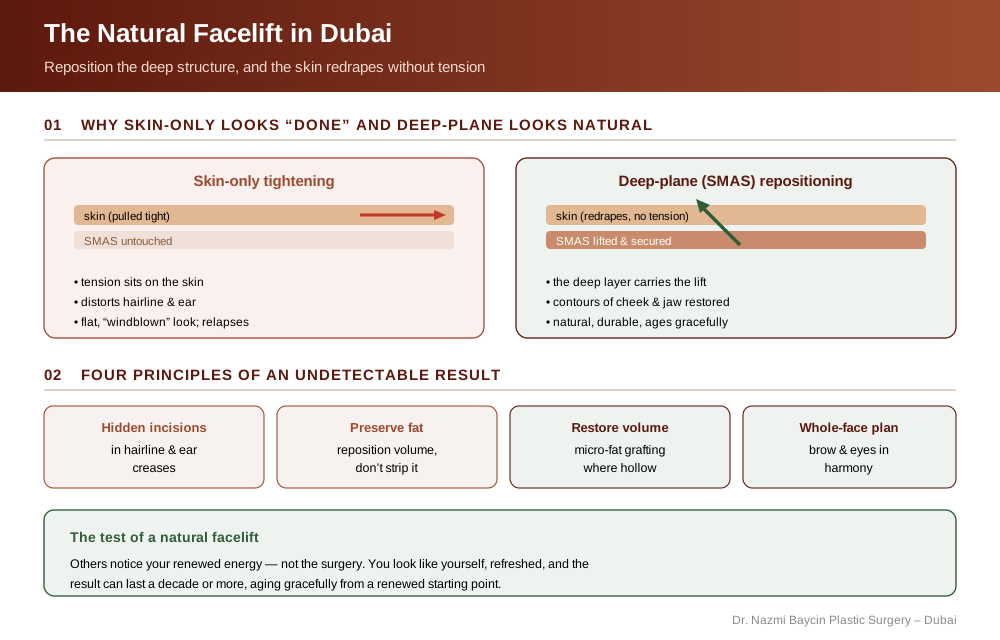
Why skin-only tightening looks operated while deep-plane SMAS repositioning looks natural — the deep layer carries the lift, so the skin redrapes without tension — by Dr. Nazmi Baycin, Dubai.
Skin-only versus deep-plane: why the method shows on the face
The difference between a natural and an overdone facelift is decided beneath the skin. The table below contrasts the two approaches.
| Feature | Deep-plane / SMAS repositioning (my approach) | Skin-only tightening |
|---|---|---|
| What is lifted | The deep structural layer (SMAS) | The skin surface alone |
| Where tension sits | On the deep layer; skin is tension-free | On the skin itself |
| Effect on landmarks | Hairline and ear stay natural | Risk of distorted hairline, pulled ear |
| Contour | Restored cheek and jawline volume | Flattened, windblown appearance |
| Fat | Preserved and repositioned | Often removed, leaving hollowing |
| Longevity | Durable; a decade or more | Tends to relapse sooner |
My techniques for an undetectable outcome
To keep the work undetectable, I follow a set of specific protocols. Incisions are planned with precision and hidden within the hairline and the natural curves of the ear, which is essential for preventing visible scars. Facial fat is treated as a precious component of youth — preserved and carefully repositioned to refill areas that have hollowed with age rather than removed. For some patients I use micro-fat grafting to add volume with accuracy. And each step is guided by a three-dimensional understanding of the face, restoring balanced, proportionate contours that simply look like you, refreshed. For the full surgical procedure and how the plan is built around your anatomy, visit facelift surgery in Dubai.
Personalized planning: no one-size-fits-all
I never use a one-size-fits-all plan. Your bone structure, tissue quality, and aging pattern are unique, so my consultation involves a detailed analysis of the precise vectors of lift your face needs and the exact volume restoration required for harmony. This level of detail prevents generic results and lets me design a procedure tailored exclusively to you — the first and most critical step toward a natural outcome.
Achieving harmony with combined procedures
For a cohesive result I assess the entire face, because a lifted lower face can look mismatched if the eyes and brow still show significant aging. In my practice I frequently combine a facelift with complementary procedures under one artistic vision. A brow lift in Dubai can elevate a heavy brow to open up the gaze, while eyelid surgery in Dubai can remove excess eyelid skin and puffiness. Performed together, these ensure every element of your rejuvenation is synchronized — the authentic, fully refreshed outcome my patients seek.
Recovery and longevity
Because I avoid placing tension on the skin, my technique typically leads to a more comfortable recovery. Most patients resume social activities in about two to three weeks as swelling subsides progressively, guided by a clear, personalized recovery protocol. The true result then evolves over several months as the tissues settle into their new position. While no procedure stops aging, a deep-layer technique effectively sets the clock back, and in my practice patients can expect to enjoy a rejuvenated appearance for a decade or more, aging gracefully from a renewed starting point — a figure drawn from clinical experience rather than from a published head-to-head comparison, since the systematic evidence on SMAS techniques reports satisfaction and complications rather than durability. The specifics of a personalized plan, including cost, are discussed transparently at consultation. This philosophy of measured, anatomical artistry runs through all of my facial plastic surgery work in Dubai.
FAQs about the natural facelift in Dubai
-
What actually causes the overdone or windblown facelift look?
It comes almost entirely from tightening the skin instead of repositioning the deeper structural layer. When a facelift pulls the skin to create the lift, the tension shows: the hairline and ear can be distorted, expressive contours are flattened, and the face takes on a tight, swept-back appearance. Because skin has elastic memory, that tension also tends to relax over time, so the result both looks unnatural and relapses. A deep-plane approach lifts the SMAS layer beneath the skin, so the skin itself is redraped without tension — which is what keeps the result natural.
-
What is the SMAS, and why does repositioning it matter?
The SMAS (superficial musculoaponeurotic system) is the fibrous support layer beneath the skin that connects the facial muscles to the overlying tissue. Facial aging is largely the descent and deflation of this layer and its associated fat, not simply loose skin. By releasing and repositioning the SMAS to its more youthful position and securing it there, the underlying structure carries the lift — restoring cheek and jawline contour. The skin then settles over this restored foundation naturally. Working at this deeper level is more technically demanding but is what produces a result that looks structural rather than superficial.
-
Will a natural facelift still make a meaningful difference, or is it too subtle?
Natural does not mean subtle or underwhelming — it means undetectable as surgery. A deep-plane facelift produces a significant, visible rejuvenation of the cheeks, jawline, and midface; what it avoids is the tell-tale signs of having had work done. The distinction is that people notice you look refreshed, rested, and more like a younger version of yourself, without being able to identify why. The change can be substantial while still reading as entirely your own face.
-
Why do you preserve facial fat instead of removing it?
Because volume loss is one of the central features of facial aging. Older techniques often removed fat in pursuit of a tighter look, but this can leave the face hollow, gaunt, and paradoxically older-looking. Facial fat is a resource: I preserve it and reposition it to refill areas that have deflated with age, and where more volume is needed I use precise micro-fat grafting. Restoring volume in the right places is as important as lifting — a full, softly contoured face reads as youthful, while a tight, hollow one reads as operated.
-
Why might a facelift be combined with brow or eyelid surgery?
Because the face ages as a whole, and rejuvenating only one zone can create imbalance. If the lower face is lifted but the brow remains heavy and the eyelids show excess skin or puffiness, the result can look mismatched — a youthful lower face beneath tired-looking eyes. Assessing the entire face allows the rejuvenation to be harmonized: a brow lift can open the gaze, and eyelid surgery can refresh the eyes, so that every region is in proportion. Not every patient needs these, but when they do, combining them under one plan produces a more cohesive, natural outcome.
-
How long does a natural, deep-plane facelift last?
Because the lift is held by the repositioned deep layer rather than by skin under tension, the result is durable, and in my experience most patients enjoy their rejuvenated appearance for a decade or more. That figure comes from clinical practice rather than from a head-to-head trial: the published systematic review of SMAS techniques compares complication rates and satisfaction between variants and concludes that the optimal approach is still unclear, and it does not measure how long results last. No surgery halts the aging process itself, so the face continues to age gently afterward, but from a visibly younger starting point.


GET APPOINTMENT
Get ready to look and feel best… You deserve…
