

Key takeaways: the high-SMAS technique
- The face ages in different directions in different regions — one uniform pull cannot restore a three-dimensional face.
- The high-SMAS plane is dissected higher, above the zygomatic arch, to reach and reposition the midface fat pads that create a youthful cheek.
- Differential vector resuspension lifts each region along its own path: midface vertical, lower face oblique, neck posterior.
- This repositions fallen volume, not just loose skin — the difference between a superficial and a restorative result.
- It avoids the classic single-vector faults: the windswept lateral sweep, flattened midface, and distorted mouth.
- Repositioning the SMAS produces measurable improvement in cheek, jawline and neck definition at one year on masked observer scoring.
The high-SMAS plane: the deeper layer of youthful anatomy
To understand this technique, one must understand the SMAS (Superficial Musculoaponeurotic System) — a fibrous muscular layer beneath your skin that envelops the muscles of expression and the fat compartments. It is the structural layer of your face. As we age, the SMAS and the fat it supports lose elasticity and descend. Traditional SMAS techniques often involve a simple tightening or folding of this layer in a single, strong direction (usually lateral).
The high-SMAS technique I use involves a more superior (higher) dissection, above the zygomatic arch and into the mid-cheek. This allows me to access and mobilize the key midface fat pads — the malar and submalar fat — that are crucial for a youthful, full cheek contour. By elevating the SMAS at this higher level, I am not just pulling on loose skin; I am directly repositioning the volume that has fallen. This is the core difference between a superficial result and a truly restorative one. Working in this deeper plane also means the skin itself is closed under far less tension. When the structural layer carries the load, the overlying skin is simply redraped rather than stretched, which protects against widened scars and the tight, shiny quality that betrays an over-pulled facelift. The tension lives where it belongs — in the SMAS, not the surface.
The science of vectors: differential resuspension explained
Differential vector resuspension is the technical heart of naturalness. Imagine the descended tissues of your face are attached to gentle, precise strings; my surgical role is to re-tie each set of strings in the exact direction they originally grew. Rather than one uniform pull, each region is lifted along its own vector.
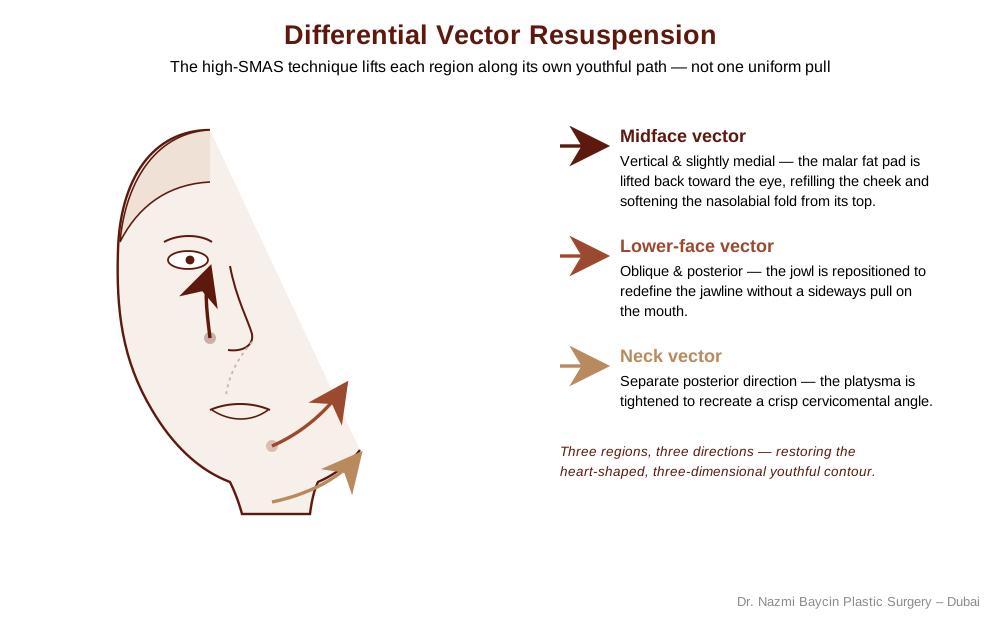
Differential vector resuspension in the high-SMAS technique: three facial regions, three distinct lift directions — by Dr. Nazmi Baycin, Dubai.
| Region | Direction of lift | What it restores |
|---|---|---|
| Midface (malar fat pad) | Vertical & slightly medial — up toward the corner of the eye | Refills the flattened cheek, softens the nasolabial fold from its top, restores the apple of the cheek |
| Lower face (jawline & jowl) | Oblique, posterior | Redefines the jawline and eliminates the jowl without a tight sideways pull on the mouth |
| Neck (platysma) | Separate posterior vector | Recreates a crisp cervicomental angle |
This multi-vector approach is what recreates a heart-shaped, three-dimensional facial contour. It is why my patients look refreshed rather than operated on.
What goes wrong without differential vectors
A single strong sideways pull produces a recognizable set of faults: a flattened, windswept cheek, a midface left descended beneath tightened skin, and a mouth distorted at rest. I catalogue those failure modes and how each one is avoided in my article on what causes an unnatural facelift. The differential-vector approach is designed to avoid every one of them, because each region is lifted along its own path rather than swept in a single direction. The goal is always harmonious, not forceful, correction.
Who benefits most from the high-SMAS approach
The ideal candidate is someone whose aging is driven by genuine descent — a midface that has flattened, cheeks that have lost their apple, jowls forming along a once-clean jawline, and softening under the chin. These are structural changes, and they respond to structural repositioning rather than to skin tightening or filler alone. It is equally suited to patients who have watched friends emerge from surgery looking tightened and altered, and who want the opposite: to look like themselves, rested. Because the technique restores rather than distorts, it tends to appeal to those who value discretion. During consultation I map the specific vectors of each face, since no two patterns of descent are identical, and confirm that the deeper approach is the right one for your anatomy.
Evidence-based mastery: what the outcome data shows
The value of SMAS-based techniques is documented in the surgical literature, though it is worth being precise about what has actually been measured. A 2024 retrospective cohort of high-SMAS facelift patients, scored by three masked examiners on a validated photo-numerical scale compared photographs taken before surgery and one year afterwards. Post-operative scores improved significantly (p < 0.0001), with the clearest gains in cheek fullness, jawline definition and the cervical angle — the three regions the differential vectors are designed to address.
Two things that study does not show, and I would rather say so than let the citation carry more weight than it can. It measured masked observer scoring of photographs, not patient satisfaction. And its follow-up is one year, which is good evidence of early structural correction but not a demonstration of the multi-year durability often claimed for SMAS surgery; nor did it compare the high-SMAS plane against a traditional SMAS or skin-only lift, so it cannot establish that one is superior to the other. What it does support is the specific claim this article makes: that repositioning the deeper layer produces measurable, objectively scored improvement in exactly the areas that differential vectors target. To understand the full journey of a facial rejuvenation, I welcome you to explore my page on comprehensive facelift in Dubai.
The distinction: a surgeon as architect and artist
The high-SMAS facelift with differential vectors is not a procedure for every surgeon. It demands the hand of a surgeon who is equal parts architect — understanding the deep forces of facial aging — and artist, capable of visualizing and executing a harmonious, individualized result. It is a complex, multi-hour procedure that requires intricate knowledge of facial nerve anatomy and sophisticated suture techniques for secure, long-lasting fixation.
In my operating room, every suture placed in the SMAS is a calculated decision to restore balance. The result is a face that moves with you — a face that smiles, laughs, and expresses without constraint; a face that is unmistakably you, simply at a more vibrant point in time. Because this technique addresses the root cause of aging — the descent of deep structural layers — its value is measured in the naturalness of the outcome and the preservation of your unique expressions. For those who seek rejuvenation that honors their individual anatomy and expression, I welcome you to discover my philosophy as a leading cosmetic surgeon in Dubai.
FAQs about the high-SMAS facelift in Dubai
-
What is the SMAS, and why does it matter in a facelift?
The SMAS (Superficial Musculoaponeurotic System) is the fibrous muscular layer beneath the skin that supports the muscles of expression and the facial fat compartments — it is the structural layer of the face. As it ages, it loses elasticity and descends, taking volume with it. A facelift that repositions the SMAS corrects aging at this structural level, rather than just tightening the skin over tissue that has fallen, which is why it produces a more natural and durable result.
-
How is the high-SMAS technique different from a traditional SMAS facelift?
A traditional SMAS facelift usually tightens or folds the layer in a single lateral direction. The high-SMAS technique dissects at a higher level, above the zygomatic arch and into the mid-cheek, which gives access to the midface fat pads that create a youthful cheek. This means the fallen volume of the midface can be lifted directly, not just the skin — the key to correcting a flat midface and softening the nasolabial fold at its source.
-
What does differential vector resuspension mean?
It means lifting each region of the face in the specific direction it originally descended, rather than pulling the whole face one way. The midface is lifted vertically and slightly toward the eye, the jowl and jawline obliquely and posteriorly, and the neck along its own separate posterior vector. Because each area is restored along its own path, the face regains its three-dimensional, heart-shaped youthful contour instead of a flat, pulled appearance.
-
Will a high-SMAS facelift look pulled or unnatural?
No — avoiding that look is the entire point of the technique. The tell-tale windswept or pulled appearance comes from a single strong sideways pull that flattens the cheeks and distorts the mouth. By lifting each region along its natural vector and repositioning volume rather than stretching skin, the high-SMAS approach restores balance and preserves your natural expressions, so you look refreshed rather than operated on.
-
How long do the results of a high-SMAS facelift last?
Because the correction is anchored in the deep structural layer rather than the skin, the result is designed to hold better than a skin-only lift. The published evidence I rely on measured outcomes at one year, where masked examiners scored significant improvement in cheek fullness, jawline and neck definition; longer-term comparative data on SMAS versus skin-only techniques is thinner than the confident claims often made for it. Aging continues naturally, but the face ages from a restored baseline, and stable weight and good skin care help preserve the outcome.
-
Does the high-SMAS technique address the neck as well?
Yes. The neck ages in a different plane from the face, so it is addressed with its own posterior vector, often including tightening of the platysma muscle, to recreate a crisp, defined cervicomental angle. Treating the neck as a separate vector — rather than an afterthought of a facial pull — is part of what makes the overall result balanced and natural.
-
Is the high-SMAS facelift safe? What about facial nerve injury?
The technique involves dissection in a deeper plane, which is precisely why it demands intricate knowledge of facial nerve anatomy and is not a procedure for every surgeon. In experienced hands, it is performed safely with careful attention to the nerve branches, and secure suture fixation supports healing. Choosing a surgeon with specific expertise in SMAS-level facelift surgery is the most important safety factor.
-
Can the high-SMAS facelift correct a previous facelift?
Often, yes. Many revision consultations involve correcting the hallmark faults of a single-vector lift — a windswept look, a flattened midface, or a distorted mouth. By re-establishing the correct anatomic vectors and repositioning fallen volume, the high-SMAS approach can restore a more natural balance. Revision surgery is more complex than a primary lift, so it requires careful assessment of your previous result and underlying anatomy. Note that the study most often cited for the high-SMAS technique excluded revision cases, so its results do not speak to secondary surgery.
The modern pinnacle of facelift surgery
The high-SMAS technique with differential vector resuspension represents the modern pinnacle of facelift surgery. It replaces the outdated paradigm of traction with the sophisticated science of anatomic restoration. For the discerning patient in Dubai, it is the path to a result that is as natural as it is transformative — a face restored to its own equilibrium, moving and expressing as it always has, simply at a more vibrant point in time.


GET APPOINTMENT
Get ready to look and feel best… You deserve…
