

Key takeaways: quality of skin outranks quantity
- The decisive variable in abdominoplasty is tissue elasticity, not how much skin is present.
- Elasticity is assessed dynamically — thickness, mobility, and recoil, not just how much skin hangs.
- Incision length is a matter of physics, not just aesthetics: poor elasticity needs a longer, safer incision.
- The closure is a layered, tension-managed system, not simply pulling skin tight.
- Deep layers (fascial plication + SFS suspension) carry the load, offloading the skin edge.
- Massive-weight-loss skin has the most compromised elasticity and needs a radically adapted plan.
This is grounded in tissue biology, not preference. Elasticity is genetically determined but degraded by sun, pregnancy, aging, smoking, and major weight change; a 2010 controlled study comparing abdominal skin from 40 post-bariatric women with 40 never-obese controls found that the lax, soft skin left after major weight loss lacked a sufficient collagen fiber network, while its elastic fiber content was not damaged and was even moderately increased in the upper abdomen. That distinction is worth stating plainly: what gives way in weight-loss skin is chiefly the collagen scaffold rather than the elastic fibers, and it is one reason such skin behaves so differently on the operating table. Reading that quality correctly, before the first incision, is what makes the plan safe and durable.
Tissue elasticity: the invisible blueprint
Abdominoplasty is often misunderstood as a simple skin-removal procedure. In reality it is a highly engineered operation whose most critical variable is tissue elasticity — the ability of skin and connective tissue to stretch and then recoil to its original state. That quality is genetically endowed, but it is profoundly diminished by factors common in my patient population: sun exposure, which is highly relevant in Dubai, along with pregnancy, significant weight loss, aging, and smoking.
During consultation I perform a dynamic assessment, evaluating not just how much skin hangs, but how it responds to tension — its thickness, its mobility, and its recoil. A patient with high elasticity may be an excellent candidate for a more conservative incision. For my tummy tuck patients in Dubai, a patient with poor, inelastic skin needs a different strategy entirely, because forcing a short incision under high tension is a fundamental error that guarantees scar widening and contour distortion over time.
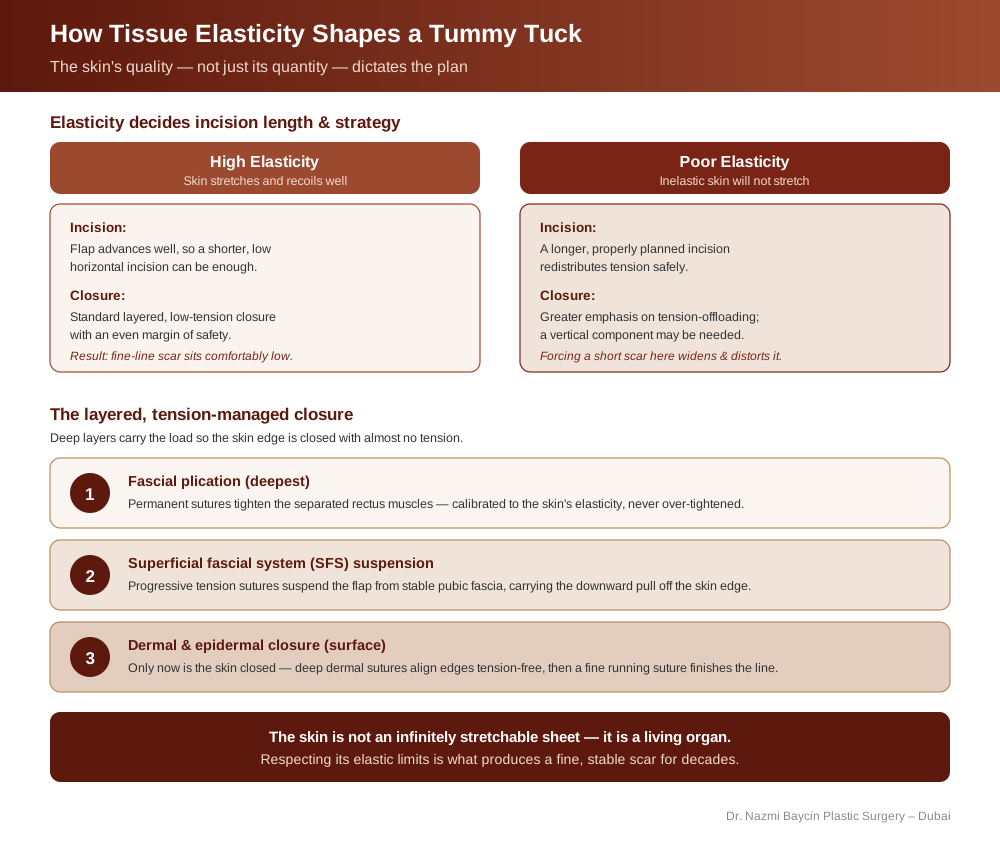
How tissue elasticity shapes a tummy tuck — high-elasticity skin allows a shorter incision and standard closure, poor-elasticity skin needs a longer tension-redistributing incision, and the three-level layered closure offloads the skin edge so the scar heals fine and stable — by Dr. Nazmi Baycin, Dubai.
Incision planning: length as a function of physics
A common request is for the “shortest scar possible.” My responsibility, though, is to design an incision of the correct length, and that is a direct calculation based on tissue compliance rather than a matter of preference. With good elasticity, I can advance the abdominal flap a considerable distance downward, which often allows a shorter horizontal incision that still lies low and hidden.
With poor elasticity, the skin simply will not stretch. Attempting a short incision in that situation creates dangerous tension at the wound edges, which compromises blood flow, invites healing problems, and ultimately produces a poor, widened scar. A longer, properly planned incision that redistributes tension is therefore the superior choice — both for long-term aesthetics and for safety.
Choosing the correct length rather than the shortest length is one of the clearest examples of prioritizing enduring quality over a short-term appeal, and it guides every abdominoplasty in Dubai I plan. The same logic governs where the incision ends: planning those endpoints with care is what prevents dog-ear deformities and waistline irregularities.
The layered closure: engineering a durable, low-tension system
The closure is where surgical craftsmanship meets engineering. I do not simply pull the skin tight and sew it shut; I build a multi-layered, tension-managed system in which the deep layers carry the load so the skin edge is closed under almost no tension. The table below sets out the three levels and what each one does.
| Closure Layer | What It Does | Why It Matters |
|---|---|---|
| Fascial plication (deepest) | Permanent sutures tighten the separated rectus muscles | Restores the abdominal wall; calibrated to skin elasticity so it isn’t over-tightened |
| Superficial fascial system (SFS) suspension | Progressive tension sutures suspend the flap from stable pubic fascia | Bears the downward pull, offloading tension from the skin edge |
| Deep dermal closure | Absorbable sutures align the skin edges precisely | Edges meet tension-free, so the scar is not stressed as it heals |
| Epidermal (surface) closure | A fine running suture finishes the surface | Produces the fine, stable final line |
| Overall system | Load transferred from skin to deep structures | Turns a potentially stressed scar into a durable, fine-line result |
The sequence matters as much as the sutures. The deepest layer is the fascial plication, where I tighten the stretched rectus muscles with permanent sutures — but I calibrate that tightening in harmony with the overlying skin’s elasticity, because over-tightening the muscle when the skin is inelastic creates an untenable conflict between the two. Next, before I touch the skin, I suture the deeper dermal and superficial fascial layer of the flap to the stable fascial structures of the pubic area.
These progressive tension sutures bear the majority of the downward pull, effectively suspending the flap and taking the load off the final skin edge. Only once those deep layers are secured do I close the skin itself, using absorbable sutures in the deep dermis to align the edges without tension, followed by a fine running suture at the surface. That discipline is what transforms a potentially stressed scar into a fine, stable line.
The high-risk patient: poor elasticity and weight-loss skin
Patients after massive weight loss present the greatest challenge, because their skin quality is so severely compromised that elasticity is often negligible. My strategy adapts radically. The incision may require a more extended pattern, sometimes incorporating a vertical component, to remove the necessary tissue without creating critical tension points.
Expectations around the scar are managed proactively and honestly, with a firm commitment to postoperative scar-care protocols from the outset. And the layered, tension-offloading closure becomes even more important, since there is little elastic reserve in the tissue to forgive any tension left at the skin edge.
In some cases I integrate complementary contouring where the skin has better elastic potential, so that the overall result is as smooth as the tissue will allow. The guiding rule does not change: the plan is built around the biology in front of me, not around an idealized skin that does not exist for that patient. To understand the full procedure in detail, you can explore tummy tuck surgery in Dubai.
Respecting biology is the highest form of surgical art
The lasting success of an abdominoplasty is engineered in the operating room through a deep respect for tissue biomechanics. My approach rests on a simple principle: the skin is not an infinitely malleable sheet, but a living organ with specific physical properties. By diagnosing elasticity carefully, designing incisions that respect its limits, and executing a closure that strategically manages tension, I produce results that hold up over time.
A contour that is harmonious, natural, and durable is always built on the bedrock of anatomical truth, and the same philosophy underpins all of my plastic surgery in Dubai. Because every patient’s tissue is different, the surgical plan and its cost are discussed transparently at consultation, once your elasticity and skin quality have been properly assessed.
FAQs about tissue elasticity and tummy tuck planning in Dubai
-
What is tissue elasticity and why does it matter in a tummy tuck?
Tissue elasticity is the ability of skin and connective tissue to stretch and then recoil to its original state. It matters more than almost anything else in abdominoplasty because it determines how safely tissue can be removed, how the incision should be designed, and which closure technique will give a fine, durable scar. Skin with good elasticity stretches and recoils predictably, allowing more flexibility in planning. Inelastic skin will not cooperate the same way, so the whole strategy must adapt to it. Assessing this quality accurately is the foundation of a safe, long-lasting result.
-
Why can’t I just ask for the shortest possible scar?
It is a very common request, but the correct incision length is dictated by your tissue, not by preference. With good elasticity, the flap can be advanced well and a shorter, low incision may be possible. With poor elasticity, the skin will not stretch, and forcing a short incision creates dangerous tension at the wound edges — compromising blood flow, impairing healing, and producing a widened, distorted scar over time. A longer, properly planned incision that redistributes tension is actually the safer and more attractive choice in that situation. The goal is the right scar, not simply the shortest one.
-
What reduces skin elasticity before surgery?
Elasticity is partly genetic, but it is significantly reduced by several common factors: sun exposure, which is especially relevant in a sunny climate, along with pregnancy, significant weight loss, aging, and smoking. Each of these can damage or deplete the collagen and elastic fibers in the dermis that give skin its recoil. This is why two patients with a similar amount of loose skin can need quite different surgical plans — their tissue quality, not just quantity, differs. A careful dynamic assessment during consultation identifies exactly how the skin behaves under tension.
-
What is a layered, tension-managed closure?
Rather than simply pulling the skin tight and stitching it, a layered closure builds a system in which the deep tissues carry the load. First, fascial plication tightens the separated abdominal muscles with permanent sutures. Then the superficial fascial system is suspended from stable pubic fascia using progressive tension sutures, which bear most of the downward pull. Only after these deep layers are secured is the skin closed, with deep dermal sutures aligning the edges tension-free and a fine running suture finishing the surface. The result is that the final skin edge heals under minimal tension, which is what produces a fine, stable scar.
-
Why is muscle tightening calibrated to skin quality?
The muscle repair and the skin closure have to work in harmony. If the abdominal muscles are over-tightened while the overlying skin is inelastic, the two create an untenable conflict — excess tension that the skin cannot accommodate, raising the risk of healing problems and a poor scar. That is why the degree of fascial plication is calibrated against the skin’s elasticity rather than done to a fixed formula. Balancing the internal muscle repair with the external skin dynamics is a key part of achieving a flat contour that also heals well and lasts.
-
How is surgery different after massive weight loss?
Massive-weight-loss patients usually have the most compromised skin, with elasticity that is often negligible, so the plan changes substantially. The incision may need a more extended pattern, sometimes including a vertical component, to remove the excess tissue without creating critical tension points. There is even greater emphasis on the layered, tension-offloading closure, because there is little elastic reserve to forgive any tension left at the skin edge. Scar outcomes are discussed candidly and supported with a committed scar-care protocol. In some cases, complementary contouring is combined where the skin retains better elastic potential.
-
How do these techniques improve my scar long term?
The scar’s long-term quality is largely determined during surgery, by how tension is managed. When the deep layers carry the load and the skin edge is closed under minimal tension, the scar is far less likely to stretch, widen, or distort as it matures. Matching incision length to elasticity, calibrating the muscle repair, and using a progressive-tension layered closure all work toward the same goal: a fine, stable line that sits low and heals predictably. Combined with diligent postoperative scar care, this biomechanical approach is what gives the scar the best chance of fading into an unobtrusive result.


GET APPOINTMENT
Get ready to look and feel best… You deserve…
