

Key takeaways: three pillars, not one
- A double chin is a structural problem — fat, muscle, and skin — not just excess fat.
- Liposuction alone uncovers the muscle and skin weakness it cannot fix.
- The platysma muscle is the neck’s supportive sling; when lax, tissue descends and fullness returns.
- Skin elasticity is finite — poor recoil leaves loose skin that sags after fat removal.
- Durable results come from an integrated plan: fat removal plus platysmaplasty, with skin support as needed.
- Recurrence is almost always a planning failure, not a healing or aftercare failure.
Submental liposuction is a precise intervention with real limits, not a universal fix. A 2022 scoping review of submental liposuction complications, searching three databases without date restriction under a registered protocol, reports that complications are rare but that when they do occur they are significant and can be disfiguring, and concludes that anatomical knowledge and correct surgical management are what prevent them. That review is about adverse events rather than recurrence, so it does not test the argument below — but it makes the same point from another angle: what happens in the submental region is decided by anatomy, not by the fat alone. Understanding what liposuction can and cannot do is the starting point for preventing recurrence.
Why isolated liposuction falls short
Liposuction is excellent at removing the superficial, preplatysmal fat layer. Performed alone, though, it ignores two elements that ultimately dictate long-term contour.
The first is the platysma muscle — the broad, thin sheet that acts as the sling supporting the neck. With age, genetics, or weight change it can separate into vertical bands and lose its supportive tone. Liposuction does nothing to repair this; it simply removes the fat that was camouflaging the underlying muscle laxity, so once the fat is gone, the unsupported muscle and remaining deep tissue can descend and recreate the appearance of fullness.
The second is skin elasticity — the skin’s ability to shrink-wrap onto a new contour is finite, and in patients with poor elasticity from age, sun damage, or genetics, liposuction can leave loose, unsupported skin that gradually sags and undermines the initial improvement.
Treating only the fat is like resurfacing the top of a structural problem while the underlying weakness remains, so the issue eventually reappears. That is why a comprehensive assessment is the non-negotiable first step in my Dubai clinic.
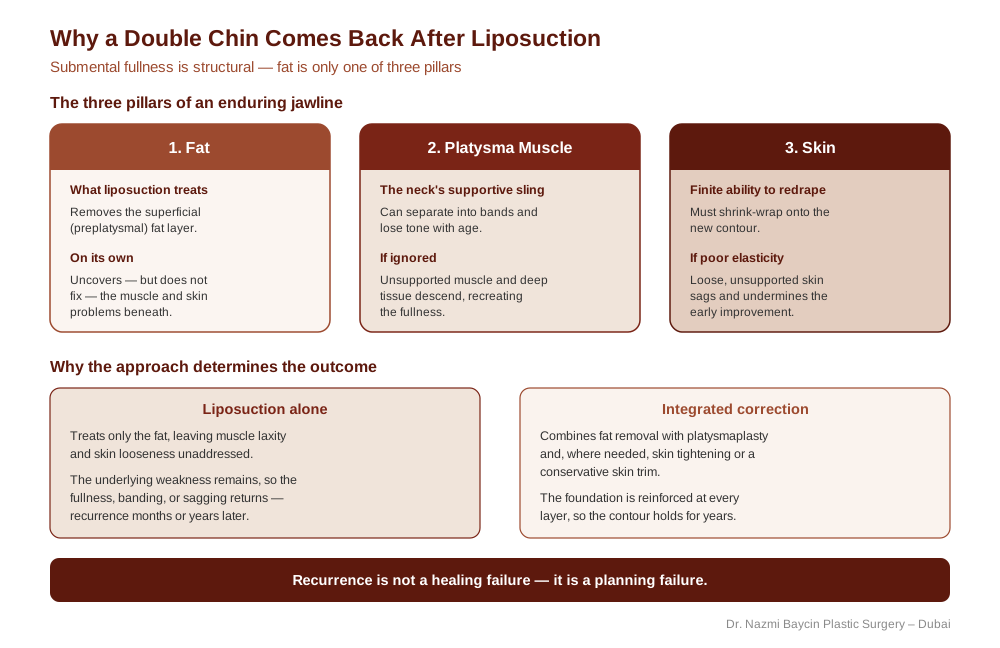
Why a double chin recurs after liposuction — the three pillars of fat, platysma muscle, and skin, and why liposuction alone recurs while an integrated correction endures — by Dr. Nazmi Baycin, Dubai.
The central role of the platysma muscle
The platysma is the true architect of the neck’s youthful appearance, so in surgery I assess its integrity meticulously. When I find significant laxity or banding in Dubai patients, liposuction alone is contraindicated, and a platysmaplasty — a precise tightening and repositioning of the muscle — becomes essential.
My technique often involves midline plication, suturing the separated edges of the muscle together in the midline, from the chin down toward the Adam’s apple, which recreates a strong, supportive central sling. In some cases I add a lateral release and suspension, releasing the muscle at a deeper level and suspending it to a more posterior structure to create a smoother, tighter drape.
This muscular repair provides the foundational support that keeps the soft tissues from descending again, and it is what transforms a temporary reduction into a permanent recontouring. The same principle of structural support underlies comprehensive neck and jawline rejuvenation more broadly, where muscle repair — not fat removal alone — is what makes a result last, and it is precisely why an isolated mid-face lift cannot rejuvenate the whole neck and jawline.
Assessing skin elasticity for optimal redraping
After fat and muscle, the final determinant is the skin. During consultation I perform a simple but telling skin pinch and recoil test: good elasticity means the skin snaps back readily, suggesting it can adapt well to the new contour, while poor elasticity signals that the skin may lack the innate ability to contract sufficiently.
For patients with moderate laxity, I often integrate complementary skin-tightening technologies such as radiofrequency or J-Plasma, which can stimulate collagen contraction and remodeling to improve the skin’s fit. It is important to be clear, though, that these are adjuncts, not substitutes for proper surgical correction of the underlying muscle. Where there is severe excess skin, a conservative trim can be the most direct and effective solution. Matching the skin strategy to the skin’s actual quality — rather than assuming it will simply tighten on its own — is a key part of preventing late sagging.
The integrated surgical solution
In practice, that means liposuction to meticulously remove the excess preplatysmal and any accessible deep fat; platysmaplasty to tighten and support the muscular foundation; adjunctive skin tightening when the skin’s elasticity calls for it; and, for patients with a genetically weak or recessed chin, a possible chin augmentation, since enhancing forward projection with an implant is sometimes the key to a strong, balanced profile — the reasoning behind how chin projection builds total jawline harmony. This multi-planar approach to double chin correction in Dubai addresses the problem at every anatomical level, which is the only reliable way to produce a result that stands up to time and gravity. Which combination is right depends entirely on the individual assessment of fat, muscle, and skin. The table below shows how each component addresses a different anatomical level.
| Component | What It Addresses | Why It Prevents Recurrence |
|---|---|---|
| Liposuction | Excess preplatysmal and accessible deep fat | Removes the volume, but only as one part of the plan |
| Platysmaplasty | Lax or banded platysma muscle | Rebuilds the supportive sling so tissue can’t descend again |
| Adjunctive skin tightening | Moderate skin laxity | Improves redraping where elasticity is borderline |
| Conservative skin trim | Severe excess skin | Directly removes skin that cannot contract |
| Chin augmentation (if indicated) | Weak or recessed chin | Improves projection for a balanced, defined profile |
For a patient seeking a definitive end to their double chin, my plan is a tailored combination rather than a single maneuver, and it is the foundation of my approach to double chin removal in Dubai.
Treat the cause, not just the symptom
Recurrence of a double chin is not a failure of the patient’s healing or aftercare; it is almost always a failure of the initial plan to address the full anatomical picture. My commitment is to provide that complete picture from the outset. By combining precise fat removal with the muscle support that is so often omitted, and with careful skin management, I create jawline contours in Dubai that are not just improved but structurally reinforced to stay defined for years. This restraint-first, structure-led philosophy is what you should expect from an experienced plastic surgeon in Dubai. Because every neck is different, the right combination of techniques and its cost are best determined at a consultation built around this kind of holistic, anatomical analysis.
FAQs about double chin recurrence in Dubai
-
Why did my double chin come back after liposuction?
Recurrence after liposuction is usually not a healing problem but a planning one. Liposuction removes the superficial fat layer, but a double chin is a structural issue that also involves the platysma muscle and the skin. If the muscle is lax or banded and the skin has poor elasticity, removing the fat simply uncovers those weaknesses — the unsupported muscle and tissue descend, and loose skin sags, so the fullness returns. Preventing recurrence means assessing and treating all three pillars from the outset, not just the fat.
-
What is the platysma muscle and why does it matter?
The platysma is a broad, thin sheet of muscle that acts as the sling supporting the neck and defining the jawline. With age, genetics, or weight change, it can separate into visible vertical bands and lose its supportive tone. Liposuction does nothing to repair this — it only removes the fat that was hiding the laxity. When the muscle is significantly lax or banded, a platysmaplasty to tighten and reposition it is essential, because that muscular repair is what provides the lasting support that prevents the soft tissues from descending again.
-
What is a platysmaplasty?
A platysmaplasty is a precise tightening and repositioning of the platysma muscle. The most common component is midline plication, where the separated edges of the muscle are sutured together down the midline from the chin toward the Adam’s apple, recreating a strong central sling. In some cases a lateral release and suspension is added, releasing the muscle at a deeper level and suspending it to a more posterior structure for a smoother, tighter drape. This muscular foundation is what turns a temporary fat reduction into a durable recontouring of the neck and jawline.
-
Why does skin elasticity affect the result?
The skin has only a finite ability to shrink-wrap onto a new contour after fat is removed. If elasticity is good, the skin snaps back and adapts well; if it is poor — from age, sun damage, or genetics — the skin cannot contract sufficiently and is left loose and unsupported, which gradually sags and undermines the early improvement. A simple pinch-and-recoil test during consultation helps gauge this. Depending on the result, the plan may include skin-tightening technology for moderate laxity or a conservative skin trim where the excess is severe.
-
Can skin-tightening devices replace surgery?
No. Technologies such as radiofrequency or J-Plasma can stimulate collagen contraction and remodeling, and they are useful adjuncts for improving the skin’s fit in cases of moderate laxity. However, they are not substitutes for correcting the underlying muscle. If the platysma is lax or banded, no amount of skin tightening will provide the structural support the neck needs, and the fullness will tend to return. These devices work best as one part of a comprehensive plan, layered on top of proper surgical correction rather than used in place of it.
-
Does a weak chin contribute to a double chin?
It can. A genetically weak or recessed chin reduces forward projection along the jawline, which can make submental fullness look more pronounced and a neck angle appear less defined, even after fat and muscle are addressed. For suitable patients, enhancing chin projection with an implant can be the key to a strong, balanced profile, complementing the neck contouring rather than replacing it. Whether chin augmentation adds value is assessed individually as part of planning the overall profile, not applied routinely.
-
How can I avoid needing a revision procedure?
The most reliable way to avoid a revision is to have the full anatomical picture addressed the first time. That means a thorough assessment of fat, muscle, and skin, followed by a plan that treats each pillar appropriately — liposuction for the fat, platysmaplasty for the muscle, and the right skin strategy for the skin’s elasticity. Choosing the most complete correction appropriate for your anatomy from the outset is consistently more effective, and more economical over time, than a simpler procedure that leaves the underlying weakness untreated and later recurs.


GET APPOINTMENT
Get ready to look and feel best… You deserve…
