

Key takeaways: scar widening is a tension problem
- Thigh-lift scar widening is usually biomechanical, not genetic.
- The inner thigh is a mobile, high-friction zone with little firm support beneath.
- Tension is the enemy of a fine scar — the plan must work against the forces, not ignore them.
- Deep fascial anchoring to a stable ligament shields the skin closure from movement.
- Technique choice — short-scar, vertical, or spiral — is matched to the pattern of laxity.
- Gait, climate, and aftercare all shape the final scar as much as the operation itself.
Technique selection genuinely changes the outcome here. In a 2018 series of 25 bilateral medial horizontal thigh lifts, the authors reported fewer complications and less postoperative morbidity than they had seen with the combined T-shaped horizontal and vertical procedure, attributing the difference chiefly to avoiding the vertical scar. It is a small retrospective series measured against the same department’s earlier experience rather than a controlled trial, and it applies to moderate skin excess confined to the upper thigh — but it makes the point that matters here: the incision pattern is a variable to be chosen against the patient’s anatomy, not a fixed cost of the operation. That principle — that the operation itself can be engineered to protect the scar — sits at the center of how I approach this surgery.
Why the inner thigh is unforgiving
Scars on the abdomen or chest heal in a relatively stable environment. The inner thigh is fundamentally different: it is a mobile, high-friction zone with a unique combination of stressors. Every step creates repeated abduction and adduction of the thighs, placing lateral tension on the scar thousands of times a day. Skin-on-skin contact generates shear — a sliding force that disrupts delicate healing edges. The weight of the leg and any residual tissue exerts a constant downward traction. And unlike the abdomen, which has a firm muscular wall behind it, the inner thigh sits on a softer foundation that offers far less resistance to these distracting forces. Ignoring this physics during planning is what sets the stage for scar widening, so my whole strategy in Dubai is to design the surgery in direct opposition to these forces.
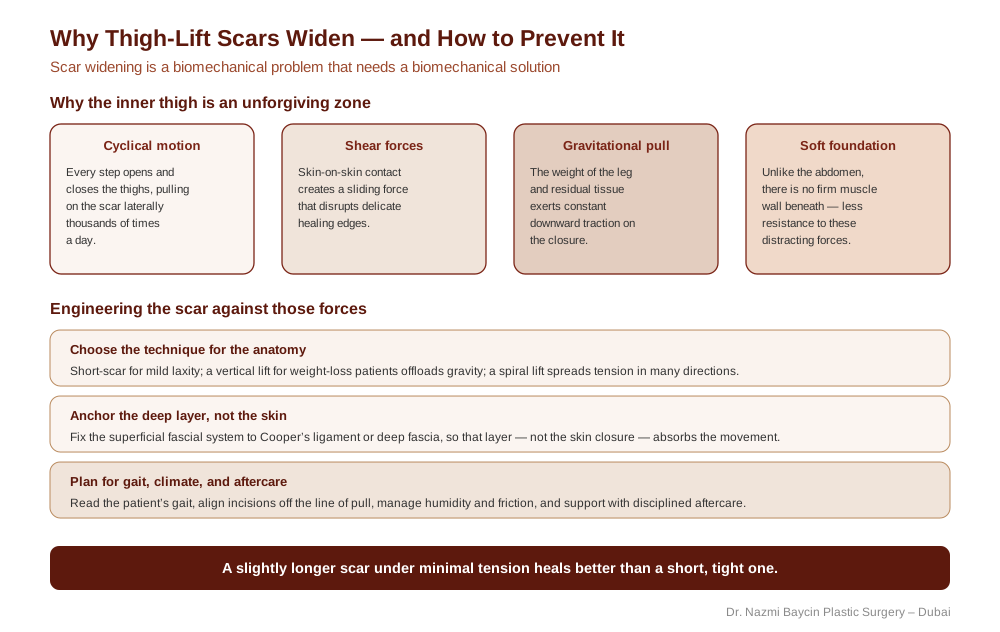
Why thigh-lift scars widen — the biomechanical stressors of the inner thigh and the tension-engineering that protects the scar — by Dr. Nazmi Baycin, Dubai.
Controlling tension vectors through surgical design
Tension is the enemy of a fine scar. When a wound is closed under excessive or misdirected tension, the body responds by laying down more collagen in a disorganized pattern, producing a wide, hypertrophic scar. My first line of defense in Dubai is intelligent surgical design — and that begins with choosing the right technique for your anatomy, which I set out in full in my article on the three graduated levels of thigh lift and which one your anatomy needs.
Beyond selecting the pattern, I never place an incision perpendicular to the dominant force of movement. Instead I analyze each patient’s gait and skin laxity and align the incisions to minimize direct pull, because a well-placed scar under minimal tension will always heal better than a tight one.
The single most important technical step, though, is deep-layer fixation. I do not rely on the skin to hold the closure; using strong, lasting sutures I secure the underlying superficial fascial system to a stable pelvic ligament — Cooper’s ligament — or the deep fascia. That deep layer absorbs the mechanical forces of movement, shielding the skin closure from tension almost entirely. This is the cornerstone of preventing widening, and it reflects the same tension-management thinking I apply across body contouring, which I discuss in my article on breast-lift scar quality and tension management.
Gait analysis: the overlooked preoperative step
Your walking pattern directly affects your scar, which is why I observe your gait during the consultation. Patients with a wider stance or powerful thigh musculature generate greater adduction force, and understanding this lets me tailor the plan — potentially adjusting the degree of deep fixation or the postoperative activity guidelines — to your personal biomechanics.
Where the laxity extends down toward the knee, the transition zone needs its own careful handling, something I cover in my article on the proximal thigh-knee continuum in thigh lift surgery.
Managing moisture, friction, and healing
A humid environment presents a specific challenge, because moisture can macerate the skin, softening the healing wound edges and making them more prone to separation and inflammation. My postoperative protocol is designed to counteract this directly. I use specialized compressive garments that manage swelling while incorporating soft, wicking liners to keep the area dry, and patients are given non-adherent dressings with clear instructions to maintain skin separation and meticulous hygiene. I also monitor closely for the earliest signs of irritation or delayed healing, which are the precursors to scar problems, and adjust care promptly.
Surgery creates the potential for an excellent scar; disciplined aftercare is what realizes it — which is why strict garment use, modified activity to limit wide leg movement and friction early on, diligent moisture management, and faithful application of silicone gel or sheeting once the incision is fully closed all matter so much. Patients who partner closely in this process consistently see markedly better outcomes.
Who is at higher risk?
Transparency matters, so I am honest about which profiles call for extra caution and especially meticulous planning: those with very thick or sebaceous skin, individuals with significant residual thigh volume or strong musculature, patients who cannot comply with postoperative activity restrictions, and anyone with a history of suboptimal scar healing.
During the consultation in Dubai I identify these factors and explain how they influence the plan, so expectations are grounded in your individual biological reality rather than a generic promise. This same anatomy-driven, tension-conscious philosophy runs through my wider approach to thigh lift surgery in Dubai, where the aim is a single, well-planned procedure with the best possible chance of a stable, refined scar.
This considered, tension-first standard is what you should expect from a leading cosmetic surgeon in Dubai. Because every patient’s anatomy and gait are different, both the surgical plan and its cost are best worked out at a consultation tailored to you. Ultimately, thigh-lift scar widening is not an inevitable complication; it is a biomechanical problem that demands a biomechanical solution — and that is exactly what careful technique selection, deep-layer support, gait-conscious planning, and disciplined aftercare are designed to deliver.
FAQs about thigh-lift scars in Dubai
-
Why do some thigh-lift scars widen?
Thigh-lift scars widen mainly because of biomechanical tension, not bad luck or genetics. The inner thigh is a mobile, high-friction area where every step pulls on the scar, skin-on-skin shear disrupts the healing edges, and gravity adds constant downward traction — all over a soft foundation with little firm support beneath. When a wound heals under this repeated stress, the body lays down disorganized collagen and the scar widens. The solution is to engineer the surgery so the deep tissue, not the skin, bears those forces, giving the scar the best chance to stay fine.
-
How does deep-layer fixation prevent scar widening?
Deep-layer fixation is the single most important step. Rather than relying on the skin to hold the closure, strong, lasting sutures secure the underlying superficial fascial system to a stable structure such as Cooper’s ligament or the deep fascia. That deep layer then absorbs the mechanical forces of walking and movement, shielding the skin closure from tension almost entirely. Because the skin is no longer doing the load-bearing, it can heal as a fine line rather than being stretched wide. This is the cornerstone of preventing widening and is what distinguishes a durable result from a fragile one.
-
Which thigh-lift technique gives the best scar?
There is no single best technique — the right one depends on your pattern of laxity. A short-scar (groin-crease) lift suits mild to moderate upper-inner-thigh laxity and, within that indication, has been reported to give fewer complications than adding a vertical limb. A vertical thigh lift, used for most significant weight-loss patients, directly offloads gravity and, although the scar is longer, it addresses laxity a groin-crease incision alone cannot reach. A spiral lift suits circumferential laxity by redistributing tension in multiple directions. Matching the technique to your anatomy, rather than defaulting to the shortest scar or the longest one, is what protects long-term scar quality.
-
Does my walking pattern really affect the scar?
Yes. Your gait directly influences the forces acting on the healing scar, which is why I observe it during the consultation. Patients with a wider stance or powerful thigh musculature generate greater adduction force, placing more repeated stress on the incision line. Recognizing this in advance allows the plan to be tailored — for example by adjusting the degree of deep fixation or the postoperative activity guidelines — to account for your personal biomechanics. Gait-conscious planning is an often-overlooked step that can make a meaningful difference to how well the scar holds up over time.
-
How does the humid climate affect thigh-lift healing?
Humidity adds a real challenge because moisture can macerate the skin, softening the healing wound edges and making them more prone to separation and inflammation. To counter this, the aftercare protocol uses specialized compressive garments with soft, wicking liners to keep the area dry, along with non-adherent dressings and clear instructions for maintaining skin separation and meticulous hygiene. Early signs of irritation or delayed healing are monitored closely and addressed promptly, since these are the precursors to scar problems. Managing moisture and friction well is an important part of protecting the final scar in a warm climate.
-
What can I do to get the best possible scar?
Surgery creates the potential for an excellent scar, but your aftercare realizes it. The most important steps are strict adherence to the compression garment for the recommended weeks, modifying activity to limit wide leg movements and friction during early healing, diligent hygiene and moisture management, and faithfully applying silicone gel or sheeting once the incision is fully closed. Following the activity restrictions matters as much as the surgery itself, because premature stress on the closure is exactly what widens a scar. Patients who partner closely in this process consistently achieve markedly better, more stable results.
-
Am I at higher risk of a poor scar?
Some profiles warrant extra caution and especially careful planning: very thick or sebaceous skin, significant residual thigh volume or strong musculature, an inability to comply with postoperative activity restrictions, and a history of suboptimal scar healing. Having one of these factors does not mean a good result is impossible — it means the surgical plan and aftercare need to be adapted to your biology, and your expectations set realistically. These factors are identified during the consultation and discussed openly, so the whole plan is built around your individual healing characteristics rather than a one-size-fits-all approach.


GET APPOINTMENT
Get ready to look and feel best… You deserve…
