

Key takeaways: restoration, not elevation
- Brow descent is a ligament problem, not a skin problem.
- Pulling skin taut creates tension, an overdone look, and eventual relapse.
- The endoscopic approach releases the retaining ligaments at the source.
- Fat pads and expression are preserved for a natural, unfrozen face.
- Fixation to stable deep tissue lets the correction last for years.
- Incisions are hidden in the hairline, with no hairline elevation or long scars.
The scale of what this surgery actually achieves is worth stating plainly. A 2025 meta-analysis of twelve studies with at least a year of follow-up pooled the long-term elevation of the endoscopic brow lift at 3.25 mm at the medial brow, 3.86 mm centrally and 4.35 mm laterally. Those are millimeters, not centimeters. The operation is a restoration of position rather than a dramatic lift, and a brow that looks dramatically raised is a brow that has been over-lifted. Its authors are careful to add that comparative long-term data on the different fixation methods are still thin — a call for more evidence rather than an endorsement of any one technique. The principle my own technique is built around is the one this article sets out: release the true anchors, then fix to something that holds, rather than fighting the anatomy with skin tension.
The anatomical flaw in “pulling” techniques
Many of the revision cases I see stem from a single misunderstanding: the belief that brow descent is a skin problem. It is not. The brow is anchored by a system of deep retaining ligaments, and when a surgeon simply pulls the skin upward without releasing these ligaments, they are fighting a powerful anatomical tether. The result is excessive skin tension that distorts the hairline, flattens expression, and produces the artificially tight look that reads instantly as surgery. More importantly, that tension guarantees relapse: as the skin stretches over time and the unaddressed ligaments continue to pull the brow back down, the correction quietly undoes itself. A lift built on tension is, by design, temporary.
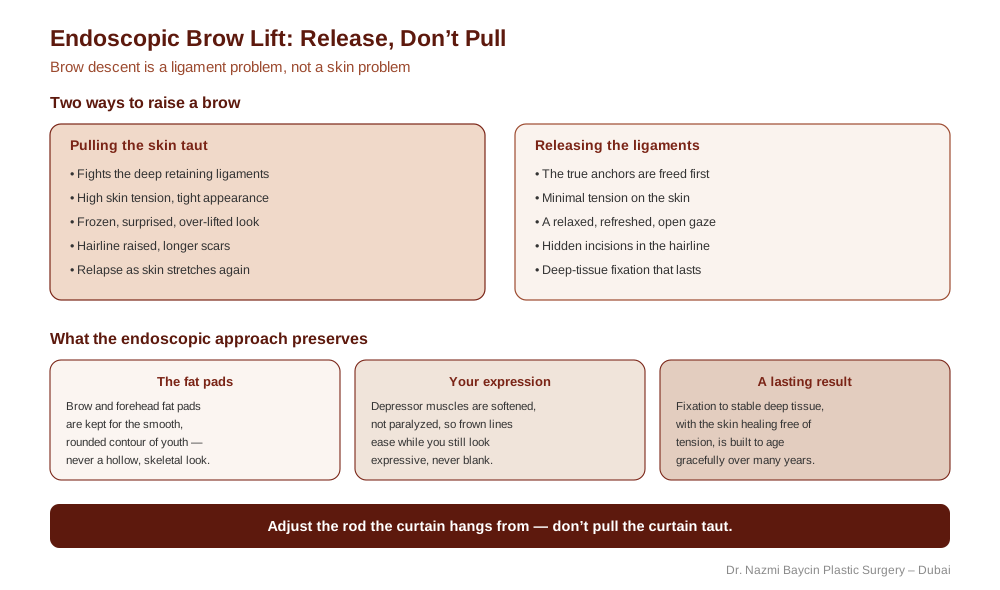
Why releasing the retaining ligaments gives a more natural brow lift than pulling the skin taut — by Dr. Nazmi Baycin, Dubai.
My endoscopic technique: releasing, not just lifting
The endoscopic approach I use in Dubai lets me correct the problem at its source. Through tiny incisions concealed within the hairline, a micro-camera gives a magnified view of the operative field, and this visualization is the critical difference: I can see and precisely release the specific ligaments — such as the orbital retaining ligament — that hold the brow in its descended position. Once those attachments are freed, the entire brow complex can be repositioned gently, as a unified unit, with far less force and therefore far less skin tension. The fixation is then secured to stable deep tissues rather than to the skin surface, so the correction is held by something that will not stretch.
The effect is closer to reversing the aging process than to a surgical pull. Getting that fixation right is also what determines how long the result lasts, a subject I explore in my article on why some brows drop again and how fixation technique matters. Patients who want to see the visual difference can review my before-and-after gallery for endoscopic brow lift surgery in Dubai.
Pull versus release: what actually changes
The contrast between the two philosophies is best seen side by side. The table below sets out what pulling the skin taut tends to produce against what releasing the ligaments allows.
| Pulling the Skin Taut | Releasing the Ligaments |
|---|---|
| Fights the deep retaining ligaments | Frees the true anchors before repositioning |
| High skin tension and a tight, drawn look | Minimal skin tension and a relaxed contour |
| Frozen, surprised, over-lifted expression | A refreshed, open gaze that reads as natural |
| Raised hairline and longer scars | Hidden hairline incisions, no hairline change |
| Relapse as the skin stretches again | Deep-tissue fixation designed to last for years |
Preserving the youthful elements: fat pads and expression
A key advantage of working under endoscopic visualization is preservation. A hollow, skeletal upper face is a tell-tale sign of an aggressive lift, so I meticulously preserve the natural brow and forehead fat pads — the soft tissues responsible for the smooth, rounded contour of youth. I can also selectively treat the brow depressor muscles, the corrugators and procerus, to soften frown lines without completely paralyzing them. This keeps your ability to express emotion intact: you look less tired or stern, but never blank.
Preserving natural movement is central to a believable result, and it is the theme of my article on the biomechanics of a natural brow lift and preserving dynamic forehead expression. The opposite outcome — a brow lifted too high or along the wrong vector — is exactly what makes a result look operated, a problem I discuss in my article on over-elevated brows and the wrong vector of lift.
The right diagnosis: brow position versus heavy eyelids
Before any lift is planned, the real source of the tired appearance has to be identified correctly, because a heavy-looking upper eye can come from the brow, from the eyelid, or from both — and each calls for a different solution. Raising a brow that did not need raising, or operating on the eyelid when the true problem is a descended brow, is one of the more common ways a result goes wrong.
Careful assessment of where the heaviness actually originates is therefore the foundation of a natural outcome, a distinction I cover in my article on why brow ptosis is often misdiagnosed. This diagnostic step is what ensures the brow is repositioned only as much as it genuinely needs, preserving the natural relationship between the brow, the lid, and the eye.
Why this approach suits the Dubai patient
My patients in Dubai are often younger, between their late thirties and fifties, with early brow descent that lends a tired or stern cast to the face. They typically have good skin elasticity and neither need nor want visible skin excision, which makes the endoscopic lift an ideal fit. It addresses the structural cause without removing hair, raising the hairline, or leaving long scars, and the goal is a refreshed, open gaze that no one can quite pinpoint as surgery. This philosophy of minimal, structural intervention also extends to how the brow is planned within the whole upper face, since altering the forehead changes how the eyelids sit — an interaction that matters whenever brow and eyelid rejuvenation are considered together rather than in isolation.
The longevity
Just as important, the results are enduring: by fixing the brow to a stable deep-tissue anchor and allowing the skin to heal without tension, the correction is designed to last for many years and to age gracefully with you. This is where the distinction between a simple skin lift and a true anatomical reconstruction really shows — the latter reflects the specialized endoscopic training, the magnified visualization, and the time spent on precise ligament release and tissue preservation.
Because each face and each pattern of brow descent is different, both the surgical plan and its cost are best worked out at a consultation, which is the right place to assess candidacy and review a simulation of the likely result. That is the standard anyone should expect from a plastic surgery clinic in Dubai that treats the brow lift as anatomy rather than as a pull.
True naturalness is engineered from within
Natural results are not accidental; they are engineered through respect for anatomy. The endoscopic brow lift lets me work beneath the surface, releasing the true cause of aging while preserving everything that makes your expression uniquely yours. It is the difference between pulling a curtain taut and carefully adjusting the rod from which it hangs. If you want a refreshed, open appearance that keeps all of your character and avoids any look of tension or surprise, this is the technique that delivers it — quietly, and for the long term.
FAQs about the endoscopic brow lift in Dubai
-
Why does an endoscopic brow lift look more natural?
Because it corrects the actual cause of brow descent rather than masking it with tension. Brow descent is driven by deep retaining ligaments, not by loose skin. The endoscopic technique releases those ligaments and then repositions the brow as a whole unit with very little skin tension, before fixing it to stable deep tissue. That avoids the tight, drawn, over-lifted look that comes from simply pulling skin upward. The elevation achieved is deliberately modest — a few millimeters — so the result reads as a refreshed version of your own face rather than as an obviously operated one.
-
Why do pulling brow lifts often look overdone?
Pulling the skin taut without releasing the underlying ligaments fights against a powerful anatomical tether. To achieve any visible lift that way, the surgeon has to apply significant tension, and that tension is what flattens expression, distorts the hairline, and creates the surprised or frozen appearance. It also tends not to last: as the skin gradually stretches and the unaddressed ligaments keep pulling the brow down, the lift relapses. So a tension-based lift can look overdone at first and then fade — the worst of both outcomes. Releasing the ligaments avoids both problems.
-
Will I still be able to show expression afterward?
Yes. Preserving expression is a core goal, not an afterthought. Rather than completely paralyzing the muscles that create frown lines, I selectively soften the brow depressors — the corrugators and procerus — so that frowning eases while natural movement remains. The brow and forehead fat pads are also preserved, which keeps the smooth, rounded contour of youth instead of a hollow, skeletal look. The intended result is that you appear less tired or stern, but never blank or frozen. Looking expressive and looking rested are not mutually exclusive when the anatomy is respected.
-
Where are the incisions, and will there be scars?
The incisions are small and concealed within the hairline, which is what allows the magnified endoscopic camera to work while keeping any scars hidden. Because the technique relies on releasing ligaments and repositioning tissue rather than excising a strip of skin, it does not raise the hairline or leave the long scars associated with older open techniques. Most patients find that once healing is complete, the incision sites are very difficult to detect. Keeping the scars hidden and the hairline unchanged is a large part of why the result looks so natural.
-
How long does an endoscopic brow lift last?
It is designed to be durable. By fixing the repositioned brow to stable deep tissue and letting the skin heal without tension, the correction avoids the main cause of early relapse. Pooled long-term data from studies with at least a year of follow-up put the elevation retained after an endoscopic brow lift at roughly 3 to 4 millimeters across the brow, so a well-executed lift holds its position rather than fading back — although the comparative evidence on which fixation method performs best is still limited. No surgical result is entirely immune to the ongoing process of aging, but a properly released and anchored brow lift ages gracefully and holds its position far better than a tension-based skin lift.
-
Is the tired look coming from my brow or my eyelids?
That is one of the most important questions to answer before surgery, because a heavy-looking upper eye can come from a descended brow, from excess eyelid skin, or from both. Operating on the eyelid when the real problem is the brow — or vice versa — is a common reason results disappoint. During assessment I identify where the heaviness actually originates, so the brow is raised only as much as it truly needs and the eyelid is addressed only if it is genuinely the source. Getting this diagnosis right protects the natural relationship between the brow, the lid, and the eye.
-
What is recovery like after an endoscopic brow lift?
Recovery is generally straightforward because the technique is minimally disruptive. Most patients have some swelling and tightness in the first days and typically return to social activities within about ten to fourteen days. Since there is no strip of skin removed and the fixation is internal, discomfort tends to be manageable and the healing period is relatively short. Following the aftercare guidance — particularly around rest and avoiding strain in the early phase — supports smooth healing and helps the deep fixation settle, which is what gives the result its longevity.


GET APPOINTMENT
Get ready to look and feel best… You deserve…
