

Key takeaways: diagnose the brow before touching the eyelid
- A heavy brow and a heavy eyelid look alike but are different problems needing different operations.
- A descended brow drags tissue down, mimicking excess eyelid skin that is not truly there.
- The manual brow elevation test is the simple maneuver that tells them apart.
- Frontalis (forehead) compensation hides brow ptosis during ordinary conversation.
- Removing eyelid skin to fix a low brow risks over-resection, hollowing, and a startled look.
- The correct answer may be a brow lift, a blepharoplasty, or both together — dictated by anatomy.
Operating on the eyelid when the brow is the culprit is like shortening a curtain without fixing the sagging rod. The problem swiftly returns. The diverse ethnicities and facial structures of the Dubai population make this diagnostic precision essential, not optional. So a holistic assessment of the upper facial third is the non-negotiable first step in every consultation I carry out in Dubai.
Brow ptosis vs. upper eyelid dermatochalasis: defining the difference
Accurate differentiation is the foundation of effective treatment, and these are two distinct anatomical issues. True upper eyelid heaviness — dermatochalasis — is an excess of skin, and sometimes fat, arising from the eyelid itself. Brow ptosis is different: it is a descent of the entire eyebrow complex. As the brow falls, it drags skin and soft tissue downward, creating a fold that convincingly mimics excess eyelid skin.
The relationship between brow and eyelid position has been measured directly rather than assumed. In a prospective cohort study of normal controls and eyelids affected by blepharoptosis or dermatochalasis, mechanically lifting the eyebrow raised the upper eyelid margin in controls and in dermatochalasis, but not in eyelids with true blepharoptosis. That study’s ptosis group is eyelid ptosis — a weakness of the levator muscle, which is a different condition from the brow descent discussed here. Its value on this page is narrower and more practical: it establishes by measurement that lifting the brow changes what the eyelid does, and that the way it changes differs by underlying cause. That is the physical basis of the examination described below. For a clear picture of how the two procedures differ, explore my approach to eyelid surgery in Dubai.
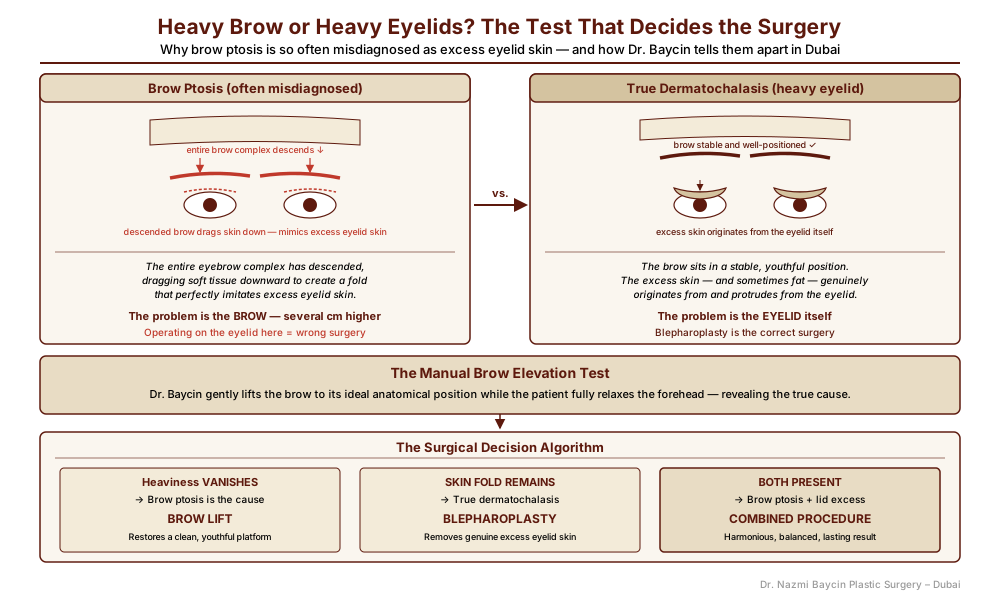
Distinguishing brow ptosis from dermatochalasis — in brow ptosis the descended eyebrow complex drags tissue down to mimic excess eyelid skin, and the manual brow elevation test makes the heaviness vanish (indicating a brow lift); in dermatochalasis the excess arises from the eyelid itself and a fold remains when the brow is lifted (indicating blepharoplasty) — by Dr. Nazmi Baycin, Dubai.
Why brow descent is so frequently overlooked
Brow ptosis is a master of disguise. It develops insidiously, and patients unconsciously compensate by chronically activating the frontalis, the forehead muscle. That creates a temporary lift, masking the true resting position during casual conversation. Several factors feed this blind spot: a narrow focus on the eyelid skin alone during examination, reliance on static photographs rather than dynamic muscle-by-muscle analysis, and a failure to assess the patient with the forehead completely passive.
The consequence is a patient left with a hollowed, over-resected upper lid but the same heavy, tired look — because the ptotic brow was never addressed. This is why I dedicate real time to a motion-based assessment. To understand the analysis involved, learn more about my approach to brow lift surgery in Dubai.
The pivotal manual brow lift test
The eyebrow is a functional and aesthetic unit suspended by ligaments and muscle balance, and aging weakens those supports. The most telling part of my examination is a simple, powerful maneuver. I gently lift the brow to its ideal anatomical position while the patient fully relaxes the forehead. If the perceived eyelid heaviness vanishes, the diagnosis is clear — brow ptosis is the primary issue. If a significant skin fold remains, true dermatochalasis is present. The table below sets out the full contrast between the two.
| Feature | Brow Ptosis | Dermatochalasis (Heavy Eyelid) |
|---|---|---|
| Source of the problem | Descended eyebrow complex | Excess skin from the eyelid itself |
| Location of cause | Several cm above the eyelid | The eyelid |
| Apparent excess skin | Displaced brow tissue (not true excess) | Genuine excess eyelid skin |
| Manual brow elevation test | Heaviness vanishes when brow lifted | Skin fold remains when brow lifted |
| Frontalis compensation | Often present, masks the cause | Not the primary driver |
| Correct procedure | Brow lift | Upper blepharoplasty |
| Result of operating on eyelid alone | Problem returns quickly | Correct and lasting |
| Risk if misdiagnosed | Over-resection, hollowing, startled look | — |
| Often coexist | Frequently (→ combined procedure) | Frequently (→ combined procedure) |
Functional implications: more than an aesthetic concern
Many patients seek consultation for functional visual obstruction, particularly in the superior and peripheral fields, and a ptotic brow is a frequent, overlooked cause. The descended tissue physically narrows the visual aperture. Meanwhile, the constant muscular effort to raise the brow produces chronic forehead fatigue and tension headaches, deep etched horizontal lines, and a compromised field of vision. Correcting the brow position does more than rejuvenate — it can relieve these physical strains.
Brow lift, blepharoplasty, or both?
The surgical plan must be dictated by anatomy, not assumption, and my decision-making follows a structured algorithm. An isolated brow lift is indicated when the brow is ptotic and the eyelid skin looks redundant only because of that descent; lifting the brow restores a clean, youthful platform. An isolated upper blepharoplasty is appropriate only when the brow position is stable and youthful and the excess is confined to the eyelid.
A combined procedure is often the ideal solution: when both conditions coexist, addressing them together creates harmonious, balanced, and long-lasting results. The critical mistake is over-resecting eyelid skin to compensate for an uncorrected low brow — risking lagophthalmos, dry eye, a hollowed deformity, and a startled expression. My philosophy is measured conservation, ensuring every structure works in harmony.
Gender and ethnic considerations in a diverse population
There is no universal ideal. In Dubai’s multicultural environment, I consider these norms carefully. For women, I typically aim for a gently arched brow that sits at or slightly above the superior orbital rim. For men, the ideal is generally lower, with a flatter contour along the rim. Applying a one-size-fits-all template risks feminizing a male face or creating an unnatural look that clashes with a patient’s own features.
My planning is always bespoke, respecting each individual’s anatomical blueprint. Because every assessment is individual, its plan and cost are discussed transparently at consultation, so the chosen procedure is always the one your anatomy truly requires.
The foundation is accurate diagnosis
The distinction between a heavy brow and a heavy eyelid is the cornerstone of successful upper facial rejuvenation. My primary duty as a plastic surgeon in Dubai is to see past the obvious and identify the underlying structural cause. Through dynamic assessment, anatomical expertise, and personalized planning, I make sure the chosen procedure is the right one. For anyone in Dubai considering surgery for a tired, heavy upper face, I offer one essential first step: a consultation focused not on what you think you need, but on what your anatomy truly requires. This diagnosis-first philosophy shapes all of my facial plastic surgery in Dubai.
FAQs about brow lift vs. eyelid surgery
-
How do I know if I have a heavy brow or heavy eyelids?
The definitive way is the manual brow elevation test, performed at consultation. I gently lift your brow to its ideal position while you fully relax your forehead. If the heaviness vanishes, the cause is brow ptosis (a descended brow) and a brow lift is indicated. If a skin fold remains, you have true dermatochalasis (excess eyelid skin) and blepharoplasty is appropriate. You cannot reliably distinguish them yourself in the mirror, because the chronic forehead muscle activation that masks brow ptosis is involuntary — which is exactly why professional dynamic assessment is essential.
-
Why is brow ptosis so often misdiagnosed as heavy eyelids?
Because brow ptosis disguises itself. Patients unconsciously activate the forehead (frontalis) muscle to compensate for a descending brow, which temporarily lifts it and masks the true resting position during conversation and examination. A clinician who focuses only on the eyelid skin, relies on static photographs, or fails to assess the patient with the forehead fully relaxed will miss the brow descent entirely — and may recommend eyelid surgery that does not address the real cause.
-
What happens if I have eyelid surgery when the real problem is my brow?
The result is typically disappointing and sometimes harmful. Because the true cause (the descended brow) was never addressed, the heavy, tired appearance returns quickly. Worse, removing eyelid skin to compensate for a low brow can cause over-resection — leading to a hollowed upper lid, difficulty closing the eye (lagophthalmos), chronic dry eye, and a permanently startled expression. Eyelid skin cannot be replaced once removed, so this error is difficult to fully correct. This is why accurate diagnosis before surgery is so important.
-
What is the manual brow elevation test?
It is the key diagnostic maneuver I use to distinguish brow ptosis from heavy eyelids. I gently lift your eyebrow to its ideal anatomical position while you completely relax your forehead muscles. This eliminates the involuntary muscle compensation that normally masks the true brow position. If your perceived eyelid heaviness disappears, brow ptosis is the cause; if a skin fold remains, the eyelid itself is the issue. It is simple, takes seconds, and prevents the serious error of removing eyelid skin that is not truly in excess.
-
Can a heavy brow cause problems with my vision or headaches?
Yes. A descended brow physically narrows your field of vision, particularly in the superior and peripheral fields. Additionally, the constant involuntary effort to hold the brow up — chronic frontalis muscle activation — commonly causes forehead fatigue, tension headaches, and the deep horizontal forehead lines that come from years of compensation. Correcting the brow position can relieve these functional and physical symptoms, not just improve appearance.
-
Do I need a brow lift, eyelid surgery, or both?
It depends entirely on what the diagnostic assessment reveals. If brow ptosis is the cause, a brow lift. If genuine eyelid skin excess is the cause, blepharoplasty. If both coexist — which is common, as they develop together with aging — a combined procedure produces the most harmonious, balanced, and lasting result. I determine this through the manual brow elevation test and a full dynamic assessment of the upper face, never by assumption.
-
Will a brow lift give me a surprised or overdone look?
Not when the brow is positioned correctly to your individual anatomy. The startled, overdone look comes from setting the brow too high or from over-resecting eyelid skin — both errors of technique and planning, not inherent to brow lift surgery. I plan the brow position bespoke to your gender and ethnic features: a gently arched brow at or slightly above the orbital rim for women, a lower flatter brow for men. The goal is a refreshed, natural, rested appearance — never a surprised one.


GET APPOINTMENT
Get ready to look and feel best… You deserve…
