

Key takeaways: the navel is the tell, or the triumph
- The belly button is the visual anchor of the abdomen — its design determines whether a result looks natural or operated.
- A natural navel has a vertical oval shape, superior hooding, engineered depth, and a soft shadow.
- Preserving the umbilical stalk protects blood supply and sensation — the safety foundation of the design.
- Superior hooding both recreates the youthful recessed look and conceals the scar in shadow.
- A tension-free closure (deep sutures bearing the load) is the single most important factor in an invisible scar.
- Design is tailored to body type — a delicate oval for thin tissue, more depth and shadow for thicker tissue.
Many patients seeking a tummy tuck in Dubai focus on overall contour, yet a truly professional result is equally defined by subtle anatomical details. Its shape, depth, orientation, and scar placement determine whether the outcome appears refined and untouched or artificially operated. I approach the umbilicus as a living, three-dimensional structure, not merely a hole to be repositioned.
Why umbilical design demands surgical precision
A natural umbilicus possesses consistent, subtle characteristics: a gentle vertical oval shape, a slight superior hooding of skin, a defined depth, and a soft shadow that blends into the abdominal plane. When these elements are ignored, the belly button can appear round, flat, or pulled — common reasons for patient dissatisfaction after surgeries performed without this focus. The table below sets out the difference between a naturally designed navel and an artificial one.
| Feature | Natural Umbilicus (Dr. Baycin’s design) | Artificial Umbilicus (rushed technique) |
|---|---|---|
| Shape | Gentle vertical oval | Round or circular |
| Superior hooding | Present — soft skin overhang | Absent — flat upper margin |
| Depth | Engineered, lasting depth | Flat or shallow |
| Shadow | Soft, natural shadow | None, or hard-edged |
| Scar position | Concealed within upper fold | Visible ring on surface |
| Scar tension | Tension-free (deep sutures bear load) | Under tension — widens and thickens |
| Stalk | Preserved — blood supply intact | Often compromised or amputated |
| Appearance over time | Maintains shape for decades | Flattens or distorts |
| Overall result | Looks unoperated | Betrays the surgery |
Anatomy-first planning: preserving the foundation
My design process begins long before skin removal. During preoperative marking, I analyze your natural waist curvature, rib cage width, and existing umbilical stalk anatomy. The most critical step is the meticulous preservation of the umbilical stalk — the core tissue that provides blood supply and sensation. I never detach or compromise this vital structure, as its integrity is essential for healing and a natural, supple result.
The hooding technique: crafting natural shadow and concealment
Superior hooding is the feature that most separates a natural navel from a surgical one. A beautiful belly button is never flat; it has a soft overhang of skin at the top that creates a gentle shadow. After repairing the abdominal muscles, I design this hood using a precise internal suturing technique. This achieves two goals at once: it recreates the youthful, recessed appearance of a natural navel, and it perfectly conceals the scar within the shadowed fold. This level of detail is what distinguishes advanced surgical artistry from basic skin tightening.
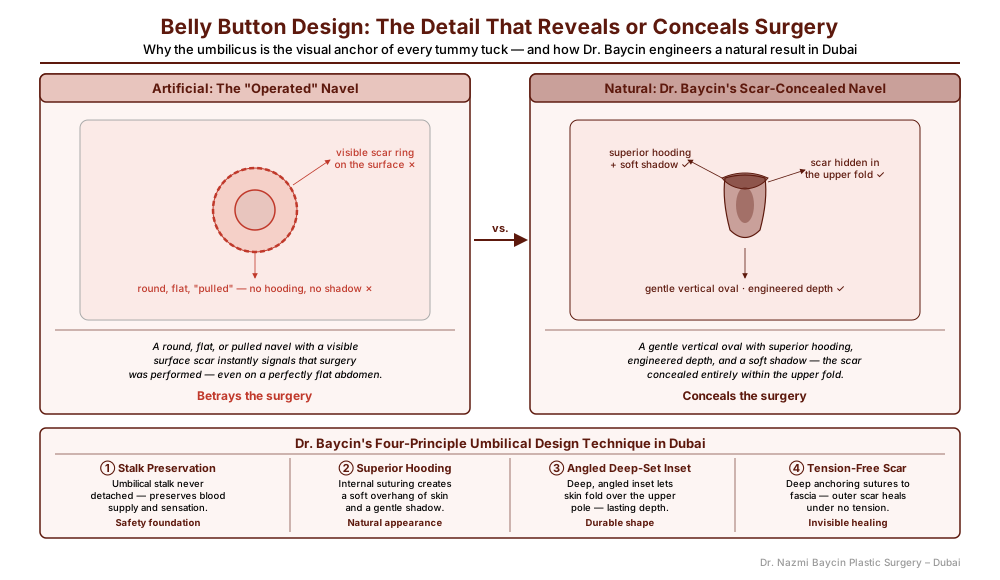
Natural umbilical design — a vertical oval with superior hooding and engineered depth, the preserved stalk maintaining blood supply, and the scar concealed within the shadowed upper fold under a tension-free closure — contrasted with the round, flat, visibly scarred artificial navel — by Dr. Nazmi Baycin, Dubai.
Inset angle and depth: the engineering of a lasting result
The angle at which the belly button is inset into the tightened abdominal skin is a highly technical step, and the surgical literature treats umbilical reconstruction as a technique in its own right rather than a finishing touch; a retrospective series of 49 abdominoplasty patients sets out such a technique step by step and reports umbilical complications in 4% of patients — 2% partial dehiscence of the umbilical knot and 2% necrosis of the navel. That series measures safety rather than appearance: it had no comparison group and no validated aesthetic score, and its authors note that the complication rate was similar to the published techniques they reviewed. I do not simply bring the stalk straight out to the surface. Instead, I use a deep-set, angled inset that allows the skin to fold over the upper pole naturally. This engineered depth creates smooth transitions, ensures the scar recedes from view, and allows the navel to maintain its shape as swelling subsides and tissues mature over time.
Scar concealment: the principle of invisible healing
While a scar around the umbilicus is unavoidable, its visibility is not. My strategy is to eliminate tension on the external suture line. I use deep, internal anchoring sutures to secure the skin to the underlying fascia, which allows the outer scar to heal under no tension — the single most important factor in preventing widening, thickening, or discoloration. The final scar rests invisibly within the natural contours of the navel. For patients who value this depth of technical focus within the whole operation, my overview of tummy tuck surgery in Dubai explains the procedure from assessment through recovery.
Customization for different body types
There is no single ideal belly button, so I tailor the design to your unique physique. For slender patients with thin tissue, I create a more delicate, narrow oval; for patients with thicker soft tissue, I emphasize depth and shadow to avoid a flat appearance. This customization is essential, as the navel must harmonize with your overall abdominal contour, whether masculine or feminine.
The umbilicus as a signature
My method prioritizes vascular preservation for safety, anatomical depth for realism, and tension-free scarring for invisibility. This commitment transforms the umbilicus from a potential tell-tale sign into the most convincing evidence of a naturally beautiful result. In my operating philosophy, the belly button is never an afterthought; it is a signature of the surgery’s quality, and because every abdomen is individual, its design and the wider plan — including cost — are discussed transparently at consultation. This attention to the decisive detail runs through all of my plastic surgery work in Dubai.
FAQs about belly button design in tummy tuck surgery
-
Will my belly button look natural after a tummy tuck?
With careful umbilical design, yes. The naturalness of the belly button depends entirely on the technique used. My approach in Dubai recreates the specific characteristics of a natural navel — a gentle vertical oval shape, superior hooding with a soft shadow, and genuine engineered depth — while concealing the scar within the upper fold. The round, flat, or pulled appearance that looks artificial results from rushed or standardized technique, not from tummy tuck surgery itself.
-
Will the scar around my belly button be visible?
A scar around the umbilicus is unavoidable, but its visibility is controllable. I conceal the scar within the shadowed superior hood of the navel and close it under no tension — using deep internal anchoring sutures to bear the structural load so the outer skin heals without the tension that causes scars to widen, thicken, or discolor. The result is a scar that rests invisibly within the natural contours of the navel rather than as a visible ring on the surface.
-
What is the umbilical stalk and why does preserving it matter?
The umbilical stalk is the core tissue that connects the belly button to the abdominal wall and carries its blood supply and sensation. Preserving it is essential: it maintains the navel’s vascularity (critical for healing), preserves sensation, and allows the natural, supple result that only a living, well-vascularized umbilicus provides. I never detach or compromise the stalk — vascular preservation is the safety foundation of my entire umbilical design approach.
-
What is superior hooding of the belly button?
Superior hooding is the soft overhang of skin at the top of a natural navel that creates a gentle shadow and gives the belly button its recessed, youthful character. It is the single feature that most distinguishes a natural navel from a surgical one. I create this hood using a precise internal suturing technique that simultaneously recreates the natural recessed appearance and conceals the scar within the shadowed fold.
-
Can a bad belly button from a previous tummy tuck be fixed?
Often, yes — though umbilical revision is more complex than primary design. The corrective approach depends on the specific problem: a too-round navel can sometimes be reshaped toward a vertical oval; a flat navel can be deepened and given superior hooding; a visible surface scar can sometimes be re-concealed within a newly created hood. Not every problem is fully correctable, which is why correct primary design matters so much. I assess each revision case individually in Dubai.
-
Does belly button design add time to a tummy tuck?
Yes — proper umbilical reconstruction adds meaningful operative time and requires significant additional skill beyond simple repositioning. The stalk preservation, internal hooding sutures, angled deep-set inset, and tension-free scar concealment each demand precision and time. This additional investment is precisely what distinguishes a natural result from a rushed one.
-
Is the belly button repositioned during a tummy tuck?
In a full tummy tuck, the belly button’s position on the abdominal skin changes because the skin around it is tightened and redraped — but the navel itself, on its preserved stalk, remains connected to the abdominal wall in its original anatomical position. I then design a new opening in the redraped skin through which the preserved umbilicus emerges, insetting it at the correct depth and angle to produce a natural appearance. In a mini tummy tuck, the navel typically stays in place without repositioning.


GET APPOINTMENT
Get ready to look and feel best… You deserve…
