

Key takeaways on post-liposuction fibrosis
- Fibrosis is excessive, disorganized scarring in the fat layer after liposuction — not simply swelling.
- Surgical trauma, over-resection, and prior treatments are among the strongest risk factors.
- Prevention starts with atraumatic technique and structured early aftercare.
- Early shockwave therapy (started about a week after surgery) shows strong evidence for reducing fibrosis severity.
- Compression, lymphatic drainage, and nutrition are practical, evidence-supported early measures.
- Even established fibrosis can be improved, with surgery reserved for severe, resistant cases.
Understanding the pathophysiology
To appreciate how fibrosis develops, one must first understand the normal wound-healing cascade. When liposuction cannulas traverse the subcutaneous tissues, they create countless microchannels of injury, and the body responds in a predictable sequence.
- In the inflammatory phase, damaged cells release cytokines and growth factors that trigger inflammation; this is essential for repair, but when it is excessive or prolonged it sets the stage for pathologic fibrosis.
- In the proliferative phase, fibroblasts migrate into the wound bed and produce collagen — normally tightly regulated, but in fibrosis-prone patients this becomes exaggerated and disorganized.
- Finally, in the remodeling phase, the collagen matrix crosslinks over weeks to months, progressively stiffening the tissue into the firm, woody texture of established fibrosis, and in severe cases calcifications may develop.
A neck-lift study of patients who had undergone prior nonsurgical treatments reported fibrosis, loss of normal tissue planes, and unpredictable fat distribution as common intraoperative findings. That study concerned nonsurgical treatments rather than liposuction, and it is cited here only as an illustration that trauma to adipose tissue from any source can alter tissue architecture — not as evidence about liposuction itself.
Risk factors for post-liposuction fibrosis
Not every patient who undergoes liposuction develops clinically significant fibrosis, and understanding the risk factors lets both surgeon and patient take proactive measures. The primary driver is the degree of tissue injury: aggressive technique, excessively large cannulas, or prolonged cannula passes all increase trauma and inflammation. Removing more fat than an area can safely accommodate adds to the inflammatory burden, and poor technique — uneven tunnels, retained necrotic fat, or an irregular subdermal plane — promotes irregular healing.
Patient factors matter too: a genetic tendency to excessive scarring, smoking (which impairs microcirculation), and deficiencies in vitamins A, C, and E all raise risk. Prior treatments are also relevant — the neck-lift study above documented that patients who had undergone injectable lipolysis, cryolipolysis, and energy-based devices presented with fibrosis that complicated subsequent surgery, an important point for patient selection and counseling.
The clinical presentation
Fibrosis after liposuction manifests in characteristic patterns that evolve over time, and recognizing these signs early is critical for successful intervention.
| Finding | Description | Typical timing |
|---|---|---|
| Hardened or thickened skin | Tissue feels unnaturally firm, woody, or indurated | 3–6 weeks |
| Palpable nodules | Discrete firm lumps beneath the skin | 4–8 weeks |
| Loss of elasticity | Skin does not spring back when stretched | Ongoing |
| Visible depressions | Where the contour is lower than surrounding tissue | 2–4 months |
| Reduced mobility | Tightness with movement, especially in facial areas | 3–6 months |
| Pain or tenderness | Discomfort, sometimes with nerve involvement | Variable |
A 2024 prospective study of 75 women presenting for secondary liposculpture documented how often each finding appeared in that group: depressions in 99%, soft nodules in 95%, hard nodules in 81%, adhesions in 47%, and cutaneous bursas in 4%. Those figures describe a population already seeking revision surgery, so they are not the rate at which fibrosis follows a primary liposuction — what they show is that once fibrosis is troublesome enough to bring someone back to theatre, it rarely presents as one isolated finding. Patients concerned about postoperative texture changes can learn more about my comprehensive approach to body contouring in Dubai and how I minimize these risks.
Prevention: the first line of defense
Preventing fibrosis begins long before the patient enters the operating room, through a combination of proper patient selection, meticulous surgical technique, and structured postoperative protocols.
Surgical technique
The surgeon’s experience and approach are perhaps the most critical variables. An atraumatic technique — using the smallest appropriate cannulas, keeping consistent movement to avoid dwelling in one area, and respecting tissue planes — reduces the inflammatory burden. Adequate tumescent fluid with epinephrine minimizes bleeding and promotes even fat removal.
Preserving a uniform layer of fat beneath the skin, typically 1–2 cm, protects the subdermal plexus and lymphatic drainage that healing depends on. And leaving sufficient fat to maintain a smooth contour reduces adhesions and depressions: when in doubt, it is safer to under-resect and plan a secondary procedure than to over-resect and create permanent irregularities.
Early postoperative protocols
The first weeks after surgery are a critical window for influencing healing. A comparative study of 50 women receiving early shockwave therapy after power-assisted liposuction for stage II–III lipedema, against 25 who did not, reported markedly better outcomes in the treated group. Therapy began seven days after surgery and ran three times a week for three weeks.
| Outcome | Shockwave group | Control group | p-value |
|---|---|---|---|
| Fibrosis severity score | 2.1 ± 0.3 | 3.8 ± 0.5 | p < .001 |
| Skin elasticity | 1.5 ± 0.2 mm | 1.0 ± 0.3 mm | p < .01 |
| Pain scores | 2.3 ± 0.8 | 4.7 ± 1.2 | p < .001 |
| Patient satisfaction | 92% | 68% | p < .01 |
Two qualifications belong with that table. The authors describe their work as a prospective study and do not report a randomisation method, although PubMed indexes it as a randomised controlled trial; and the patients had lipedema, whose fatty tissue is already inflammatory and fibrotic, so the size of the benefit may not transfer directly to routine cosmetic liposuction. The mechanism they propose — modulating fibroblast activity, reducing pro-inflammatory cytokines, and improving tissue perfusion — is nonetheless plausible, and it reflects a shift in thinking: rather than treating fibrosis after it develops, we can intervene during healing to make it less likely to become established.
Other essential early interventions include properly fitted compression garments (typically for 2–4 weeks) to reduce edema and dead space; manual lymphatic drainage by trained therapists to clear inflammatory mediators and gently break up early adhesions; nutritional support with vitamins A, C, and E to aid collagen synthesis; and strict smoking cessation for at least 4–6 weeks, since nicotine constricts blood vessels and impairs oxygen delivery.
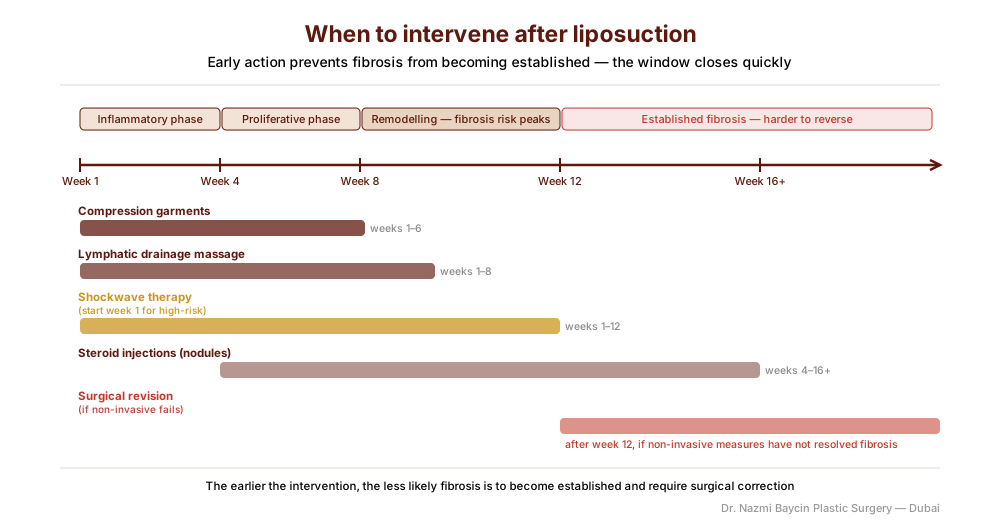
The post-liposuction fibrosis timeline — how the healing phases map to when signs appear and when early intervention works best, by Dr. Nazmi Baycin, Dubai.
Classification systems for early detection
Early detection requires systematic evaluation. The same 2024 secondary-liposculpture study proposed a classification that guides management by categorizing findings as depressions (contour lower than surrounding tissue), soft nodules (palpable but compressible), hard nodules (firm, non-compressible), adhesions (tethering of skin to deeper structures), and cutaneous bursas (fluid-filled cavities). This classification is clinically useful because each finding type may respond differently: soft nodules, for example, may resolve with massage and time, while hard nodules and adhesions often require more aggressive therapy.
The authors also showed that photographic analysis using specialized software could objectively document change in affected areas, with statistically significant improvement after treatment (p < .001). The classification was developed from the lead author’s own practice and evaluated within it, so it is best regarded as a well-structured clinical framework rather than an externally validated instrument.
Early management strategies
When fibrosis begins to develop despite preventive measures, early intervention offers the best chance of resolution. Among non-invasive therapies, shockwave therapy started within the first weeks reduces fibrosis severity by mechanically disrupting early scar tissue, stimulating neovascularization, and modulating inflammation, with multiple sessions (typically 2–3 per week for 3 weeks) for optimal results.
Low-level laser and pulsed-light treatments encourage controlled collagen remodeling and work best when started early, while non-ablative radiofrequency heats the dermis and subcutaneous tissues to soften early fibrotic areas. Topical silicone gels or sheets can help superficial scarring.
For established fibrotic nodules, intralesional corticosteroid injections are the mainstay — reducing inflammation and inhibiting fibroblast proliferation — though results are temporary and repeat injections may be needed. Agents such as 5-fluorouracil and verapamil have been used off-label for resistant fibrosis, though evidence in post-liposuction patients is limited.
Surgical management of established fibrosis
When fibrosis becomes established and does not respond to non-invasive measures, surgery may be necessary. A 2024 single-surgeon case series of 23 patients described a systematized surgical approach combining liposuction (to remove residual fat and release early adhesions), direct sharp excision of mature fibrotic tissue, and flap tensioning through an abdominoplasty or mini-abdominoplasty to redrape the skin. At twelve months, assessed by two independent plastic surgeons on an objective aesthetic scale, all 23 patients had improved, though three still had residual irregularities. The minor complication rate was 26%, with no major complications.
The authors concluded that combining liposuction, direct fibrosis removal, and flap tensioning could correct the multiple factors behind abdominal-wall surface irregularities in a safe, effective, and reproducible manner — a conclusion drawn from one surgeon’s consecutive experience rather than from a comparison against another technique. Where skin redraping is required, this overlaps with the techniques of a tummy tuck (abdominoplasty) in Dubai. The principle is clear: when fibrosis is severe, addressing all contributing factors simultaneously yields the best results.
The Dubai context
Dubai patients seeking liposuction have high expectations for both safety and aesthetic outcomes, and the city’s climate, lifestyle, and fashion norms mean patients expect to wear fitted clothing and swimwear with confidence. Several local factors deserve emphasis.
The heat and humidity can affect wound healing, so patients are counseled to avoid excessive sweating, sun exposure, and activities that raise body temperature during early healing. Because many patients travel frequently, I advise scheduling surgery at least 4–6 weeks before significant travel to ensure adequate healing and access to aftercare.
Compression-garment compliance is genuinely harder in Dubai’s climate, which makes honest preoperative counseling essential. On the positive side, Dubai offers world-class access to lymphatic-drainage therapists, physiotherapists, and aesthetic-medicine specialists who provide the adjunctive care that supports optimal outcomes. Patients considering liposuction in Dubai can learn more about my preoperative planning and postoperative support.
The evidence-based approach: a synthesis
Synthesizing the evidence, a rational approach spans the whole journey. In the preoperative phase, I identify higher-risk patients (prior treatments, smoking history, genetic predisposition), counsel on modifiable risk factors, and plan to minimize trauma. Intraoperatively, I use atraumatic technique with appropriate cannulas, preserve the subdermal plexus and an adequate fat layer, and avoid over-resection.
- In the early postoperative phase (weeks 1–4) I rely on compression, lymphatic drainage, nutritional support, and early shockwave therapy for high-risk patients, while monitoring for early signs.
- In the intermediate phase (weeks 4–12) I continue manual therapies, introduce energy-based modalities if indicated, consider steroid injections for persistent nodules, and document progress objectively.
- Beyond twelve weeks, I evaluate for persistent or severe fibrosis, consider surgical revision for resistant cases, and manage expectations about residual irregularities.
This principled approach reflects the wider philosophy behind my work as a plastic surgeon in Dubai. Because each case differs in complexity, its plan is discussed candidly during consultation.
FAQs about post-liposuction fibrosis in Dubai
-
What does post-liposuction fibrosis actually feel like?
Most patients describe a firmness or hardness in the treated area, board-like in places, that does not match the surrounding tissue. You may feel discrete nodules, tightness when you stretch the skin, or notice visible depressions or irregularities in the contour. It typically develops between three and eight weeks after surgery, as the initial swelling resolves.
-
Is it just swelling, or is it fibrosis?
Normal post-operative swelling feels soft, is fairly evenly distributed, and gradually reduces over the first few weeks. Fibrosis feels firm or even hard, may be focal rather than diffuse, and doesn’t soften with time the way swelling does. If an area feels distinctly harder than the surrounding tissue after six weeks, or you notice palpable nodules forming, that warrants clinical assessment rather than waiting.
-
What is shockwave therapy, and when should it be started?
Shockwave therapy uses acoustic pressure waves to break up early scar tissue, reduce inflammation, and stimulate healthy remodeling. In a comparative study of women undergoing liposuction for lipedema, starting it seven days after surgery — during the inflammatory phase, before fibrosis organizes — was associated with substantially less fibrosis than no treatment at all. For higher-risk patients, such as those with fibrous fat or prior treatments, I recommend starting early rather than adopting a wait-and-see approach.
-
Can established fibrosis be fixed, or is it permanent?
Established fibrosis can be significantly improved, though it becomes progressively harder to reverse as collagen crosslinks mature and calcification develops. Most cases respond to a combination of shockwave therapy, steroid injections for persistent nodules, and manual therapies. For severe or non-responsive fibrosis — hard nodules, deep adhesions, or significant contour irregularities — surgical correction combining liposuction, direct fibrosis removal, and skin redraping produces reliable improvement in the majority of patients.
-
Does energy-assisted liposuction carry a different fibrosis risk?
Energy-assisted devices — laser, ultrasound, or radiofrequency-assisted liposuction — add a thermal component on top of mechanical trauma, and in some patients that extra inflammatory burden can trigger an exaggerated fibrotic response. In the 2024 surgical case series, 20 of the 23 patients who needed surgical correction, or 87%, had previously undergone liposuction combined with an energy technology. That is a revision cohort rather than a comparison, so it shows what walks through the door rather than a risk ratio — but it does mean monitoring and prevention should be more vigilant when these devices are used.
-
How long do I need to wear compression garments, and does it matter?
Compression is one of the most evidence-supported measures for preventing fibrosis. Properly fitted garments reduce edema, minimize dead space where fluid can accumulate, and support the tissues as they heal, typically through weeks one to six. Patients who are non-compliant — often because compression is uncomfortable in Dubai’s climate — tend to have more contour irregularities, which is why I set this expectation before surgery rather than after.


GET APPOINTMENT
Get ready to look and feel best… You deserve…
