

Key takeaways: numbness after a tummy tuck
- For the vast majority of patients, numbness after a tummy tuck is temporary — sensation returns over months to a year.
- Nerves regenerate at roughly one inch per month, so recovery is gradual and follows a predictable four-phase timeline.
- Tingling and pins-and-needles are positive signs — they mean nerves are reconnecting, not that something is wrong.
- Permanent numbness occurs in about 1% of patients, usually confined to a small area right along the scar line.
- Numb skin cannot feel heat — avoid heating pads, hot water bottles, and sun exposure for the first year to prevent burns.
- Published satisfaction after abdominoplasty is consistently high, even where some sensory change persists.
For the vast majority of patients, numbness after a tummy tuck is temporary. Sensation typically begins returning within weeks to months, and the process can continue for a year or longer. However, in a small percentage of cases, some degree of numbness may be permanent — usually confined to small areas near the incision lines. Understanding why this happens and what influences recovery can help you approach your healing journey with realistic expectations and confidence.
Why numbness happens: the anatomical explanation
To understand post-surgical numbness, we must first understand what nerves do and how surgery affects them. The skin of your abdomen is supplied by a network of sensory nerves that carry messages to your brain — warmth, cold, touch, pressure, pain. During a tummy tuck, several things happen that can disrupt these nerves:
- Skin undermining: the surgeon lifts a large flap of skin from the underlying muscle to remove excess tissue and tighten the abdominal wall. This process separates the skin from its nerve supply.
- Incision placement: the long incision across the lower abdomen cuts through nerve endings in that specific area.
- Muscle tightening: when we repair separated abdominal muscles, deeper nerve branches may be affected.
- Tissue repositioning: the remaining skin is pulled down and secured in a new position, which places tension on healing nerve endings.
The nerves themselves are not typically “cut” in a way that prevents healing. Rather, they are stretched, compressed, or temporarily disrupted. Think of them as tiny electrical wires that have been disconnected from their power source. Over time, these wires can regenerate and reconnect — but it happens slowly, at a rate of approximately one inch per month.
What the research tells us
A systematic review of abdominoplasty-related nerve injuries, pooling the data from 23 published studies, provides the best figures available for patients concerned about numbness. The pooled findings are reassuring, with one caveat I will come back to:
| Outcome | Incidence | What it means for you |
|---|---|---|
| Decreased sensation | 7.67% | Some reduced feeling, usually temporary |
| Specific nerve injury | 1.94% | An identifiable nerve affected |
| Permanent nerve-related change | 1.02% | Lasting change, typically a small area near the scar |
| Chronic pain | 1.07% | Ongoing discomfort — uncommon |
| Temporary muscle weakness | 0.44% | Short-lived, resolves with healing |
Two things need saying about that table. The first is that the 7.67% figure counts the cases in which reduced sensation was formally reported as an outcome across those studies. It is not the proportion of patients who feel numb in the early weeks, which is far higher, and which is the normal course described below. The second is the caveat the authors attach to their own numbers: although the incidence of nerve injury is low, where it does occur the lasting impact on the affected patient’s quality of life can be significant, and appropriate, timely treatment by a multidisciplinary team is critical. I repeat that deliberately. A one percent risk is small, but it is not nothing to the person it happens to, and that is why I discuss it before surgery rather than after.
The healing timeline: what to expect
Nerve healing follows a predictable but highly individual timeline. Understanding this can help you track your progress and avoid unnecessary worry.
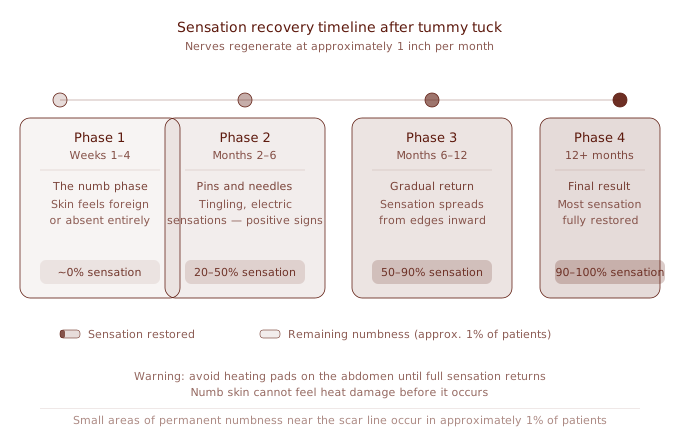
The tummy tuck numbness recovery timeline — four phases of nerve healing from surgery to one year — by Dr. Nazmi Baycin, Dubai.
Weeks 1–4: the numb phase
Immediately after surgery, the entire area of undermining will feel numb. This is normal and expected. The skin may feel “foreign” or like it belongs to someone else. Some patients describe a “tight” sensation that accompanies the numbness. During this phase, the priority is protecting the numb skin from injury — you cannot feel pain, so you may not realize if something is too hot, too cold, or causing pressure damage.
Months 2–6: the “pins and needles” phase
As nerves begin to regenerate, you may experience strange sensations: tingling or pins and needles, occasional sharp electric-shock feelings, areas of hypersensitivity alternating with numbness, and itching deep within the tissue. These sensations are positive signs. They indicate that nerves are “waking up” and reconnecting with the skin. The regeneration process follows the approximate rate of one inch per month, so a patient with a longer torso may experience a longer recovery period.
Months 6–12: gradual return
By six months, most patients have regained significant sensation in the upper and central abdomen. The area immediately surrounding the incision may still feel numb, and this is where permanent numbness is most likely to occur. Sensation continues to improve throughout the second half of the first year.
Beyond one year: the final result
At one year, what you feel is likely what you will have long-term. Some patients report continued subtle improvement beyond this point, and the published literature describes recovery of protective sensibility taking anywhere from six months to three years — but the majority of healing is complete by twelve months. If small areas of numbness remain — typically right along the scar — they are unlikely to change much further.
When numbness persists: understanding permanent changes
In approximately one percent of patients, some degree of numbness may be permanent. This typically occurs when:
- Nerves are trapped in scar tissue: as the body heals, collagen fibers can surround and compress nerve endings, preventing full regeneration.
- Nerve ends are too far apart: if the gap between severed nerve endings is too wide, they may not be able to reconnect.
- Individual healing factors: age, overall health, smoking status, and genetic factors influence nerve regeneration capacity.
Permanent numbness, when it occurs, is usually confined to small areas directly adjacent to the incision. Most patients find that this does not interfere with daily life or their satisfaction with the surgical outcome. The benefits of a flatter, tighter abdomen far outweigh the minor sensory changes for the vast majority.
| Phase | Timeframe | What you feel | What is happening |
|---|---|---|---|
| The numb phase | Weeks 1–4 | Whole undermined area feels numb; skin may feel “foreign” or tight | Nerves temporarily disconnected; priority is protecting insensate skin |
| The “pins & needles” phase | Months 2–6 | Tingling, electric-shock feelings, itching deep in the tissue, patchy hypersensitivity | Nerves regenerating and reconnecting — positive signs |
| Gradual return | Months 6–12 | Sensation returns across upper and central abdomen; area near scar still numb | Most feeling restored; scar-line numbness may persist |
| The final result | Beyond one year | What you feel now is likely long-term; small scar-line numbness may remain | Majority of nerve healing complete |
The hidden risk: burns and injury
One of the most important warnings I share with patients relates to the danger of numb skin. When you cannot feel temperature or pressure, you cannot protect yourself from harm. A published case report of a post-abdominoplasty heating-pad burn describes a 53-year-old woman who placed a heating pad on her abdomen three weeks after surgery to relieve lower abdominal pain. Because she could not feel the heat, she sustained a second-degree burn, which healed with conservative treatment. Its authors make the same point I make to every patient: the sensory nerves of the abdominal wall are divided during the operation, and a patient who has not been warned about that is the one who gets hurt. Critical safety measures during recovery:
- Avoid heating pads and hot water bottles on the abdominal area.
- Test bath water with your hand before immersing.
- Be cautious with sun exposure — numb skin burns more easily.
- Check your skin visually each day for any signs of redness, blistering, or pressure marks.
- Avoid tight clothing that could create pressure points you cannot feel.
This risk diminishes as sensation returns, but vigilance is necessary throughout the first year of recovery.
Factors that influence nerve healing
Several factors affect how quickly and completely sensation returns.
Surgical factors
- Extent of undermining: more extensive dissection affects more nerve pathways.
- Technique: some surgeons employ techniques that preserve more nerve endings.
- Previous surgeries: scar tissue from prior procedures can affect healing.
Patient factors
- Age: younger patients typically heal faster.
- Overall health: conditions like diabetes can slow nerve regeneration.
- Nutrition: adequate protein, vitamins B and D support nerve health.
- Smoking: nicotine constricts blood vessels and impairs healing at every level.
- Body habitus: longer torsos require more nerve regeneration distance.
During your consultation, I will discuss how these factors apply to you and what you can do to optimize your healing.
Can anything be done to improve sensation?
For most patients, time is the most effective treatment. However, several approaches may support nerve regeneration.
During the healing phase
- Gentle massage: once incisions are well-healed, gentle circular massage can stimulate nerve endings and improve circulation.
- Nutritional support: a balanced diet with adequate protein supports tissue repair.
- Stay hydrated: cellular function depends on good hydration.
For persistent numbness
- Medications: drugs like gabapentin may help with nerve-related discomfort and support nerve health.
- Scar revision: if nerves are trapped within scar tissue, surgical release may improve sensation.
- Physical therapy: specific exercises and desensitization techniques can stimulate nerve endings.
These interventions are rarely needed but provide reassurance that options exist should persistent numbness affect quality of life. To understand the full framework I use to support healing after surgery, visit my advanced surgical recovery protocol in Dubai article.
The big picture: satisfaction despite sensory changes
It is important to place numbness in context. Whatever happens with sensation, patients are overwhelmingly glad they had the surgery. A prospective study of quality of life after aesthetic abdominoplasty found that surgery improved general life satisfaction, satisfaction with health and with outer appearance, and emotional stability, with the clearest gains in patients who had been depressed beforehand. Satisfaction rates reported across the wider literature are consistently high, though they vary from series to series, which is why I no longer attach a single percentage to them here. Patients consistently report that the aesthetic improvement — a flatter abdomen, restored waistline, elimination of excess skin — far outweighs the temporary or even permanent sensory changes.
The ability to wear clothes that previously did not fit, to exercise without discomfort from separated muscles, and to feel confident in their appearance transforms quality of life in ways that make the recovery journey worthwhile. If you are seeking detailed information about the procedure itself, I encourage you to explore my page on abdominoplasty in Dubai.
What to expect at your consultation
The concern about post-surgical numbness is valid, and addressing it requires not only surgical skill but also time spent during consultation to set realistic expectations. Every patient’s anatomy and healing potential differ, which is why I take a highly individualized approach to both the procedure and the recovery planning.
During your consultation, I will perform a thorough examination, discuss your medical history, and explain how my surgical technique aims to preserve sensation while achieving your aesthetic goals. We will review the expected recovery timeline, including the typical patterns of sensation return, so you know exactly what to anticipate. This comprehensive approach — meticulous tissue handling, techniques that preserve nerve function wherever possible, and ongoing support throughout healing — is central to how I care for every abdominoplasty patient.
FAQs about numbness after tummy tuck surgery
-
Is numbness after a tummy tuck normal?
Yes — it is one of the most expected aspects of abdominoplasty recovery. During a tummy tuck, the skin flap is lifted from the underlying muscles, which disrupts the sensory nerves supplying that skin. This is not an injury in the traditional sense; it is a temporary disconnection that heals as nerves regenerate. The vast majority of patients experience significant numbness for weeks to months, followed by a gradual return of sensation.
-
How long does numbness last after a tummy tuck?
For most patients, numbness begins to improve within weeks and continues recovering for up to 12 months. The first signs of returning sensation — tingling, pins and needles, or occasional sharp feelings — typically appear in months two to six. These are positive signs of nerve regeneration, not complications. By one year, most patients have regained the majority of their sensation, with any remaining numbness usually limited to a small area directly along the scar line.
-
Can tummy tuck numbness be permanent?
In approximately one percent of patients, some degree of numbness may be permanent. This typically affects a small area adjacent to the incision line and rarely interferes with daily life or satisfaction with the surgical result. Published patient satisfaction after abdominoplasty is consistently high even accounting for this possibility. I discuss this honestly with every patient during consultation so expectations are realistic from the start.
-
Why do I feel pins and needles after a tummy tuck?
Tingling and pins and needles sensations after a tummy tuck are a positive sign — they indicate that the nerves are regenerating and beginning to reconnect with the skin. Nerves heal at approximately one inch per month, so these sensations may move gradually from the outer edges of the numb area inward as healing progresses. They can be uncomfortable but are a normal and expected part of the recovery process.
-
Is it safe to use a heating pad on my abdomen after a tummy tuck?
No — and this is one of the most important safety warnings I share with all my tummy tuck patients. Because the skin is numb after surgery, you cannot feel heat the way you normally would. A heating pad that would feel warm to healthy skin can cause a second-degree burn on numb post-operative skin before you realize anything is wrong. Avoid heating pads, hot water bottles, and prolonged sun exposure on the abdominal area for at least the first year, or until full sensation has returned.
-
What can I do to help sensation return after a tummy tuck?
Once your incisions are well-healed — usually from around six weeks onward — gentle circular massage of the abdominal skin can stimulate nerve endings and improve circulation. Adequate nutrition, especially protein, vitamin B, and vitamin D, supports nerve regeneration. Staying well hydrated also helps. Avoiding smoking is critical: nicotine constricts blood vessels and significantly impairs the healing of nerves and tissue. Beyond these measures, time is the most effective treatment for most patients.
-
At what point should I be concerned about persistent numbness?
If significant numbness remains beyond six months with no improvement, it is worth discussing with your surgeon. In most cases this is still within the normal healing range, but your surgeon may recommend options such as medication support, scar mobilization massage, or desensitization techniques. Permanent, functionally limiting nerve injury after abdominoplasty is rare — occurring in approximately one percent of patients according to published research — and options exist to address it when it does.
-
Does numbness after a tummy tuck affect the final aesthetic result?
No — numbness is a sensory change in the skin and has no bearing on the aesthetic outcome of the tummy tuck. The flatter contour, tightened muscle repair, and removal of excess skin are structural results that remain regardless of how sensation recovers. In practice, most patients stop noticing residual numbness in daily life well before the first year is complete.
What I want every patient to understand before surgery
The question “Is numbness permanent?” deserves an honest answer. For most patients, no — sensation returns over months to a year. For a small percentage, small areas of numbness may remain, typically near the scar line. But in either case, the vast majority of patients find that their satisfaction with the procedure far exceeds any concern about sensory changes.
The numbness will not last forever in most cases. But the worry — the strange disconnection from your own body, the daily test of what you can and cannot feel — that experience matters, and I take it seriously in every consultation I conduct. I designed this article because I believe a surgeon’s responsibility includes preparing patients for the full reality of recovery, not just the result. When you understand what is happening inside your body — why the nerves fell silent, how they find their way back, and what you can do to protect yourself while they do — the waiting becomes purposeful rather than fearful.
You are not a passive observer of your own healing. You are its active guardian. If you are considering abdominoplasty in Dubai and want to talk through what your specific anatomy and health history might mean for your recovery, I invite you to book a consultation at my Dubai clinic. As a board-certified cosmetic surgeon in Dubai, I bring the same rigor I apply in the operating room to every conversation I have with a patient before it.


GET APPOINTMENT
Get ready to look and feel best… You deserve…
