

Key takeaways: recovery is half the result
- The postoperative phase is an extension of the surgery, not an afterthought.
- Intimate tissue heals by distinct biological rules that generic aftercare ignores.
- Recovery is phased: protective (days 1–7), proliferative (weeks 2–4), remodeling (weeks 5–12).
- Most preventable complications come from premature friction and neglected scar care.
- The protocol is adapted for Dubai’s heat, humidity, and lifestyle.
- Good aftercare protects against the outcome no one wants: revision surgery.
My philosophy views recovery as biological stewardship — precise guidance that prevents complications and coaxes the tissues toward an imperceptible, natural-seeming result. Below I explain the biology, the phased protocol, the common errors that lead to revision, and the specific adaptations that matter for recovery in Dubai. This article is about the aftercare protocol itself — the decisions and disciplines that keep healing on course and complications at bay. For a stage-by-stage account of what each week of healing actually feels like, see my week-by-week labiaplasty healing timeline.
The biology of intimate healing: why standard protocols fail
Healing in the labial region follows biological rules that generic advice ignores. The tissue is highly vascular, richly innervated, and under constant mechanical stress from movement, clothing, and moisture. In Dubai’s climate, the risks of maceration, low-grade inflammation, and biofilm formation are heightened. My protocol is built on anticipating these challenges rather than reacting to them. Three ideas anchor it.
- First, the inflammation-scar continuum: the initial inflammatory phase is necessary, but uncontrolled swelling causes prolonged hypoxia, which drives fibroblasts to lay down dense, disorganized collagen — the foundation of hypertrophic scarring. My immediate regimen is designed to modulate that response, not suppress it.
- Second, neurovascular preservation: altered sensation is usually neuropraxia, a temporary nerve-conduction block from swelling, so the recovery timeline for sensation matters as much as the one for scarring.
- Third, mechanical stress: friction from clothing, the pressure of sitting, and the forces of walking make a demanding healing environment that calls for proactive protection, not just simple wound care.
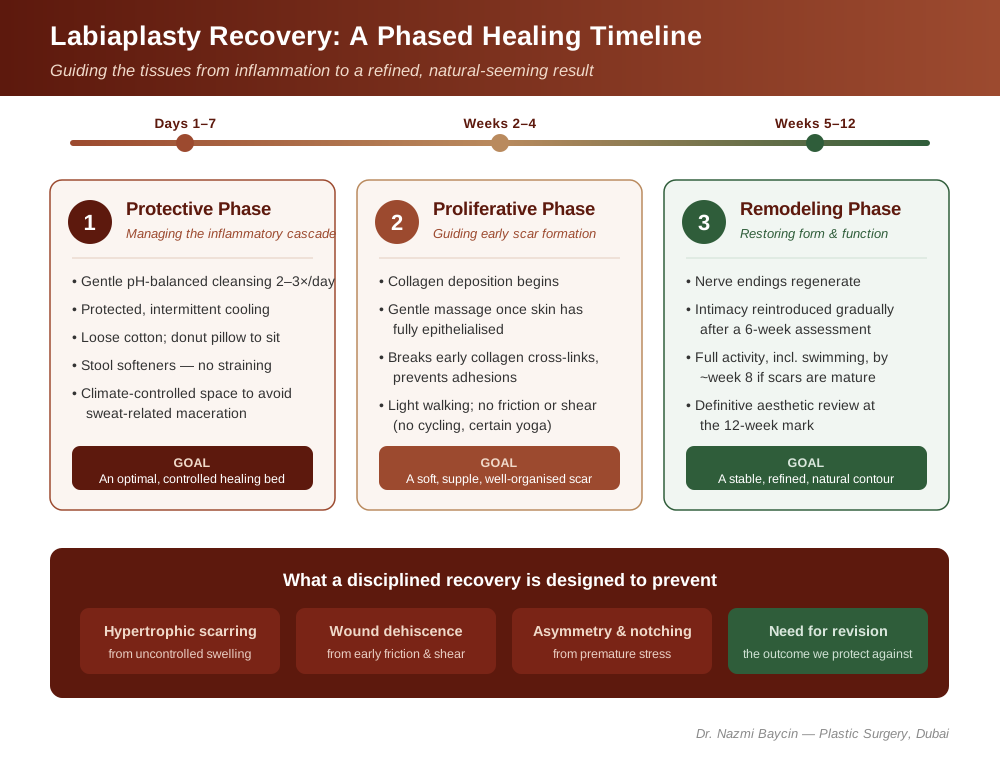
The phased labiaplasty recovery timeline — the protective phase (days 1–7) controls the inflammatory cascade, the proliferative phase (weeks 2–4) guides early scar formation, and the remodeling phase (weeks 5–12) restores form and function — designed to prevent hypertrophic scarring, dehiscence, asymmetry, and the need for revision — by Dr. Nazmi Baycin, Dubai.
A phased recovery protocol
My protocol is a deliberate, phased journey with clear objectives for each stage.
- Phase one, the protective phase across days one to seven, establishes an optimal healing environment while controlling the initial biological response. Meticulous, gentle cleansing with a prescribed, pH-balanced cleanser two to three times daily prevents bacterial colonization without disrupting the fragile epithelial barrier. Intermittent, protected cooling — always with a cloth barrier, never ice directly on numb skin — reduces swelling. Loose, breathable cotton clothing is mandatory, a donut pillow suspends the perineum when seated, and stool softeners eliminate straining. Because of the local climate, I emphasize managing heat exposure and keeping a climate-controlled recovery space to prevent sweat-related maceration.
- Phase two, the proliferative phase across weeks two to four, is about guiding collagen deposition toward a soft, supple scar. Gentle, targeted massage with a specialized emollient begins once epithelialization is complete; it breaks down early cross-links in the collagen matrix and prevents adhesions. Light walking is encouraged, but anything that creates direct friction or shear — cycling, certain yoga poses — stays off-limits, with the tissue’s own feedback guiding the pace.
- Phase three, the remodeling phase across weeks five to twelve, is when the result stabilizes and normal life resumes. As nerve endings regenerate, sensation can be unpredictable, so I give clear guidance for the gradual reintroduction of intimacy, always with lubrication, after a thorough six-week assessment. By around week eight, most patients are cleared for all exercise, including swimming, provided the scars are mature and non-tender. The twelve-week mark allows a definitive evaluation, once swelling has resolved and scar contraction is nearly complete.
For those who follow the protocol, the result is a refined, natural contour with well-integrated scars — the experience I aim for with a labiaplasty surgery in Dubai under my care.
The critical errors: why generic advice leads to revision
I frequently correct problems that stem from inadequate postoperative guidance. Long-term data give a sense of the scale. A 2025 review pooling nine studies and 748 patients followed for a year or more found that most of them — 621 of 748 — reported no postoperative complication at all. Among those that were reported, asymmetry was the most common at 6.02%, followed by the need for revisional surgery at 5.61% and scarring at 1.87%. That review reported outcome frequencies rather than testing aftercare, so it does not measure what a recovery protocol achieves; what it does establish is which problems are worth designing against. Three preventable errors recur in the cases I am asked to correct.
- Premature return to friction — spinning, horseback riding, or intimacy resumed too early — places shear stress on healing scars and leads to widening, notching, or pain.
- Neglecting scar management, on the assumption the scar will fade on its own, forfeits control over the maturation process and often leaves visible, raised, or adherent scars.
- And misunderstanding sensation changes — reading temporary hypersensitivity as permanent nerve damage, or the reverse — causes needless anxiety, which is why I educate patients on the normal neuropraxia timeline and provide desensitization strategies when needed.
Optimized healing vs. complication risk: what makes the difference
Most of what separates a smooth recovery from a troubled one comes down to a handful of decisions in the weeks after surgery. The table below contrasts the two paths.
| Factor | Optimized Healing (Guided Protocol) | Raised Complication Risk |
|---|---|---|
| Swelling control | Modulated with protected cooling | Uncontrolled, prolonged swelling |
| Scar outcome | Soft, fine, well-integrated | Raised, adherent, hypertrophic |
| Scar management | Staged massage after epithelialization | Left to fade on its own |
| Return to friction | Delayed until tissues are ready | Premature — widening, notching |
| Intimacy timing | After a 6-week assessment | Too early — pain, scar tension |
| Sensation changes | Understood as transient neuropraxia | Misread as permanent damage |
| Climate measures | Barrier ointments, breathable dressings | Sweat, maceration, biofilm |
| Follow-up | Unlimited, surgeon-supervised | Minimal or self-directed |
| Likely outcome | Refined, natural, stable result | Elevated risk of revision |
The Dubai differential: climate, culture, and compliance
My protocol is specifically adapted for this region. To counter heat and humidity, I use antimicrobial barrier ointments and breathable dressing strategies that combat moisture accumulation. Guidance is tailored around daily life here — prayer positions, attire choices such as the abaya or light clothing, and planning surgery well before major events like Ramadan or beach season. I also provide evidence-based recommendations for supplements such as bromelain, arnica, and vitamin C, which can help reduce postoperative swelling and bruising and shorten the uncomfortable early phase. The aim throughout is a recovery in Dubai that respects both the delicacy of the tissues and the realities of life in a fast-moving city.
The art of healing: guided recovery
A masterful outcome has two equal halves: precision in the operating theater and stewardship in the healing process. My recovery protocol is a structured, empathetic, scientifically grounded roadmap that turns the postoperative period from a time of guesswork into one of confident progression. The goal is not just a beautifully healed incision, but a patient who feels educated, supported, and confident in their restored self from the first day to the last. Because every patient and every recovery is individual, the protocol is adjusted to you at every follow-up visit rather than issued once and forgotten, and this stewardship-first philosophy shapes all of my genital plastic surgery in Dubai.
FAQs about labiaplasty recovery in Dubai
-
What are the phases of the labiaplasty aftercare protocol?
Recovery is phased. The protective phase covers days one to seven, when swelling and comfort are the focus. The proliferative phase runs through weeks two to four, when gentle scar massage begins and light walking resumes. The remodeling phase spans weeks five to twelve, when most patients return to full activity — typically cleared for all exercise, including swimming, by around week eight if the scars are mature. A definitive aesthetic assessment is made at the twelve-week mark, once swelling has fully resolved. I provide milestones for each stage so you always know what is normal.
-
When can I return to exercise and normal activities?
Light walking is encouraged early, but activities that create friction or shear — cycling, certain yoga poses, horseback riding — remain off-limits during early healing because they stress the scar. Most patients are cleared for all exercise, including swimming and high-impact activity, by around week eight, provided the scars are mature and non-tender. Returning to friction-generating activity too early is one of the most common preventable causes of scar widening, notching, or pain, so I clear activity based on how your tissues are actually healing rather than a fixed calendar.
-
How do I minimize scarring after labiaplasty?
Scar quality is guided, not left to chance. Controlling early swelling limits the prolonged low-oxygen state that drives dense, disorganized collagen and hypertrophic scars. Once the skin has fully epithelialized, gentle targeted massage with a specialized emollient breaks down early collagen cross-links and prevents adhesions. Assuming a scar will simply fade on its own forfeits control over how it matures. I provide a structured, multi-stage scar-management routine, which is a core reason the protocol produces fine, well-integrated scars.
-
When is it safe to resume intimacy after labiaplasty?
Intimacy is reintroduced gradually, and only after a thorough six-week assessment. As nerve endings regenerate, sensation can be unpredictable and areas of temporary hypersensitivity are common, so resuming too early risks painful scar tension. I provide clear, individualized guidance — always advising lubrication at first — and confirm the tissues are ready before clearance. Rushing this step is a frequent, avoidable cause of discomfort, which is why it is tied to an assessment rather than a fixed date.
-
Is it normal for sensation to change after labiaplasty?
Yes. Temporary changes in sensation are common and usually reflect neuropraxia — a reversible nerve-conduction block caused by swelling or delicate handling of the tissues — rather than permanent nerve damage. Transient hypersensitivity can also occur as nerves regenerate. These changes typically settle along a predictable timeline. I educate patients on what to expect so that normal, temporary sensation changes are not mistaken for a lasting problem, and provide desensitization strategies if hypersensitivity is bothersome.
-
What makes labiaplasty recovery different in Dubai’s climate?
Heat and humidity raise the risk of moisture accumulation, maceration, and low-grade inflammation in the healing area. My protocol counters this with antimicrobial barrier ointments, breathable dressing strategies, and an emphasis on a climate-controlled recovery space to prevent sweat-related problems. Guidance is also tailored around local life — attire such as the abaya or light clothing, prayer positions, and timing surgery well before Ramadan or beach season — so recovery fits comfortably around your personal and professional rhythms.
-
How can I avoid needing revision surgery after labiaplasty?
The single most effective step is following a structured recovery protocol closely. Most revisions I see trace back to preventable errors: returning to friction too early, neglecting scar management, and misreading normal healing. Protecting the area from shear stress during early healing, following the staged scar-care routine, attending your reviews, and maintaining the climate-specific precautions all protect the initial result. Long-term studies show most labiaplasty patients heal without complications, and disciplined aftercare is what keeps you in that majority.


GET APPOINTMENT
Get ready to look and feel best… You deserve…
