

Key takeaways: why fat type changes everything
- Fat is not uniform — its texture and density vary between people and between body areas.
- Soft fat is loose and responds predictably to suction; fibrous fat is dense, anchored by connective-tissue bands, and resists standard cannulas.
- Treating fibrous tissue with a soft-fat technique causes more trauma, uneven results, and slower recovery.
- The right tool is matched to the tissue: Vaser (ultrasound) for fibrous fat, power-assisted (PAL) or refined suction for soft fat.
- Dense fibrous areas often have poorer skin elasticity, so skin-tightening may be combined.
- Matching technique to tissue is fundamentally a matter of safety — it lowers the risk of seromas and contour irregularities.
Defining the two types: soft vs. fibrous fat
Soft fat is loose, malleable, and typically found in areas like the lower abdomen, inner thighs, and arms. It responds predictably to suction, allowing smooth removal and consistent skin retraction. My technique for soft fat prioritizes finesse over force, using fine cannulas and cross-tunneling methods to create seamless, natural contours without causing depressions.
Fibrous fat is an entirely different challenge. It is dense, anchored by strong internal connective-tissue bands, and commonly found in the male chest, upper abdomen, flanks (“love handles”), and any previously treated or scarred areas. This fat resists standard cannulas and requires a modified approach; forcing through it leads to surgeon fatigue, excessive trauma, and a higher risk of contour irregularities.
A clinical review of liposuction (StatPearls) sets out the anatomy behind this, noting the clinical significance of fibrous versus areolar fat — dense fibrous fat lying superficially and looser areolar fat deeper — and the importance of respecting these tissue planes and zones of adherence to prevent contour irregularities. In my clinic, fibrous fat is addressed with advanced energy-assisted technology to gently break down the structure before removal.
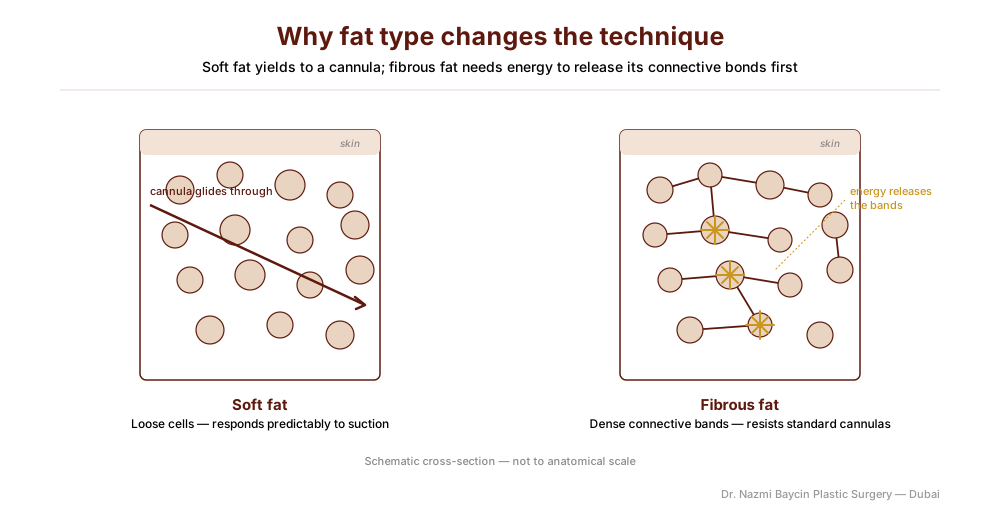
Fibrous fat versus soft fat: dense, band-anchored fibrous tissue is broken down with Vaser ultrasound energy, while loose soft fat is refined with power-assisted liposuction and fine cannulas — by Dr. Nazmi Baycin, Dubai.
Reading the tissue: assessing fat type before surgery
The plan is set long before the operating room, during a careful hands-on assessment. I palpate each area to be treated, feeling for the springy resistance of fibrous tissue versus the yielding softness of unstructured fat, and I note how the skin pinches and recoils.
This tells me not only which technology each zone needs, but how much energy, which cannula gauge, and how conservative I must be to protect the overlying skin. Crucially, I assess you in motion and in different positions, because fat behaves differently when you stand, sit, or engage the underlying muscle. A flank that looks soft when seated can reveal its fibrous anchoring when you twist. Mapping this behavior zone by zone is what lets me build a plan that fits your body rather than a textbook average.
My technical strategy: matching technology to tissue type
The core of my practice is applying the right tool to the right tissue; a one-size-fits-all method is ineffective and unsafe. For fibrous fat, I primarily use Vaser liposuction — its targeted ultrasound energy selectively liquefies the stubborn fat cells while preserving the vital surrounding network of blood vessels and connective tissue, resulting in less bruising, more precise contouring, and significantly better skin retraction in these stubborn zones. It is my instrument of choice for sculpting a masculine chest or defining the waistline against dense flank tissue.
For soft fat, I often employ power-assisted liposuction (PAL) or refined traditional suction; PAL provides exceptional control, allowing the cannula to glide through the soft tissue with minimal effort and enhancing my ability to perform the delicate feathering and layering necessary for a perfectly smooth result, especially in large areas like the abdomen or thighs. This decision is never arbitrary — it is a clinical conclusion based on my preoperative assessment, which involves detailed palpation and evaluation of your unique anatomy. The table below summarizes how the two tissue types differ across the factors that shape the surgical plan.
| Factor | Soft fat | Fibrous fat |
|---|---|---|
| Consistency | Loose, malleable | Dense, anchored by connective-tissue bands |
| Common locations | Lower abdomen, inner thighs, arms | Male chest, upper abdomen, flanks, scarred/treated areas |
| Preferred technology | Power-assisted liposuction (PAL) or refined suction | Vaser ultrasound-assisted liposuction |
| Response to suction | Predictable, smooth removal | Resistant; requires energy to break down first |
| Recovery | Faster, less swelling, earlier final contour | More gradual as structural remodeling heals |
| Skin consideration | Usually good retraction | Often poorer elasticity; may add skin tightening |
For patients researching their options, I detail this tailored approach on my page dedicated to liposuction in Dubai.
When one body holds both types of fat
Most patients are not purely one type or the other. It is common to find soft fat across the lower abdomen sitting beside dense, fibrous tissue in the flanks or upper abdomen, and the transition zones between them are where contour irregularities are most likely to appear. Treating the whole area with a single technique is exactly what produces the uneven, patchy results I am often asked to revise.
My approach is to switch technology within the same operation — breaking down the fibrous zones with ultrasound energy first, then refining the soft and transitional areas with gentler power-assisted suction and fine cannulas. Blending these boundaries with deliberate feathering is what turns separately treated areas into one smooth, continuous contour that reads as natural from every angle.
Why this precision affects your recovery and results
The tissue type directly shapes your healing journey and ultimate outcome. With soft fat, patients typically experience a faster recovery, less swelling, and earlier visibility of smoother, final contours. With fibrous fat, the process is more gradual — swelling resolves more slowly as the body heals from the necessary structural remodeling — but the payoff is transformative: precisely defined contours that were previously impossible to achieve.
A common mistake is neglecting skin quality in fibrous areas, since the density of the fat often corresponds with poorer skin elasticity. For patients with significant fibrous fat and mild skin laxity, I frequently integrate J-Plasma skin tightening, contracting the tissue envelope from the inside at the time of surgery to proactively prevent loose skin.
Aftercare tuned to your tissue
Recovery instructions should reflect the technique used, not a single generic protocol. Fibrous zones treated with ultrasound energy benefit from a longer, more structured compression schedule and gentle lymphatic massage to help the remodeling tissue settle evenly and to discourage fluid collections. Soft-fat areas typically need lighter, shorter support as they contract more readily on their own. I tailor the garment plan, the massage timeline, and the return-to-activity guidance to the specific mix of tissue we treated, which is part of why matching method to fat type pays off well beyond the operating room.
Preventing complications through expert technique
My focus on tissue type is fundamentally a commitment to safety and prevention. Fibrous areas are more prone to seromas (fluid collections) and contour irregularities if handled improperly. My technique mitigates these risks through conservative energy use, strategic intraoperative fluid management, and meticulous, layered compression-garment plans. This proactive, detail-oriented philosophy is why patients choose an experienced cosmetic surgeon in Dubai for procedures requiring such a high degree of tailored care.
The final outcome: contours crafted with biological intelligence
Ultimately, successful liposuction is an exercise in biological intelligence. It requires the surgeon to listen to what the tissue is communicating — its density, its elasticity, its vascularity — and to respond with the appropriate technical execution. By respecting the fundamental difference between fibrous and soft fat, I can move beyond simple fat removal to achieve true body sculpting: results that are smooth, harmonious, and look naturally intended for your body.
FAQs about fibrous and soft fat liposuction in Dubai
-
What is the difference between fibrous fat and soft fat?
Soft fat is loose and malleable, common in the lower abdomen, inner thighs, and arms, and it responds predictably to suction. Fibrous fat is dense and held together by strong connective-tissue bands, and it is typically found in the male chest, upper abdomen, flanks, and previously operated or scarred areas. Fibrous fat resists standard cannulas and needs a modified, energy-assisted approach, which is why identifying the tissue type first is so important.
-
How do you know which type of fat I have?
I assess it during a hands-on preoperative examination, mapping the consistency of your fat by palpation across each area to be treated. Fat type often varies from one region to another on the same person, so I plan technique and technology zone by zone rather than applying a single method to the whole body.
-
Why is Vaser used for fibrous fat?
Vaser uses targeted ultrasound energy to selectively liquefy dense, stubborn fat while preserving the surrounding blood vessels and connective tissue. This makes fibrous fat far easier to remove smoothly, with less bruising, more precise contouring, and better skin retraction — which is why it is my instrument of choice for areas like the male chest or dense flanks.
-
Will recovery be different depending on my fat type?
Yes. Soft-fat areas generally heal faster, with less swelling and earlier visibility of the final contour. Fibrous areas take longer as the body heals from the structural remodeling involved, so swelling resolves more gradually — but the trade-off is definition in areas that are otherwise very difficult to sculpt.
-
Do I need skin tightening as well as liposuction?
Not always, but dense fibrous areas often come with poorer skin elasticity, so loose skin can be a risk after fat removal. In those cases I may combine liposuction with J-Plasma skin tightening, which contracts the tissue envelope from the inside during the same procedure to help prevent laxity. Whether this is recommended depends on your skin quality and the area treated.
-
Is fibrous-fat liposuction riskier?
Fibrous areas are more prone to seromas and contour irregularities if handled improperly, which is precisely why matching the technique to the tissue matters. I reduce these risks through conservative energy use, careful intraoperative fluid management, and a structured compression-garment plan. In experienced hands, respecting the tissue type is what keeps the procedure both safe and precise.


GET APPOINTMENT
Get ready to look and feel best… You deserve…
