

Key takeaways: what makes a result last
- The true test of a surgical result is time, not the three-month mirror.
- Durable results come from anchoring the deep layer to stable structures, not tensioning skin.
- Structural grafts of cartilage and fat integrate as living tissue, giving permanent support.
- Implants last best with robust soft-tissue or muscle coverage that spreads load and limits rippling.
- Atraumatic, tension-free technique produces supple scars that mature favorably.
- An ideal result is a living, aging system kept in harmony — engineered, not frozen.
The four levers of longevity
Across very different operations, the same four biomechanical principles separate a result that relapses from one that endures. Both may look excellent at first; what happens over the following years is decided by how well the surgery respected these levers.
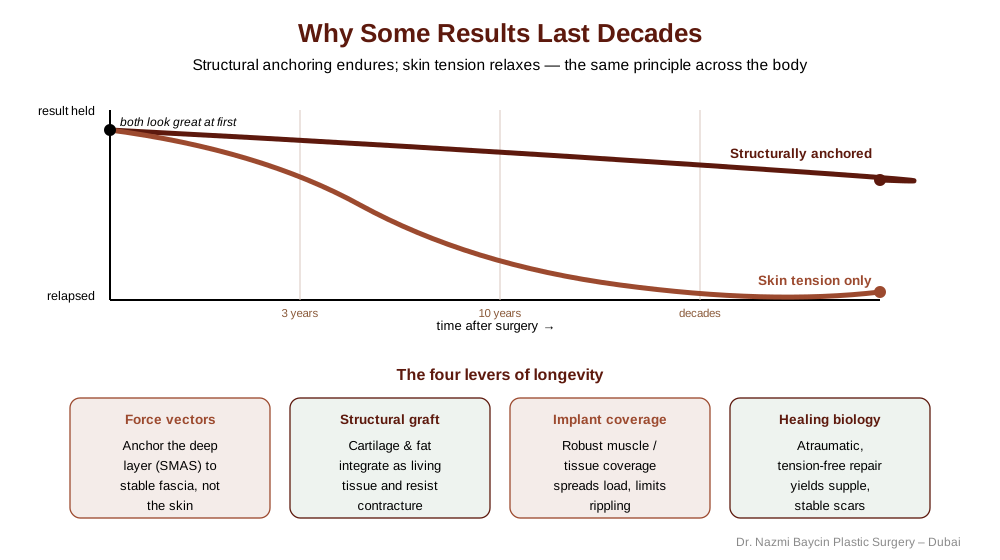
Why structurally anchored results endure while skin-tension results relax — and the four biomechanical levers that apply across the face, nose, and breast — by Dr. Nazmi Baycin, Dubai.
| Principle | Short-lived approach | Durable approach |
|---|---|---|
| Force vectors & tissue planes | Skin tension fighting gravity → stretch-back, wide scars | Deep layer (SMAS) re-suspended to stable fascia; lift aligned with natural vectors |
| Structural grafting & volume | Reduction-only or filler on a descended base → collapse, migration | Autologous cartilage/fat grafts that integrate as living, permanent structure |
| Implant integration | Thin coverage → rippling, edge visibility, shear-driven contracture | Dual-plane/submuscular coverage distributing load evenly |
| Healing biology | Aggressive trauma & tension → prolonged inflammation, poor scars | Atraumatic technique & tension-free closure → supple, stable scars |
The foundation: respecting force vectors and tissue planes
Every facial and bodily movement — smiling, chewing, turning the head — generates complex vectors of force, and a durable result must work with these forces, not against them. A short-lived facelift relies on skin tension, which fights the constant downward pull of gravity and muscular animation, leading to stretch-back and scar widening. The enduring alternative repositions and secures the deeper SMAS layer to stable fascial structures such as the temporal fascia, addressing the cause of descent at its source. By aligning the lift vector with the natural vectors of facial expression, the result appears natural under animation and holds its position because it is structurally anchored, not merely stretched. Equally important is the preservation of natural gliding planes. Meticulous dissection within anatomical planes and precise layered closure prevent the dense adhesions that tether tissue and distort expression, allowing the overlying soft tissue to move smoothly over the reconstructed foundation for a lifetime. To learn more about this deep-layer approach to facial rejuvenation, visit facelift surgery in Dubai.
Structural grafting and volume as living architecture
Biomechanical longevity also depends on creating or restoring a stable structural framework. The nose is a complex, cantilevered structure, and reduction-only techniques that weaken the dorsal septal L-strut or over-resect tip-support cartilages are biomechanically doomed, leading to mid-vault collapse, pinching, and valve collapse over time. The durable approach pairs conservative resection with strategic autologous cartilage grafting — from septum or rib — to reinforce critical angles and valves. These grafts become integrated, living parts of the framework that resist scar contracture and gravity for decades.
This is well supported in the literature. A critical review of spreader grafts in rhinoplasty reports that they restore dorsal aesthetics, support the nasal valve, and maintain the straightened position of a corrected deviated cartilaginous dorsum, and cautions surgeons against removing nasal tissue overzealously or compromising the valve angle. The same review notes that the extent of the benefit to nasal patency remains contested — the structural case is the stronger one.
The same logic governs volume. Rather than injecting filler onto a descended foundation — which looks puffy and migrates — the biomechanically sound approach repositions descended fat compartments and restores volume at the bone level with micro-autologous fat grafting, so the transplanted fat establishes its own blood supply and ages synchronously with the patient. To learn more about this structural philosophy of nasal surgery, visit rhinoplasty surgery in Dubai.
Material science and implant integration: the breast as a case study
Breast augmentation illustrates the biomechanical interplay between a patient’s tissue and an implant. Placing an implant under inadequate soft-tissue coverage maximizes the risk of long-term complications — palpable rippling, accelerated sagging from the implant’s weight, and visible edges. A durable protocol instead prioritizes a supportive environment, often selecting the appropriate implant profile and placing it in a dual-plane or submuscular position where the pectoralis muscle provides robust, vascularized coverage that distributes forces evenly. This is borne out by the evidence.
A 2025 systematic review and meta-analysis of 24 studies found subpectoral placement significantly reduced capsular contracture rates compared with placement above the muscle, with an odds ratio of 0.35. In my experience that coverage also reduces implant visibility, palpability, and rippling. The capsule itself is a biomechanical response. An implant that moves excessively during muscle contraction creates shear forces that trigger chronic inflammation and a thick, constrictive capsule, whereas precise pocket dissection, minimal tissue trauma, and contamination-reducing insertion technique all favor a soft, stable capsule. To learn more about this coverage-first approach, visit breast augmentation surgery in Dubai.
Healing biology: minimizing trauma for optimal scar quality
The body’s healing response is the final determinant of longevity. Excessive surgical trauma — from aggressive electrocautery, rough handling of tissue, or undue tension — triggers a prolonged inflammatory phase and poor-quality, hyperplastic scars that weaken over time and can distort results.
My operative philosophy is one of microsurgical precision: delicate instruments, precise bipolar cautery on low settings, and tension-free closures that respect the biology of healing, producing minimal, supple scars that mature favorably and strong, layered repairs that withstand time.
This principle is universal, from a minimal-scar abdominoplasty to eyelid surgery — the durable result is engineered, not stretched into place. That same commitment to structural soundness runs through all of my plastic and reconstructive surgery work in Dubai, where the biomechanical principles behind a lasting outcome are discussed openly as part of the consultation.
FAQs about lasting plastic surgery results in Dubai
-
Why do some plastic surgery results last decades while others fade in a few years?
The difference is usually structural. A result built on skin tension is fighting gravity and muscle movement from day one, so it gradually stretches back. A result that repositions and anchors the deeper layers — the SMAS in the face, cartilage in the nose, well-covered implants in the breast — is supported by stable architecture rather than tension, so it holds its position far longer. Both can look excellent at first; time reveals which was structurally sound.
-
What does working with force vectors actually mean?
Every expression and movement pulls on tissue in specific directions. Working with those vectors means lifting and securing tissue along the lines the body already moves in, and anchoring to stable structures such as deep fascia, so the repair is reinforced by normal movement instead of being fought by it. A lift placed against the natural vectors looks unnatural in animation and tends to relapse; one aligned with them looks natural and lasts.
-
Why is cartilage grafting so important in rhinoplasty longevity?
The nose is a cantilevered structure that depends on internal support. Removing or weakening key cartilage without reinforcing it can lead to gradual collapse, pinching, and breathing problems years later. Strategic grafts — often spreader grafts from the septum or rib — reinforce the critical angles and valves and become integrated, living parts of the framework. Reviews of spreader grafts report that they support the nasal valve and help maintain the corrected shape over time.
-
Does implant placement affect how long a breast augmentation lasts?
It strongly affects long-term quality. Thin coverage over an implant tends to show rippling and visible edges and can accelerate sagging under the weight of the implant. Placing the implant in a dual-plane or submuscular position gives it robust, vascularized coverage that distributes forces and reduces rippling, and meta-analysis data show subpectoral placement is associated with significantly lower capsular contracture rates than placement above the muscle. The best plane still depends on your individual anatomy.
-
How does surgical technique affect scarring years later?
Gentle, atraumatic technique matters enormously. Aggressive cautery, rough tissue handling, and closing under tension provoke prolonged inflammation and thick, weak scars that can distort the result over time. Delicate instruments, low-energy cautery, and tension-free closure — where the deep layers carry the load, not the skin — let scars heal fine and supple and let the repair stay strong for the long term.
-
Is a more dramatic result less likely to last?
Not necessarily — durability is about how the result is built, not how big the change is. A well-anchored, structurally sound result can be significant and still last, while a modest result built purely on skin tension can relapse quickly. What predicts longevity is whether the surgery respected force vectors, restored structure, ensured good coverage or grafting, and healed with minimal trauma — not the magnitude of the change itself.


GET APPOINTMENT
Get ready to look and feel best… You deserve…
